Living Trust Beneficiaries: How to Choose Who Inherits and Set Distribution Terms
Plan Who Receives Trust Property, When They Receive It, and How Your Instructions Should Work
Choosing the right beneficiaries for your living trust determines who actually receives your property, when they receive it, and whether your wishes get carried out the way you intended.
This decision touches everything from your children’s inheritance to how a charitable gift gets handled after you’re gone, and getting it right matters more than most people realize. Bulletproof Legacy’s supported digital estate-planning approach is built around helping families work through exactly these kinds of decisions with professional resources on hand, rather than guessing at them alone.
Key Takeaways: Choosing Beneficiaries for Your Living Trust
- Living trust beneficiaries can include individuals, charities, other trusts, or even your own estate, but each option comes with different practical consequences.
- Naming both primary and contingent (backup) beneficiaries prevents your trust property from defaulting to state inheritance rules if your first choice can’t inherit.
- Minor children, beneficiaries with special needs, and blended family situations each require specific planning approaches rather than generic language.
- Beneficiary designations on retirement accounts and life insurance often override your trust instructions entirely, so these need to be coordinated separately.
- Later in this article, you’ll find out exactly what “per stirpes” means for your grandchildren’s inheritance and why that single phrase can change who gets what.
Naming beneficiaries is one of the most consequential steps in the entire trust-creation process, right alongside funding the trust and selecting a successor trustee. If you haven’t yet worked through the full process of setting up your trust, the guide on how to create a living trust walks through each stage from drafting to funding. This article focuses specifically on the beneficiary piece: who to name, how to structure their inheritance, and what mistakes tend to cause the most family friction down the road.
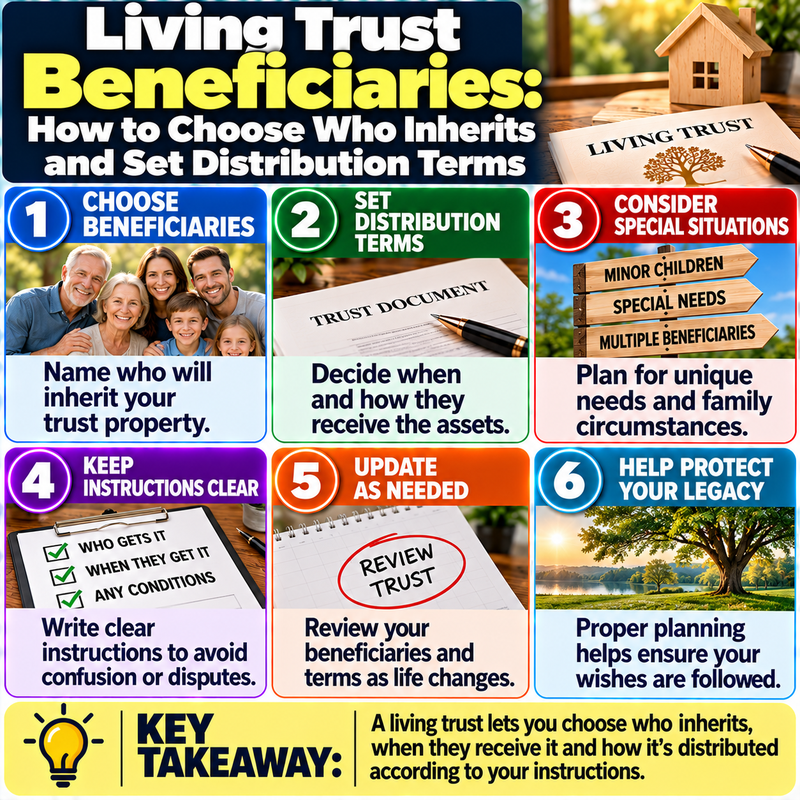
Plan Who Receives Trust Property, When They Receive It, and How Your Instructions Should Work
A beneficiary is simply a person or organization you’ve designated to receive trust property under the terms you’ve written. That sounds straightforward, but the real planning work happens in the details: who receives property now versus later, what happens if someone predeceases you, and whether your instructions actually hold up the way you expect them to.
Current Beneficiaries Versus Remainder Beneficiaries
Some trusts name current beneficiaries who receive income or distributions right away, while others name remainder beneficiaries who only receive property after an earlier interest ends. For example, a trust might provide income to a surviving spouse during their lifetime, with the remaining property passing to children only after that spouse passes away. Understanding which role each person plays in your plan helps you write instructions that match your actual intent, rather than leaving a trustee to interpret vague language later.
Why Contingent Beneficiaries Are Your Backup Plan
A contingent beneficiary only inherits if your primary beneficiary doesn’t survive you, can’t be located, or declines the inheritance. Skipping this step is one of the most common gaps in a trust document. Without a named contingent beneficiary, your trust may not clearly address what happens next, which can lead to delays, added expense, or a result that doesn’t reflect what you actually wanted.
How This Fits Into Your Overall Living Trust
Beneficiary designations don’t exist in isolation. They work alongside your trustee provisions, your funding decisions, and the broader structure of your revocable living trust, which governs how and when your trust can be changed during your lifetime. It’s worth noting that a living trust, on its own, doesn’t guarantee your estate avoids probate; that outcome depends heavily on whether assets are properly retitled into the trust, how beneficiary designations on other accounts are handled, and the requirements of your state’s law.
Who Can You Name as a Beneficiary?
You have more flexibility here than many people assume. A living trust beneficiary can be an individual, a charitable organization, another trust, or in some cases your own estate, though that last option usually isn’t the wisest choice.
Individuals, Charities, and Organizations
Most trusts name family members as beneficiaries, such as a spouse, children, grandchildren, or close friends. But you’re not limited to people. Charitable organizations, religious institutions, and nonprofits can all be named to receive a portion of your trust property, either as a fixed dollar amount or as a percentage of the overall trust.
Naming Another Trust as a Beneficiary
Sometimes a trust names another trust as its beneficiary rather than an individual outright. This structure shows up often in special-needs planning, in trusts created for minors, or when a beneficiary’s share needs to be managed under separate terms. It adds a layer of complexity, so this approach typically benefits from guidance from an estate planning attorney familiar with how your state treats nested trust arrangements.
Naming Your Own Estate: Why This Usually Backfires
Naming your own estate as a trust beneficiary is technically possible, but it tends to undercut the very reason many people create a living trust in the first place. Assets that pass to your estate generally get swept into the probate process instead of transferring directly to your intended recipients. If avoiding probate complications is part of your goal, this is usually one option worth steering clear of.

How to Choose Your Primary and Backup Beneficiaries
Once you know who you want to benefit from your trust, the next step is organizing those people into a clear hierarchy: primary beneficiaries first, contingent beneficiaries as backup. This structure is what keeps your trust functioning the way you intended, even if circumstances change between the day you sign your trust and the day it’s actually put into action.
Naming More Than One Primary Beneficiary
You’re not limited to a single primary beneficiary. Many trusts split property among several people at once, such as three children each receiving one-third of the trust estate. When you name multiple primary beneficiaries, it’s important to specify percentages or shares clearly rather than leaving the division open to interpretation, since vague language is one of the most common sources of family disagreement after a death.
Layering Contingent Beneficiaries Correctly
A well-built trust doesn’t stop at one layer of backup planning. Consider naming a contingent beneficiary for each primary beneficiary, and then think through what happens if that contingent beneficiary also can’t inherit. For example, if your trust leaves property to your child, and names your grandchild as a backup, you might also want to specify what happens if neither survives you. This kind of layered planning sounds thorough because it is, and it’s exactly the kind of detail that prevents gaps in your plan.
What Happens If You Name No Backup at All
Skipping contingent beneficiaries entirely leaves a gap in your instructions. If your primary beneficiary has already passed away, can’t be found, or declines their inheritance, and no backup has been named, the outcome depends on how your trust document is otherwise drafted and on your state’s default rules for undistributed trust property. This can mean delays, added legal costs, and outcomes that don’t reflect what you would have chosen yourself.
Equal Shares Versus Unequal Shares: Documenting Your Intent
Many people assume dividing trust property equally among children is the safest choice, and often it is. But equal isn’t always fair, and fair isn’t always equal, especially when family circumstances vary.
When Unequal Distributions Make Sense
You might choose unequal shares if one child has already received significant financial support during your lifetime, if one child has greater financial need, or if one child has taken on a larger caregiving role. There’s no universal rule here; it’s a personal decision based on your family’s specific situation.
Writing Clear Language to Prevent Future Disputes
Whatever you decide, documenting the reasoning behind unequal distributions, either within the trust itself or in a separate letter of intent, can go a long way toward preventing hurt feelings or legal challenges later. Silence tends to invite speculation, and speculation tends to invite conflict among surviving family members.

Outright Distributions Versus Continuing Trusts
Your trust can hand property directly to a beneficiary, or it can hold that property in a continuing trust and distribute it according to terms you set. Choosing between these two approaches depends heavily on who the beneficiary is and what kind of oversight makes sense for their situation.
When an Outright Distribution Is the Simpler Choice
An outright distribution transfers property directly to the beneficiary with no ongoing management or restrictions. This works well for adult beneficiaries who are financially capable and don’t need built-in protections. It’s simpler to administer and gives the beneficiary full control right away.
When a Continuing Trust Protects Your Beneficiary Better
A continuing trust keeps property under a trustee’s management and distributes it according to your instructions over time. This structure tends to make more sense for minors, beneficiaries with limited financial experience, beneficiaries with disabilities, or beneficiaries going through circumstances like divorce or creditor issues. The trustee manages the assets, while the beneficiary receives distributions according to the standards you’ve written into the trust.
Age-Based and Milestone Distribution Strategies
If you decide a continuing trust is the better fit, you’ll also need to decide how and when distributions actually happen. Two common approaches are age-based staggered distributions and milestone-based distributions.
Staggered Distributions at Set Ages
A staggered distribution schedule releases portions of a beneficiary’s inheritance at specific ages rather than all at once. A common example might look like this:
- One-third of the share distributed at age 25
- One-third distributed at age 30
- The remaining balance distributed at age 35
This approach gives a beneficiary time to mature financially before receiving full control, while still ensuring they eventually receive everything you intended to leave them.
Tying Distributions to Life Milestones
Instead of fixed ages, some trusts tie distributions to life events, such as college graduation, starting a business, or purchasing a first home. This approach can feel more personal, though it requires careful drafting so the trustee has clear standards for determining when a milestone has actually been met.
Planning for Minor Beneficiaries
Minor children cannot legally receive and manage trust property on their own, no matter how mature they seem for their age. This is one of the clearest cases where a continuing trust structure isn’t just helpful, it’s necessary.
Naming a Trustee or Custodian Until Adulthood
Your trust should name a trustee responsible for managing property on behalf of a minor beneficiary until they reach a specified age, whether that’s 18, 21, 25, or another age you choose. This trustee has a legal duty to manage the property responsibly and distribute it according to the trust’s terms.
When selecting this trustee, think through a few practical questions:
- Does this person have the financial judgment to manage significant assets responsibly?
- Would they prioritize the beneficiary’s wellbeing over personal convenience?
- Do they have the time and willingness to take on this responsibility?
- Is there a backup trustee named in case your first choice can’t serve?
Answering these honestly helps you avoid naming someone out of obligation rather than genuine fit.
Why Minors Cannot Inherit Property Directly
Without a trustee or custodian arrangement in place, property intended for a minor typically requires court involvement to appoint someone to manage it, which can mean delays and added legal costs. Building this structure into your living trust in advance avoids that outcome and keeps control over who manages the property in your own hands rather than a court’s.

Special-Needs Beneficiaries Require Specialized Planning
If one of your intended beneficiaries receives or may need means-tested government benefits, such as Supplemental Security Income or Medicaid, standard trust language can create serious complications. This is an area where generic planning genuinely isn’t appropriate.
Protecting Eligibility for Government Benefits
A direct inheritance, even a well-intentioned one, can disqualify a beneficiary from benefits they depend on for medical care and daily living support. Special-needs trusts are specifically designed to supplement rather than replace these benefits, but the rules governing them are technical and vary based on program requirements and state administration. Because an incorrectly drafted provision can jeopardize a beneficiary’s benefits entirely, this is an area where working with an attorney experienced in special-needs planning is particularly important.
Why Generic Trust Language Can Cause Problems
A standard distribution clause, even one that seems protective on its surface, may not include the specific language needed to preserve benefit eligibility. This is not a situation where a one-size-fits-all approach is appropriate, and it’s worth flagging clearly to whoever helps you draft or review your trust.
Blended Families, Second Marriages, and Competing Interests
Blended families introduce planning challenges that traditional nuclear-family trusts don’t always anticipate. A surviving spouse, children from a prior relationship, and jointly owned property can all pull in different directions if a trust isn’t drafted with these dynamics in mind.
Balancing a Surviving Spouse and Children From a Prior Relationship
One common structure allows a surviving spouse to use or benefit from trust property during their lifetime, with the remaining property passing to children from a prior marriage after the spouse’s death. This balances two goals that can otherwise compete: providing for a current spouse while still preserving an inheritance for children from an earlier relationship.
Addressing Jointly Owned Assets in Your Plan
Assets owned jointly with a spouse often pass directly to that spouse by operation of law, regardless of what your trust says. This means your trust’s beneficiary instructions may only apply to separately owned property, making it important to review how each asset is titled alongside your trust planning.

Beneficiaries With Creditor, Divorce, or Money-Management Concerns
Not every beneficiary is in a position to receive a lump-sum inheritance without complications. Beneficiaries facing creditor judgments, pending divorces, or a history of financial difficulty may benefit from additional structure built into their share of the trust.
Using Trust Terms to Shield Assets From Creditors
Keeping a beneficiary’s inheritance in a continuing trust, rather than distributing it outright, can offer a layer of protection from that beneficiary’s creditors, since the assets remain under the trustee’s control rather than becoming the beneficiary’s personal property outright. The specific level of protection depends on how the trust is drafted and on applicable state law, so this is worth discussing with an attorney if creditor exposure is a real concern for someone you’re planning to include.
Protecting an Inheritance From a Beneficiary’s Divorce
Similarly, property held in a continuing trust is generally treated differently than property distributed outright when a beneficiary later goes through a divorce. Keeping inherited assets separate and trust-held, rather than commingled with marital property, can help preserve their intended purpose.
Setting Distribution Standards for Beneficiaries Who Struggle With Money
For a beneficiary who has a pattern of financial difficulty, your trust can specify distribution standards, such as funds released only for health, education, maintenance, or support, rather than an unrestricted lump sum. This gives a trustee clear guidance for making discretionary decisions, rather than leaving every distribution open to argument.
Naming Charitable Beneficiaries
Charitable giving through a living trust lets you support causes you care about while still providing for family members. Many people choose to combine both approaches within the same trust document.
Giving a Fixed Amount Versus a Percentage of Your Trust
You can name a charity to receive a fixed dollar amount, a specific asset, or a percentage of your overall trust estate. A percentage-based gift automatically adjusts if your estate’s value changes over time, while a fixed amount stays the same regardless of how your assets perform. Each approach has trade-offs worth thinking through based on how predictable you expect your estate’s value to be by the time your trust is administered.
How Outside Beneficiary Designations Interact With Your Trust
Your living trust doesn’t operate alone. Many of your most valuable assets, including retirement accounts and life insurance, pass according to their own beneficiary designations, completely separate from what your trust document says.
Retirement Accounts, Life Insurance, and Payable-on-Death Assets
Accounts like 401(k)s, IRAs, life insurance policies, payable-on-death bank accounts, and transfer-on-death brokerage accounts all transfer based on the beneficiary forms filed directly with the financial institution. Naming beneficiaries on these accounts requires particular care, since retirement accounts in particular carry specific tax rules depending on who inherits them.
Why These Designations Override Your Trust Instructions
Here’s the part that catches people off guard: a beneficiary designation on one of these accounts generally overrides whatever your trust or will says, even if your trust document seems to address the same asset. If your life insurance beneficiary form still names an ex-spouse from years ago, that designation will typically control, regardless of your current intentions.
It’s also worth noting that retirement accounts like IRAs and 401(k)s generally should not be retitled into a living trust the way a bank account or piece of real estate might be. Instead, these accounts use their own beneficiary designation forms, and naming a trust as beneficiary of a retirement account involves specific tax considerations that are worth reviewing with a financial or tax professional before making that choice.
Coordinating Outside Designations With Your Overall Estate Plan
Because these designations operate independently, it’s worth periodically reviewing every account that allows a named beneficiary and confirming it still matches your current wishes. This coordination is just as important as the language inside your trust document itself, and it’s a step that’s easy to overlook once the trust itself is signed.

Per Stirpes and Other Distribution Terms Explained Simply
Estate planning documents often include Latin terms that sound more complicated than they actually are. Two of the most common, “per stirpes” and “per capita,” directly affect how your grandchildren might inherit if one of your children passes away before you do.
- Per stirpes means a deceased beneficiary’s share passes down to their own children, divided equally among them.
- Per capita means the share is instead redistributed equally among the surviving beneficiaries at the same generational level.
These two terms can produce very different outcomes depending on your family structure, so it’s worth understanding exactly which one your trust uses.
What “Per Stirpes” Means for Your Grandchildren’s Inheritance
Imagine you have three children and name them as equal beneficiaries. If one child passes away before you, leaving two children of their own, a per stirpes distribution means those two grandchildren would split their deceased parent’s one-third share between them, rather than that share being absorbed by their surviving aunts or uncles.
Per Capita Distribution: The Key Difference
Under a per capita approach, that same one-third share would instead be divided among all surviving beneficiaries at the same level, meaning the grandchildren might receive nothing directly, while the remaining two children split the full estate between themselves. Neither approach is universally right or wrong, but the difference is significant enough that it’s worth confirming which method your trust specifies, rather than assuming.
Life Events That Should Trigger a Beneficiary Review
A living trust isn’t a document you sign once and forget about. Your family circumstances, financial picture, and relationships all shift over time, and your beneficiary designations need to keep pace with those changes rather than lagging years behind reality.
A good rule of thumb is to review your trust and all related beneficiary designations every few years, and immediately after any major life event. Waiting until “someday” to update an outdated plan is one of the most common and most avoidable estate planning mistakes.
Marriage, Divorce, Births, and Deaths
Marriage, divorce, the birth or adoption of a child, and the death of a previously named beneficiary are the clearest triggers for a review. A divorce decree, for instance, doesn’t automatically remove an ex-spouse from a beneficiary designation on a retirement account or life insurance policy, even if your trust has been updated separately. Each of these events deserves a fresh look at both your trust document and every outside beneficiary form tied to your accounts.
Estrangement, Disability, and Major Financial Changes
Less obvious triggers matter too. A falling-out with a previously named beneficiary, a new disability diagnosis for someone in your family, or a significant change in your own financial situation can all shift what makes sense for your plan. If a beneficiary develops a disability after your trust is signed, for example, their share may need to move into a special-needs trust structure to avoid jeopardizing benefits they now rely on.

Communicating Your Intentions to Avoid Family Disputes
Even a well-drafted trust can lead to hurt feelings or legal challenges if your beneficiaries are caught completely off guard by its contents. Clear communication, while you’re still able to provide it, tends to prevent far more conflict than any amount of careful drafting alone.
Putting Your Wishes in Writing
Beyond the legal language in your trust itself, consider writing a separate letter of intent that explains your reasoning, especially if you’ve chosen unequal distributions or unusual conditions. This document isn’t legally binding the way your trust is, but it gives your beneficiaries context that can prevent them from assuming the worst about your intentions.
Talking to Your Beneficiaries and Successor Trustee Ahead of Time
Having a direct conversation with your beneficiaries and your successor trustee before anything happens to you can clear up confusion and set expectations early. Your successor trustee, in particular, benefits from knowing where your trust documents are kept, how you’d like distributions handled, and who to contact for professional guidance when the time comes to administer the trust.
Common Mistakes to Avoid When Naming Beneficiaries
Several patterns show up again and again in poorly planned trusts, and nearly all of them are avoidable with a bit of extra attention during the drafting process.
Forgetting to name a contingent beneficiary tops the list, followed closely by failing to coordinate outside beneficiary designations with the trust itself. Naming a minor as a direct beneficiary without a trustee or custodian structure creates legal complications that a continuing trust could have easily prevented. Using vague percentage language, such as splitting assets “equally among my children” without clarifying how a deceased child’s share should be handled, leaves room for disputes that clearer per stirpes or per capita language would have resolved.
Perhaps one of the most overlooked living trust mistakes is simply never updating the trust after a major life change. A trust drafted during a first marriage, left untouched through a divorce and remarriage, can create outcomes that no longer reflect the person’s actual wishes. Treating your trust as a living document that deserves periodic attention is one of the simplest ways to prevent this.
Frequently Asked Questions
These are some of the most common questions people ask when working through beneficiary decisions for their living trust.
Can I change my living trust beneficiaries after I sign the trust?
Yes, if your trust is revocable, you generally retain the right to change beneficiaries, add new ones, or remove existing ones at any time while you’re alive and have legal capacity to do so.
This flexibility is one of the defining features of a revocable living trust, which differs from an irrevocable trust in exactly this respect.
What happens if a beneficiary dies before I do?
If your trust names a contingent beneficiary for that person, the contingent beneficiary typically inherits that share instead. If no contingent beneficiary was named, the outcome depends on how your trust document is otherwise drafted and your state’s default rules for distributing property when a named beneficiary predeceases the trust creator.
Can a beneficiary also serve as my successor trustee?
Yes, it’s common for a beneficiary to also serve as successor trustee, particularly an adult child managing a trust that benefits themselves and their siblings. It’s worth thinking through whether this dual role creates any practical conflicts, especially in situations involving unequal distributions or blended families.
Do I need a lawyer to name beneficiaries in my living trust?
While straightforward beneficiary designations don’t always require legal assistance, more complex situations, such as special-needs planning, blended families, or beneficiaries with creditor concerns, often benefit from an attorney’s guidance to make sure the language actually accomplishes what you intend.
Can I leave different amounts to each of my children?
Yes, you’re free to divide your trust property however you choose among your children. Unequal distributions are entirely legal, though documenting your reasoning can help reduce the chance of disputes or hurt feelings among your beneficiaries later.
What happens if I don’t name a contingent beneficiary?
Without a contingent beneficiary, your trust may not clearly address what happens if your primary beneficiary can’t inherit, which can lead to delays, added legal costs, or a distribution outcome that doesn’t match your original intent. Naming a backup beneficiary for every primary beneficiary is one of the simplest ways to close this gap.
Should retirement account beneficiaries match my trust?
Not necessarily in the sense of naming the trust itself as beneficiary, but your retirement account beneficiary designations should be reviewed alongside your trust to make sure your overall plan is coordinated. Because retirement accounts carry specific tax rules and generally aren’t retitled into a trust the way other property is, it’s worth discussing your specific situation with a financial or tax professional. For more guidance, you can explore this simple guide on choosing beneficiaries.
Can I name a pet as a beneficiary of my living trust?
A pet can’t legally own property as a beneficiary, but many states allow for a pet trust, which names a caretaker and sets aside funds specifically for your pet’s care. This is a specialized structure worth discussing if providing for an animal companion is part of your plan.
How often should I review my beneficiary designations?
A general guideline is to review your trust and related beneficiary designations every few years, and immediately after major life events like marriage, divorce, births, deaths, or significant financial changes.
Staying current with these reviews is far simpler than untangling an outdated plan after the fact.
Can creditors reach a beneficiary’s inheritance from my trust?
It depends on how the inheritance is structured. Property distributed outright becomes the beneficiary’s personal asset and may be reachable by their creditors, while property held in a continuing trust often receives a greater degree of protection, depending on your state’s law and how the trust is drafted.
If creditor protection is a significant concern for a specific beneficiary, this is worth discussing directly with an estate planning attorney familiar with your state’s trust laws.
Get Professional Guidance Before You Finalize Your Beneficiary Choices
Choosing living trust beneficiaries touches nearly every corner of your estate plan, from how your children inherit to whether a loved one with special needs keeps their government benefits intact. Getting these decisions right the first time saves your family from confusion, delay, and unnecessary expense later.
Every family’s situation is different, and the right structure for your trust depends on factors like your state’s laws, your family dynamics, and the specific assets you’re planning to pass on. A conversation with a professional familiar with these details can help you confirm your plan actually does what you intend it to do.
If you’d like help thinking through your own beneficiary decisions, reviewing the full process for creating a living trust is a solid next step, and scheduling a Free Living Trust Consultation can give you a clearer picture of your specific options.
Bulletproof Legacy’s supported digital estate-planning approach is designed to pair easy digital access with professional resources and trust-funding assistance, so your plan doesn’t just get created, it gets properly put into action.
Bulletproof Legacy helps families build and maintain living trusts with the professional support needed to keep those plans working the way they were intended.