How Long Does Probate Take? Key Stages, Delays, and Timeline Factors
Follow the Major Stages of Probate and Learn What Can Make Estate Administration Faster or Slower
Probate rarely finishes on a fixed schedule, so if you’re hoping for a single number, the honest answer is: it depends on where the estate sits in the process right now.
Most families ask “how long does probate take” expecting a tidy answer like six months or a year, but probate isn’t a stopwatch event. It’s a sequence of legal steps, each with its own pace, and the total time depends on how quickly each step gets completed. Some of those steps are fast. Others are locked in place by state law no matter how organized the executor is.
Understanding which stage an estate is in, and what’s holding it up, tells you far more than a national average ever could. If you’re trying to avoid this process altogether for future planning purposes, resources like a living trust can help keep certain assets out of court administration entirely, though that’s a separate conversation from the probate timeline itself.
This guide walks through each stage of administration, explains what tends to speed things up or slow things down, and compares probate to trust administration so you know what to realistically expect either way.
Article-at-a-Glance
- Probate timing depends on the stage of administration an estate is in, not a fixed national number, since state law, creditor periods, and court calendars all shape the schedule.
- Simple, uncontested estates can move through probate in several months, while estates with disputes, missing heirs, or real estate sales can take well over a year.
- Many states offer simplified or expedited procedures for smaller estates that skip several standard steps.
- A properly funded living trust can remove assets from probate court, but a successor trustee still has real work to do before distributions happen.
- Later in this guide, you’ll find a practical checklist to help keep administration organized and moving, whether you’re handling probate or trust duties.
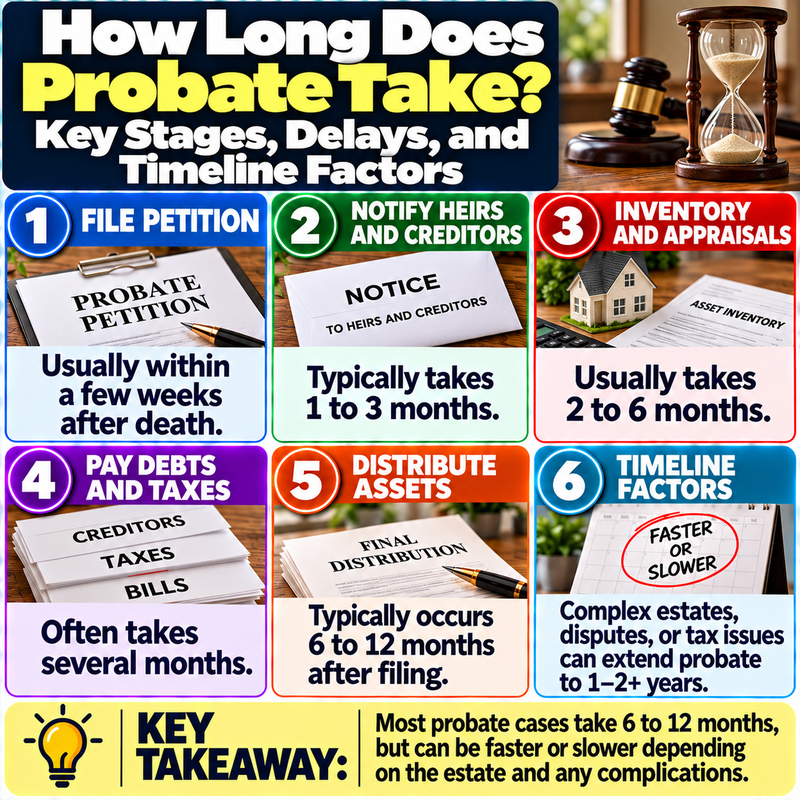
Why There Is No Universal Probate Timeline
Trying to pin probate to a single number is a bit like asking how long a road trip takes without naming the destination. The process involves a series of required legal steps, and each one has its own built-in timing. Some steps take weeks. Others are fixed by statute and cannot be rushed, no matter how cooperative the family is or how skilled the attorney happens to be.
Probate Rules Are Set by State Law, Not Federal Law
Probate procedure is established primarily by state law, which means two estates of similar size can move through the system at very different speeds depending on where the decedent lived. One state might require a four-month creditor claim period; another might require six. One state might offer a streamlined small-estate affidavit process; another might not. This is why generic timelines you find online rarely match what you experience locally.
Because of this variation, the smartest first move is figuring out what your specific state requires rather than assuming a timeline based on what happened in a friend’s or relative’s case somewhere else.
How Estate Size and Complexity Change the Clock
Smaller estates with few assets and no outstanding debts tend to move quickly through probate. Larger estates, on the other hand, can take anywhere from nine months to a few years, particularly when family dynamics get complicated or when the estate includes assets that require appraisal, like real estate, business interests, or collectibles. The more moving parts an estate has, the more time it typically takes to tie everything together before a judge will sign off on closing it.
Why Family Dynamics and Court Schedules Matter
Even a well-organized estate can stall if the probate court handling it has a packed docket. Courts in busy counties may only hear certain types of probate matters on specific days each month, which means a single missed filing deadline can push a hearing back weeks. Combine that with family disagreements, and what should have been a straightforward matter turns into a drawn-out one. Probate cases can vary widely in length, with some wrapping up in a matter of months while others extend beyond two years when disputes or scheduling backlogs pile up.

The Six Stages of Probate and How Long Each Takes
Rather than quoting a single average, it helps to break probate into its component stages. Each stage has its own typical range, and knowing where an estate stands tells you far more than a blended national figure.
| Stage | Typical Duration |
|---|---|
| Filing the petition and appointment | 1–4 months |
| Creditor notice period | 3–6 months |
| Paying debts, fees, and taxes | 6–12 months |
| Asset inventory and valuation | 6–12 months |
| Asset distribution | 9–18 months |
| Final closing of the estate | 9–24 months |
These ranges overlap because several stages run concurrently rather than one after another in strict sequence. An executor might be gathering asset valuations while the creditor notice period is still running, for example. That overlap is actually good news, since it means progress on one front doesn’t have to wait for another to finish first.
Filing the Petition and Appointing a Personal Representative
Probate begins with filing a petition, which requires a valid will (if one exists) and the decedent’s death certificate, typically provided by the funeral home. The executor or personal representative then sends official notice of probate to beneficiaries and other interested parties. Each state sets its own requirements for how and when this notice must go out, but it’s usually handled within the first two months. Some states also require publishing a notice of death in a local newspaper, which adds a procedural step but rarely adds much time.
When all beneficiaries are in agreement, they can often sign a waiver of process consent to probate, which tells the court there’s no dispute over the will’s validity. This single document can shave meaningful time off the front end of the case, since it removes the need for a contested hearing before the court will officially open the estate.
Locating, Securing, and Valuing Estate Assets
Once the estate is open, the personal representative must locate, secure, and inventory everything the decedent owned. This includes bank accounts, real estate, stocks and bonds, retirement accounts, life insurance policies, vehicles, and sometimes less obvious items like intellectual property or valuable collectibles. Jointly owned property and accounts with a named beneficiary, like many retirement accounts, typically transfer outside of probate entirely and don’t need to be included in this inventory process.
This stage is often where disorganized records cause the most friction. If the decedent kept careful documentation of accounts, deeds, and policies, the inventory can move along in weeks. Without that paperwork, it can stretch for months as the executor tracks down statements, contacts institutions, and confirms ownership details.
The Creditor-Notice Waiting Period
This is one of the stages that simply cannot be rushed, because it’s built into state law as a fixed waiting period designed to protect creditors’ rights to file claims. The executor must formally notify known creditors and, in many states, publish a general notice for unknown creditors as well.
In many states, creditors are given a window of three to four months after notice to file claims against the estate, and the estate generally cannot close until that period expires.
Even if every other part of the estate is wrapped up early, the personal representative usually has to sit tight until this window closes. It’s one of the clearest examples of why probate timelines are shaped by statute rather than by how fast any one person works.

Paying Debts, Fees, and Filing Tax Returns
Once the creditor claim period runs its course, the executor pays out approved debts and administration costs directly from estate funds. This includes professional fees, outstanding personal debts of the decedent, and any state or federal income taxes owed before the estate can legally close. Fee structures in many states actually increase the longer a will sits in probate, which gives the executor a direct financial incentive to move carefully but efficiently rather than letting paperwork pile up.
Tax matters can be the trickiest part of this stage. A final individual income tax return is often required, and larger estates may also need a separate estate tax return depending on the value involved. These filings have their own government deadlines, and the executor generally can’t distribute remaining assets or close the estate until tax obligations are resolved.
Selling or Liquidating Property When Necessary
Not every estate needs to sell property, but when real estate, a business, or other illiquid assets are involved, this step can add significant time. Selling a house requires listing it, finding a buyer, and closing the sale, all of which take weeks or months depending on the local market. If the estate owns property in more than one state, the executor may need to coordinate with probate proceedings or attorneys in each jurisdiction, which stretches the timeline further.
Executors sometimes have the option to distribute property in kind to beneficiaries rather than selling it, which can shortcut this stage considerably. Whether that’s possible depends on the will’s instructions, the number of beneficiaries, and whether everyone agrees on how to divide a single asset like a family home.
Distributing Assets and Closing the Estate
After debts, taxes, and any necessary sales are complete, the executor can distribute what remains to beneficiaries according to the will or state intestacy law. In many states, the law requires this distribution to happen only after a probate hearing confirms everything has been handled properly. Once distributions are made and the final accounting is approved, the probate judge issues a final order of discharge, officially closing the estate and releasing the personal representative from further duty.
What Commonly Delays Probate
Every estate has the potential to move through these stages smoothly, but certain circumstances reliably add months, sometimes years, to the process. Recognizing these red flags early helps families set realistic expectations rather than being blindsided later.
A Contested Will or Beneficiary Dispute
When someone challenges the validity of the will, or when beneficiaries disagree about how assets should be divided, probate essentially pauses while the court sorts out the dispute. These disagreements often require additional hearings, sometimes mediation, and occasionally full litigation, any of which can add many months to a case that would have otherwise wrapped up quickly.
Missing or Hard-to-Locate Heirs
Finding every named beneficiary sounds simple until someone has moved, changed their name, or lost touch with the family entirely. Executors sometimes have to hire investigators or run public notices to track down missing heirs, and courts generally won’t close an estate until all named parties have been properly notified or accounted for.
Assets That Are Difficult to Value
Bank accounts and publicly traded stocks are easy to value. Family businesses, closely held partnerships, unique collectibles, and intellectual property are not. These assets often require professional appraisals, and if the appraisal is disputed or the asset’s value shifts between the date of death and the date of distribution, that disagreement can hold up the entire estate.
Multiple Properties, Real Estate Sales, or Business Interests
Estates with multiple real estate holdings, particularly across different states, require additional time for proper appraisal and valuation of each property. Business interests complicate matters further, since the executor may need to keep a company running, value its goodwill, or coordinate a sale, all while managing the rest of the estate at the same time.
Creditor Claims and Disputes
Most creditor claims are routine, but occasionally a creditor disputes the amount owed or the executor disputes whether a claim is valid at all. These disagreements sometimes require a hearing to resolve, which adds another layer of scheduling and waiting on top of the standard creditor notice period already built into the process.
Unresolved Tax Returns or Audits
Tax issues are among the slowest-moving parts of probate because they’re subject to government timelines that nobody involved in the estate controls. An estate cannot close until:
- The decedent’s final personal income tax return has been filed
- Any required estate tax return has been submitted
- Outstanding tax liabilities have been paid from estate funds
- Any pending audit or inquiry from a tax authority has been resolved
If a return triggers an audit, the estate may need to remain open for months or longer while that review plays out, regardless of how organized the rest of the administration is.
Court Backlogs and Busy Dockets
Courts don’t operate on the estate’s schedule. Busy counties may only hear certain probate matters on designated days each month, and a single missed filing or incomplete form can bump a hearing to the next available date.
- High case volume in populous counties can push hearing dates out by weeks
- Judges may require additional documentation before approving routine requests
- Scheduling conflicts between attorneys, executors, and the court can cause repeated delays
- Holiday seasons and court closures can quietly add weeks to an otherwise simple case
None of this reflects on how well the executor is doing their job. It’s simply a reality of working within a public court system that handles many cases at once.
Taken together, these delay factors explain why two estates of similar size can finish at very different speeds. An uncontested estate with simple assets might close in under a year, while a contested one with real estate, missing heirs, or tax complications can easily stretch past two years.

Small-Estate and Simplified Probate Procedures
Not every estate has to go through the full, multi-stage process described above. Many states recognize that smaller estates don’t need the same level of court oversight as larger, more complex ones, and offer streamlined alternatives specifically designed to move faster.
Which Estates Qualify for a Faster Process
Qualification typically depends on the total value of the estate and sometimes on the types of assets involved. States often set a dollar threshold below which an estate can use a simplified small-estate affidavit instead of full probate.
Example: An estate valued under a state’s small-estate threshold, with no real property and no contested claims, may be able to transfer assets using a sworn affidavit rather than opening a formal probate case, cutting what might have been a year-long process down to a matter of weeks.
Not every asset counts toward that threshold either. Jointly owned property, accounts with payable-on-death designations, and assets already held in a trust are usually excluded from the small-estate calculation since they never enter probate in the first place.
How Simplified Filings Skip Standard Waiting Periods
Simplified procedures often bypass several of the standard stages outlined earlier, including some of the formal notice requirements and court hearings that larger estates must go through. This doesn’t mean creditors lose their rights entirely, but the process for addressing them is usually condensed. For families dealing with a modest estate, it’s worth asking an attorney early on whether a simplified filing is available, since it can be the single biggest time-saver in the entire process.
Can Beneficiaries Receive Partial Distributions During Probate?
Beneficiaries often ask whether they have to wait until the very end of probate to receive anything at all, and the answer is sometimes no. Courts in many states allow partial distributions under specific circumstances, particularly when an estate is well-funded and the executor is confident that remaining assets will comfortably cover any outstanding debts or taxes.
That said, partial distributions aren’t automatic, and they’re not available in every case. They depend on the executor’s judgment, the court’s approval, and the overall financial picture of the estate.
When Courts Allow Early or Partial Payouts
Partial distributions tend to happen when the estate has far more in liquid assets than it owes in debts and taxes, making an early payout low-risk. A court may approve a partial distribution to help beneficiaries cover immediate expenses, especially if the full probate process is expected to run long due to real estate sales or creditor timelines.
Why Executors Often Wait Until Debts Are Settled First
Executors who distribute funds too early and later discover the estate can’t cover its debts can be held personally liable for the shortfall. Because of that risk, many executors choose to wait until the creditor period closes and debts are fully accounted for before releasing any funds, even if a partial distribution would technically be allowed.
Does a Living Trust Make Administration Instantaneous?
A properly funded living trust removes trust-owned assets from probate court entirely, which is one of the biggest reasons people set them up in the first place. But removing assets from court oversight is not the same thing as making inheritance instant. A successor trustee still has real legal responsibilities to fulfill before anyone receives a dime, and skipping that process isn’t an option just because court approval isn’t required.
What a Successor Trustee Still Must Do Before Distributing Assets
The successor trustee named in a living trust steps into a role similar to an executor, just without the court supervision. That means identifying and securing trust assets, obtaining accurate valuations, paying outstanding debts and expenses, coordinating any required tax filings, and keeping clear records of every transaction along the way. Only after those obligations are handled does the trustee distribute remaining property to beneficiaries according to the trust’s terms.
Trust Administration vs. Probate: Where the Real Time Savings Come From
The time savings with a trust come from avoiding court filings, hearings, and the formal notice periods that probate requires, not from skipping the underlying work itself. A well-organized trustee with clean records can often finish administration faster than a comparable probate case simply because there’s no court calendar to wait on.
But if the trust owns real estate, a business, or complicated investments, the trustee still faces many of the same valuation and tax challenges an executor would. A revocable living trust set up properly during someone’s lifetime tends to produce the smoothest administration, since assets are already titled in the trust’s name and don’t need to be tracked down after the fact.

How Advance Planning Can Reduce Avoidable Delays
While some probate delays are completely out of anyone’s control, like statutory creditor periods or court scheduling, plenty of others are preventable with a bit of advance planning. Families who take a few proactive steps before they’re needed tend to move through administration noticeably faster.
Keeping a Will Current and Legally Sound
An outdated or poorly drafted will is one of the most common sources of unnecessary delay. If a will doesn’t meet a state’s legal requirements, or if it conflicts with more recent family changes like a divorce or new grandchild, it opens the door to challenges that can stall the entire process.
Reviewing a will regularly, especially after major life events, helps keep it legally sound and reduces the chance of disputes later.
- Update beneficiary names after marriages, divorces, or deaths
- Confirm the will meets your current state’s signing and witnessing requirements
- Review the document every few years, not just once and forget it
- Store the original in a location your executor can actually access
A will that’s clear, current, and properly executed gives the court far less reason to pause and question anything.
Setting Up a Revocable Living Trust to Bypass Probate
For families who want to avoid probate court involvement entirely for certain assets, setting up a revocable living trust during one’s lifetime is one of the most effective tools available. Assets properly retitled into the trust’s name bypass the probate process altogether, allowing a successor trustee to begin administration without waiting on court filings or hearing dates.
Choosing an Executor Who Can Navigate the Process
The person named as executor matters more than most people realize. Someone who understands how probate works, or who’s comfortable working closely with an attorney, tends to move an estate through administration far more efficiently than someone navigating it blind. It’s worth having an honest conversation with a potential executor before naming them, making sure they’re willing and able to take on the responsibility.
This doesn’t necessarily mean choosing the oldest child or the most senior family member out of habit. It means choosing whoever is organized, responsive, and willing to follow through on a long list of administrative tasks over many months.
Organizing Asset Documentation Before It’s Needed
One of the simplest ways to speed up probate is making sure account statements, property deeds, insurance policies, and ownership records are all gathered in one place well before they’re needed. Executors who have to track down this information from scratch after a death often lose weeks or months just locating paperwork that could have been assembled in advance.
A simple folder, whether physical or digital, containing account numbers, policy information, and contact details for financial institutions can save an executor an enormous amount of time during the asset inventory stage.
What Families Can Do to Keep Administration Organized
Whether you’re navigating probate or managing a trust, staying organized is the single biggest factor within your control. Courts can’t be rushed and statutory waiting periods can’t be shortened, but how smoothly the paperwork, communication, and documentation come together is entirely up to the people running the estate.
A little structure early on prevents the kind of scrambling that adds weeks or months to an otherwise manageable process. Here’s a practical checklist worth keeping handy from day one:
- Locate the original will and any trust documents before filing anything with the court
- Order multiple certified copies of the death certificate right away
- Create a master list of all assets, including account numbers and approximate values
- Identify and list all known debts, including medical bills, credit cards, and loans
- Notify beneficiaries promptly and in writing according to state requirements
- Open a separate estate or trust bank account to keep funds clearly separated
- Track every expense, payment, and distribution in a dedicated ledger
- Confirm tax filing deadlines for both the decedent’s final return and any estate return
- Keep copies of every court filing, receipt, and correspondence in one organized file
Running through this list early doesn’t guarantee a fast probate case, but it does eliminate the self-inflicted delays that come from disorganization, missing paperwork, or forgotten deadlines.
Building a Complete Asset and Debt Inventory Early
Executors and trustees who build a thorough asset and debt inventory in the first few weeks tend to move through every later stage faster. This means gathering bank statements, property deeds, insurance policies, and loan documents before the court or beneficiaries start asking questions. Waiting until the inventory deadline approaches to start this work almost always backfires, since financial institutions can take weeks to respond to requests for account information.
Working With a Probate Attorney to Avoid Procedural Errors
Even a well-meaning executor can accidentally miss a filing requirement or misunderstand a state-specific deadline, and those small errors have a way of snowballing into real delays. A probate attorney familiar with local court procedures can catch these issues before they become problems, streamline communication with the court, and make sure filings go in correctly the first time. This is especially valuable in counties with busy dockets, where a rejected filing might mean waiting another month just to get back on the calendar.
Communicating Openly With Beneficiaries to Prevent Disputes
Many of the lengthiest probate cases aren’t dragged out by the court system at all, they’re dragged out by family conflict. Keeping beneficiaries informed about what’s happening and why, even when there’s no new update to share, goes a long way toward preventing misunderstandings that turn into formal disputes. A brief update every few months, explaining what stage the estate is in and what’s left to do, costs very little time and can prevent a far more expensive and drawn-out conflict later.

The Bottom Line on Probate Timing
There’s no getting around it: probate moves at the pace set by state law, court calendars, and the complexity of what’s being administered. Longer timelines can certainly drive up the cost of probate, depending on the situation. Simple, uncontested estates with modest assets can wrap up in several months, especially in states offering small-estate procedures. Larger or contested estates, particularly those involving real estate sales, business interests, or hard-to-locate heirs, can easily stretch beyond a year or two.
What families can control is organization, communication, and advance planning. The checklist above, combined with a clear and current will or a properly funded trust, puts an estate in the best possible position to move through administration without unnecessary delay. A few key points worth remembering:
- Probate timelines are shaped by state law and specific case circumstances, not a universal average
- Creditor notice periods and court scheduling create unavoidable waiting time regardless of preparation
- Disputes, missing heirs, and hard-to-value assets are the most common sources of extended delays
- Simplified procedures exist in many states for smaller, uncomplicated estates
- A funded living trust removes assets from probate court but still requires real administrative work from a trustee
Families facing a specific timeline question are usually better served by a direct conversation with a local probate or estate planning attorney than by any general guide, since state-specific rules and individual circumstances ultimately decide how long the process will actually take.

Frequently Asked Questions About the Probate Timeline
A few questions come up again and again from families navigating this process for the first time. Here are straightforward answers to the ones that matter most.
What Is the Shortest Possible Time Probate Can Take?
The shortest timelines typically belong to small, uncomplicated estates using a state’s simplified or small-estate procedure, sometimes wrapping up in a matter of weeks to a couple of months. Full formal probate, even in a best-case scenario with no disputes, usually still takes several months due to required waiting periods for creditors.
Does Probate Take Longer Without a Will?
Generally, yes. When someone dies without a will, the court must apply state intestacy laws to determine who inherits, which can take additional time, especially if the court needs to identify and locate all legal heirs. Without a named executor, the court also has to appoint an administrator, which adds another procedural step at the very start of the process.
Can Probate Be Avoided Entirely?
Yes, for assets that are properly structured to avoid it. Jointly owned property, accounts with payable-on-death designations, and assets titled in a revocable living trust typically bypass probate court altogether. Assets owned solely in the decedent’s name without any of these arrangements will still need to go through probate.
How Long Do Creditors Have to File a Claim Against an Estate?
This varies by state, but a few common patterns show up across jurisdictions:
- Many states set creditor claim windows somewhere between three and six months after formal notice
- The estate generally cannot close until this window has fully expired
- Known creditors often must be notified directly, while unknown creditors are notified through published notice
Because this period is set by statute rather than by the executor’s pace, it’s one of the most predictable, and unavoidable, parts of the entire timeline.
Executors sometimes mistakenly believe they can pay beneficiaries and close the estate before this window closes, which creates real legal risk if a valid claim surfaces afterward.
What Happens if an Executor Misses a Deadline?
Missing a probate deadline, whether it’s a filing date, a tax deadline, or a required notice period, typically results in delay rather than an automatic penalty, though repeated or serious failures can expose the executor to personal liability or even removal by the court. Courts generally allow some flexibility for honest mistakes, but a pattern of missed deadlines signals to the judge that oversight may be needed, which can slow the case down even further.
Does Every Estate Have to Go Through Probate?
No. Estates consisting entirely of jointly owned property, beneficiary-designated accounts, or assets held in a properly funded trust may avoid probate entirely. Many states also exempt small estates below a certain value threshold from full probate, allowing a simplified affidavit process instead.
How Does Jointly Owned Property Affect the Timeline?
Property owned jointly with rights of survivorship typically transfers directly to the surviving owner outside of probate, regardless of what the will says. This can meaningfully shorten the overall timeline since one less asset needs to move through the formal inventory, valuation, and distribution stages.
It’s worth double-checking the actual title on jointly held assets, though, since not all forms of joint ownership carry automatic survivorship rights. An attorney can confirm exactly how a specific account or property is titled before assuming it will skip probate.
Can Probate Be Reopened After It Closes?
Yes, in certain circumstances. If a previously unknown asset surfaces, or if fraud or a significant error is discovered after the estate has closed, courts can reopen probate to address the issue.
This is relatively uncommon, but it does happen, particularly with estates that include complex holdings like investment accounts, business interests, or property in multiple states.
Example: A family discovers a forgotten brokerage account six months after an estate closes. In many states, the executor or an interested party can petition the court to reopen probate specifically to address that asset, without needing to redo the entire case from scratch.
How Do Multiple Properties in Different States Affect Probate?
Owning real estate in more than one state often triggers what’s known as ancillary probate, a secondary proceeding in each additional state where property is located. This means the executor may need to work with attorneys in multiple jurisdictions, each with their own filing requirements and timelines.
This situation tends to add noticeable time to the overall process, since each state’s proceeding runs somewhat independently and must be resolved before that particular property can be distributed or sold.
What Role Does the Executor Play in Speeding Up or Slowing Down Probate?
The executor’s organization, responsiveness, and familiarity with the process have a direct impact on how quickly an estate moves, even though statutory waiting periods remain fixed regardless of effort. An executor who promptly files paperwork, communicates clearly with beneficiaries, and works closely with an attorney tends to avoid the kind of self-inflicted delays that come from missed deadlines or incomplete filings.
On the other hand, an executor who procrastinates, fails to respond to court requests, or struggles to locate necessary documentation can turn what should have been a routine case into one that drags on far longer than the underlying assets and debts would otherwise require.