Category: Probate & Estate Planning

Learn about probate, wills, trusts and estate-planning strategies, including how different planning tools can affect the administration and transfer of assets after death.

  • Personalizing a Life Care Plan within a Living Trust

    Personalizing a Life Care Plan within a Living Trust

    Coordinating a Personalized Life Care Plan With a Living Trust

    Connect long-term care preferences, financial resources, support roles, and estate documents without confusing a care plan with the trust itself.

    Key Takeaways

    • A life care plan and living trust serve different purposes but can work together when coordinated carefully, not combined into one document.
    • A life care plan documents evolving healthcare, housing, daily support, and advocacy needs, while a living trust legally governs how specific assets are held and distributed.
    • Attaching a care plan to a trust does not automatically expand a trustee’s legal duties or guarantee funding for every recommendation.
    • Families supporting a person with a disability often need to distinguish an ordinary revocable living trust from a specialized special needs trust.
    • Keep reading to see how a practical budget framework, review checklist, and clearly assigned roles help these two planning tools support each other over time.

    Life-Care-Plan-And-Living-Trust

    Connect long-term care preferences, financial resources, support roles, and estate documents without confusing a care plan with the trust itself.

    A personalized life care plan and a living trust can absolutely work side by side, but they are not interchangeable, and treating them as one document creates confusion fast. A life care plan is an evolving record of someone’s healthcare, housing, daily support, and advocacy needs. A living trust is a legal arrangement that controls how specific property is owned, managed, and eventually distributed. When a family understands how a life care plan and living trust relate to each other, financial resources stay aligned with real-world needs instead of guesswork.

    Many families start building a living trust plan as part of their broader estate strategy, then later realize they also need a structured way to track ongoing care needs for an aging parent or a family member with a disability. Neither document replaces the other. Instead, each one answers a different question: the trust asks “who controls this property, and under what terms,” while the care plan asks “what does this person need to live well, and who is responsible for making that happen.”

    This distinction matters because families sometimes assume that writing down a detailed care plan and storing it with trust paperwork somehow makes it enforceable. It doesn’t. A trustee’s legal obligations come from the trust instrument itself and applicable fiduciary law, not from every wish list or projected expense included in a separate planning document.

    What Exactly Is a Life Care Plan?

    A life care plan is a coordinated snapshot of a person’s current and anticipated support needs. It typically pulls together input from family members, healthcare providers, care managers, and sometimes financial advisers to paint a full picture of what daily life looks like and what it might require going forward. Unlike a will or trust, there’s no single legal format a life care plan must follow.

    Depending on the person’s situation, a life care plan might address:

    • Medical care coordination, prescriptions, and ongoing therapies
    • Daily living assistance and personal care routines
    • Housing arrangements, including accessibility modifications
    • Education, employment, or vocational support
    • Transportation and mobility needs
    • Assistive technology and adaptive equipment
    • Social participation and community involvement
    • Family caregiving versus professional support arrangements
    • Advocacy, decision-making assistance, and legal representation
    • Emergency preparedness and contingency planning
    • Anticipated financial resources and funding gaps

    Daily Support, Healthcare, and Housing Needs

    For many families, daily support and healthcare top the list. This might mean documenting which family member handles morning routines, which agency provides in-home aides, and which physicians manage ongoing conditions. Housing needs often follow closely behind, especially when accessibility modifications, assisted living transitions, or future relocation plans are on the horizon.

    A thorough plan also tracks how these pieces interact. A housing change, for example, might affect transportation logistics or require new in-home support arrangements. Writing these connections down helps everyone involved anticipate ripple effects instead of reacting to them after the fact.

    Education, Transportation, and Advocacy Roles

    For younger individuals or those with developmental disabilities, education and vocational goals often play a central role. Transportation needs—whether that’s medical appointments, school, or community activities—tend to shift as circumstances change, so the plan should note current arrangements and who coordinates backup options.

    Advocacy matters just as much. Someone needs to be clearly identified as the point person for navigating healthcare decisions, benefits applications, or disputes with service providers. Without this clarity, family members can end up duplicating efforts or, worse, assuming someone else is handling something that nobody actually owns.

    Why a Life Care Plan Is Not a Legal Document

    It’s worth repeating: a life care plan is a planning tool, not a legally binding instrument. It can be prepared informally by a family or more formally by a professional care manager, rehabilitation specialist, or financial adviser, depending on the complexity of the situation. Either way, it doesn’t carry the same legal weight as a trust, will, healthcare directive, or power of attorney.

    That said, a well-documented care plan gives those legal documents context. A trustee reading a detailed care plan understands the family’s priorities and anticipated needs, even though the trustee’s actual authority and obligations come strictly from the trust document itself.

    How a Living Trust Differs From a Care Plan

    A living trust is a legal arrangement for holding, managing, and eventually distributing designated assets according to terms the grantor establishes while competent. During the grantor’s lifetime, a revocable living trust generally allows the grantor to manage trust property directly and name successor trustees to step in later, subject to the trust’s specific terms and applicable state law. This structure is commonly used for general estate organization, probate avoidance on funded assets, and smoother transitions of control if the grantor becomes incapacitated.

    What a Living Trust Can Legally Enforce

    Only provisions actually written into the trust instrument are enforceable. If a family wants certain care-related objectives to carry legal weight, an estate planning attorney can help translate select goals from the life care plan into specific trust language, such as distribution standards or guidance for successor trustees. Simply attaching a separate care plan document to the trust paperwork does not accomplish this.

    What a Living Trust Cannot Do for Daily Care Decisions

    A living trust, by itself, doesn’t make healthcare decisions, coordinate caregivers, or manage day-to-day logistics. Those functions typically fall to a healthcare agent under a medical power of attorney, a financial agent under a separate power of attorney, or family members and professionals acting under the care plan’s informal structure. The trust manages property; it doesn’t manage a person’s daily life.

    Federal Rules, State Variations, and When You Need a Specialist

    Public benefit programs add another layer of complexity, and the rules aren’t uniform across the country. Some programs are federal with state-level administration, while others vary more substantially depending on where the beneficiary lives. Families coordinating a life care plan with a living trust need to understand which programs are involved before assuming any funding source is automatically available.

    SSI, Medicaid, and Other Means-Tested Programs

    Supplemental Security Income (SSI) is a means-tested federal program with strict income and resource limits. Medicaid eligibility rules can differ by state and by eligibility category, which means a strategy that works in one state may not translate directly to another. Distributions from a trust, direct cash payments, and housing-related support can all be treated differently under these programs, so assumptions made without professional verification can create real problems.

    How SSDI and Medicare Differ From Means-Tested Benefits

    Social Security Disability Insurance (SSDI) operates differently from SSI—it’s an insurance-based program tied to work history and doesn’t use the same resource test. Medicare similarly isn’t means-tested in the way Medicaid is. Lumping all these programs together as “disability benefits” leads to planning mistakes, since what affects eligibility for one program may have no bearing on another.

    Why State Law Changes the Right Trust Structure

    Because trust law and benefits administration both vary by state, a structure that protects benefits eligibility in one jurisdiction might not work the same way elsewhere. This is exactly the kind of detail that calls for a conversation with a qualified estate planning or special needs planning attorney rather than a generic online template, especially when a family member currently receives or may need means-tested assistance.

    Building the Daily Support and Healthcare Framework

    Once a family understands how a life care plan and living trust relate to each other, the next step is actually building out the framework. This means getting specific about who provides daily support right now, who would step in if that person became unavailable, and which healthcare providers are involved in ongoing treatment. Vague intentions don’t help anyone during a crisis—specific names, contact information, and backup plans do.

    Start by listing every person currently providing care, whether that’s a family member handling meals and transportation or a professional home health aide managing medication schedules. Then note what happens if that person can’t continue, even temporarily. A solid framework doesn’t just describe today’s arrangement; it anticipates tomorrow’s gaps.

    Identifying Current and Future Caregiver Roles

    Caregiver roles often shift gradually, and families don’t always notice until something forces the issue—an illness, a move, or simple burnout. Documenting who does what now, and who’s next in line if circumstances change, prevents scrambling later. This is also where it helps to separate caregiving duties from financial or legal authority, since a caregiver and a trustee don’t have to be the same person.

    Matching Medical Needs to Long-Term Providers

    Medical needs evolve too, sometimes faster than families expect. A care plan should track current diagnoses, treatment plans, and the providers managing each one, along with notes on how care might escalate. Long-term care services exist specifically to meet the medical and personal needs of people who can’t fully manage daily activities on their own, whether that’s due to aging, illness, or disability, and recognizing when a loved one has crossed into needing this level of support is often the first step toward adjusting the broader plan.

    Planning for Housing, Transportation, and Education

    Housing, transportation, and education needs don’t exist in isolation—they interact constantly. A housing change might eliminate the need for certain transportation arrangements while creating new ones. An education or vocational goal might depend entirely on reliable transportation being in place first. Mapping these connections out ahead of time keeps families from being blindsided when one piece shifts.

    Choosing Between In-Home Care and Residential Options

    Families weighing in-home care against assisted living or other residential options need to consider more than comfort and preference. Cost, availability of local services, and the complexity of medical needs all factor in. In-home care often works well for moderate support needs, while residential care may become more practical as needs intensify or caregiver availability shrinks.

    Coordinating Transportation for Appointments and Daily Life

    Transportation logistics deserve their own line item in any care plan. Medical appointments, therapy sessions, social activities, and errands all require reliable transportation, and relying on a single driver or service creates risk. Building in backup options—whether that’s a secondary family member, a local paratransit service, or a rideshare arrangement—keeps daily life functioning even when the primary plan falls through.

    Addressing Ongoing Education or Skill-Building Needs

    For younger individuals or those pursuing vocational goals, education and skill-building needs should be tracked just as carefully as medical ones. This might include school accommodations, job training programs, or community-based skill development. These goals often tie directly into long-term independence, so they deserve regular attention rather than being treated as a one-time item to check off.

    Advocacy and Future Funding Considerations

    Every care plan needs someone responsible for advocacy—someone who steps in when a provider denies a service, when a benefits application gets stuck, or when a decision needs to be made quickly. Without a clearly named advocate, these responsibilities tend to fall through the cracks or get picked up reluctantly by whoever happens to be available.

    Future funding considerations tie closely to advocacy, since someone needs to track where money is coming from and whether it’s keeping pace with actual needs. This is where the life care plan and the living trust genuinely intersect: the trust may hold or manage certain resources, but someone still has to monitor whether those resources are being used appropriately and whether they’ll last.

    Assigning Decision-Makers and Advocates

    Decision-making authority should be assigned deliberately, not by default. A healthcare agent named in a medical power of attorney handles healthcare decisions within the scope that document allows. A financial agent under a separate power of attorney manages finances within granted authority. A trustee manages trust property according to the trust’s terms. These roles can overlap among the same people, but they shouldn’t be assumed to overlap automatically.

    Families sometimes default to naming one person for everything, assuming it simplifies things. In practice, splitting these roles—especially when conflicts of interest are possible—often protects both the person receiving care and the people serving in these roles.

    Linking Funding Sources to Long-Term Goals

    Funding sources might include personal savings, insurance benefits, retirement income, family contributions, public benefits, or assets held in a trust. Each source comes with its own rules about ownership, availability, and restrictions. A life care plan should note which source covers which type of expense, since mixing them up—or assuming one source covers everything—creates problems down the line.

    Sample Life Care Plan Budget Categories

    Building a workable budget starts with categorizing expenses, not guessing at dollar amounts. The table below offers an illustrative framework families can adapt, not a set of predicted costs. Actual figures should come from real providers, insurers, public agencies, and qualified professionals familiar with the individual’s specific situation and location.

    Care CategoryPotential ExpensesPossible Funding SourceReview Considerations
    Healthcare and medicationsOffice visits, prescriptions, specialist careInsurance, Medicaid, Medicare, personal fundsCheck coverage changes annually
    Personal care and daily assistanceIn-home aide hours, respite careFamily contributions, long-term care insurance, trust assetsMonitor caregiver availability
    Housing and accessibilityModifications, rent, facility feesPersonal savings, trust assets, public programsReassess as mobility needs change
    TransportationVehicle modifications, ride servicesPersonal funds, community programsConfirm backup options remain active
    Therapy and rehabilitationPhysical, occupational, speech therapyInsurance, Medicaid, private payVerify provider network changes
    Education or vocational supportTuition, training programs, job coachingGrants, personal funds, state programsAlign with evolving goals
    Assistive technologyMobility aids, communication devicesInsurance, Medicaid, personal fundsCheck for coverage overlaps
    Recreation and community participationSocial programs, membershipsFamily contributions, personal fundsRevisit as interests shift
    Care coordination and advocacyCare manager fees, legal consultationsPersonal funds, trust assets if authorizedConfirm trustee authority before assuming coverage
    Emergency and contingency reservesUnplanned medical or housing costsSavings, trust reservesRebuild reserve after use

    This table is a planning starting point, not a comprehensive or guaranteed budget. Some categories may be partially covered by insurance or public programs, while others require private resources entirely. It’s worth double-checking that no single expense gets counted twice across two different funding sources, since that mistake can make a budget look healthier than it actually is. For more insights on estate planning, you might want to explore how assets will be distributed after you pass.

    Hypothetical Example: The Alvarez family has set up a revocable living trust as part of their estate plan and is now developing a long-term care plan for their adult son, who requires ongoing assistance with daily activities and medical coordination.

    Stage A: The family writes down his anticipated needs—healthcare coordination, transportation, housing support, and assistive technology—but never shares this document with their estate planning attorney or reviews it against their existing trust. Months later, a successor trustee has no idea these needs exist.

    Stage B: The family creates a structured care plan, reviews available financial resources, and clarifies which trustee responsibilities and successor arrangements apply. They realize their trust doesn’t specifically address ongoing care funding, so they flag it for review.

    Stage C: The family consults a special needs planning attorney and a benefits specialist, who determine that their son’s eligibility for means-tested benefits means a separate special needs trust—not their ordinary revocable living trust—is the appropriate vehicle for certain assets.

    Each stage builds clarity. The family’s ordinary revocable living trust never automatically becomes a special needs trust just because a care plan exists alongside it—that determination requires specific legal structuring based on their son’s actual circumstances.

    Annual Review Checklist for Your Life Care Plan and Living Trust

    An annual review isn’t a legal requirement, but it’s one of the most useful habits a family can build. Life circumstances shift gradually, and an outdated plan can cause real friction right when clarity matters most. The checklist below covers the core areas worth revisiting every year, plus any time something major changes.

    1. Review current medical conditions and care requirements
    2. Update medications, therapies, and healthcare providers
    3. Reassess daily living assistance and caregiver availability
    4. Review housing suitability and accessibility needs
    5. Reevaluate transportation and mobility arrangements
    6. Update education, employment, or community participation goals
    7. Review actual expenses and anticipated future funding needs
    8. Confirm insurance coverage and applicable public benefits
    9. Evaluate changes in SSI, Medicaid, or other relevant program rules
    10. Review trustee, successor trustee, caregiver, and agent appointments
    11. Check beneficiary designations and related estate documents
    12. Determine whether formal trust amendments or specialized legal review are necessary
    13. Update emergency contacts and contingency plans
    14. Document decisions, responsibilities, and the next review date

    Changes in Care Needs or Diagnoses

    A new diagnosis or a significant change in condition almost always ripples outward into housing, caregiving, and funding decisions. Catching this early during a scheduled review—rather than mid-crisis—gives families more options and less stress.

    About 19% of Americans will need long-term care lasting more than three years, according to long-term care cost statistics and planning research, which underscores why building flexibility into both the care plan and the funding strategy matters more than assuming today’s arrangement will hold steady for years.

    Updates to Public Benefits Eligibility

    Public benefit rules change, sometimes through legislation and sometimes through routine administrative updates. A review should confirm whether a beneficiary’s eligibility status has shifted and whether any trust distributions made over the past year had unintended effects on means-tested programs.

    Provider and Caregiver Changes

    Caregivers move, retire, or simply become unavailable. Providers change networks or stop accepting certain insurance plans. An annual check-in on who’s actually providing care—versus who was listed in last year’s plan—keeps the document accurate and useful.

    If caregiver turnover has been frequent, it’s worth asking whether the current support structure is sustainable or whether a professional care manager might provide more stability going forward.

    Shifts in Family Circumstances

    Marriages, divorces, relocations, and deaths all affect who’s available to help and how resources are distributed. These shifts sometimes require more than updating the care plan—they may call for amending the trust itself. Updating a life care plan is a separate process from legally changing a trust; if a family’s circumstances suggest that trust provisions no longer fit the situation, it’s worth reviewing how to amend a living trust with a qualified attorney rather than assuming the care plan update alone covers it.

    Formal amendments must follow the procedures outlined in the trust instrument itself and comply with applicable state law. Skipping this step—even when everyone agrees informally on a change—can leave outdated instructions legally in force.

    When a Standard Living Trust Fits—and When It Doesn’t

    A standard revocable living trust works well for organizing assets, naming successor trustees, and potentially reducing probate exposure for properly funded property. It’s a solid tool for general estate planning. But it was never designed to address the specialized rules that govern means-tested public benefits, and assuming it can do that job is one of the most common—and costly—mistakes families make.

    Families exploring whether to build their own living trust often start by reviewing how to create a living trust to understand the basic structure before deciding whether additional specialized planning is needed on top of it.

    Using a Revocable Living Trust for General Estate Organization

    A revocable living trust lets the grantor retain control over assets during life, make changes as circumstances evolve, and name successor trustees to step in without court involvement. This flexibility is exactly why it’s a popular foundation for estate planning. But flexibility for the grantor doesn’t translate into specialized protections for a beneficiary receiving means-tested assistance.

    Warning Signs You May Need a Special Needs Trust Instead

    If a family member currently receives or may need SSI, Medicaid, or similar means-tested benefits, that’s the clearest sign a standard trust may not be enough. Other warning signs include a beneficiary who can’t manage funds independently, a family wanting to leave an inheritance without disqualifying someone from benefits, or a situation where direct cash distributions could jeopardize eligibility. In these cases, the question isn’t whether to use a trust—it’s which type of trust actually fits.

    First-Party, Third-Party, and Pooled Trust Differences

    These three structures aren’t interchangeable, and each carries different consequences:

    • First-party special needs trusts are funded with assets that legally belong to the beneficiary, such as a personal injury settlement, and typically include Medicaid payback provisions.
    • Third-party special needs trusts are funded with assets belonging to parents, grandparents, or others, and generally don’t require Medicaid payback since the funds never belonged to the beneficiary.
    • Pooled trusts are administered through qualifying nonprofit organizations that manage funds for multiple beneficiaries, often providing a practical option for families without the resources to establish an individual trust.

    Choosing between these options—or determining that a standard revocable trust is sufficient after all—depends entirely on the beneficiary’s specific benefits status, asset ownership, and long-term goals. This is squarely the territory where a special needs planning attorney or benefits specialist earns their fee, since getting it wrong can mean losing benefits a family spent years qualifying for.

    Common Mistakes and Questions to Ask a Professional

    Families coordinating a life care plan with a living trust tend to run into the same handful of mistakes. Watch for these:

    • Treating a life care plan as if it were an enforceable trust document
    • Assuming a trustee must pay every projected expense listed in the care plan
    • Confusing an ordinary revocable living trust with a specialized special needs trust
    • Failing to identify which funding resources are actually available and legally accessible
    • Relying on outdated cost assumptions instead of current, individualized estimates
    • Overlooking caregiver transitions or changing healthcare needs
    • Neglecting to name successor trustees or emergency contacts
    • Ignoring how trust distributions might affect public benefit eligibility
    • Forgetting to update beneficiary designations alongside the trust
    • Assuming an updated care plan automatically amends the trust itself

    When meeting with professionals, it helps to come prepared with specific questions: Does this trust structure affect my family member’s benefits eligibility? Who has legal authority to make healthcare versus financial decisions? What happens if the current trustee becomes unavailable? Should any part of this plan be formalized into the trust itself? These questions push the conversation toward actionable answers rather than general reassurance.

    Your Plan Deserves Ongoing Attention, Not a One-Time Signature

    A personalized life care plan and a living trust each serve distinct but complementary roles—one organizes evolving care needs, the other legally governs designated assets—and keeping them aligned takes periodic review, clear roles, and professional input where public benefits or specialized trusts are involved. For individualized guidance on how your estate plan might need to adapt, consider scheduling a Free Consultation with Create A Living Trust, which connects families with resources to help organize their estate planning foundation.

    Where eState Fits Into This Planning Process

    Families often ask where a service like the eState Living Trust fits once they’ve built out a life care plan. The honest answer is that it handles the estate-planning side—trust funding, document preparation, and successor arrangements—while the life care plan handles the day-to-day support picture. Create A Living Trust connects visitors with Bulletproof Legacy Financial for this kind of standard trust package, and understanding exactly what that package covers (and what it doesn’t) keeps expectations realistic.

    How a Living Trust Plan Supports Broader Estate Goals

    A standard revocable living trust plan typically focuses on organizing and transferring ownership of assets so they’re managed consistently during life and distributed smoothly afterward. The eState Living Trust, as described in its current plan materials, is built around that core function, with several supporting pieces layered in to make the process more complete.

    Depending on current plan terms and jurisdiction, this kind of package commonly includes:

    • Assistance funding the trust with eligible assets
    • Deed-related support for real property transfers
    • A secure digital vault for storing estate documents
    • Healthcare and financial powers of attorney
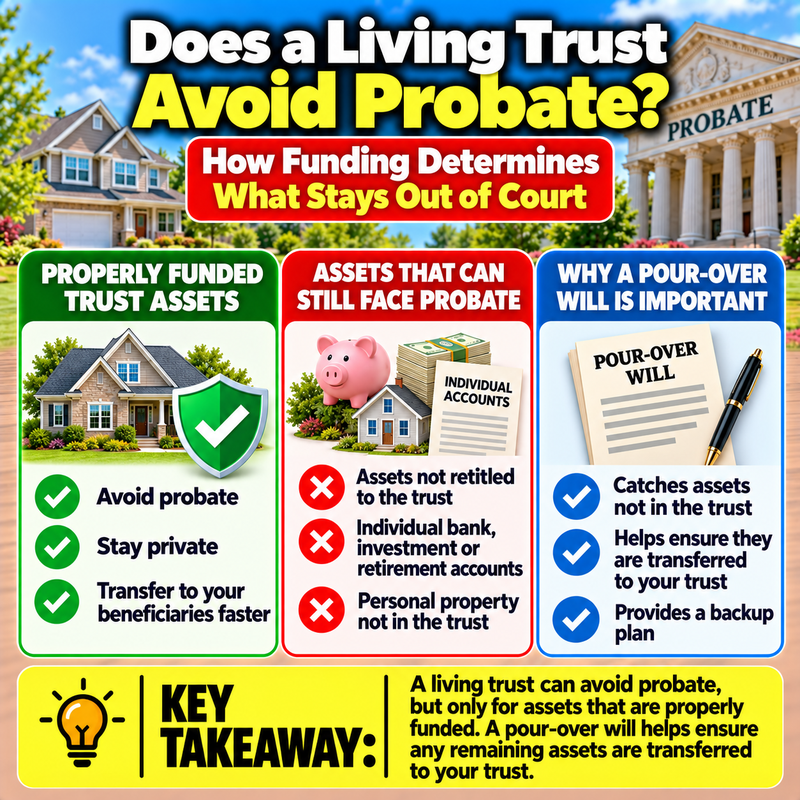
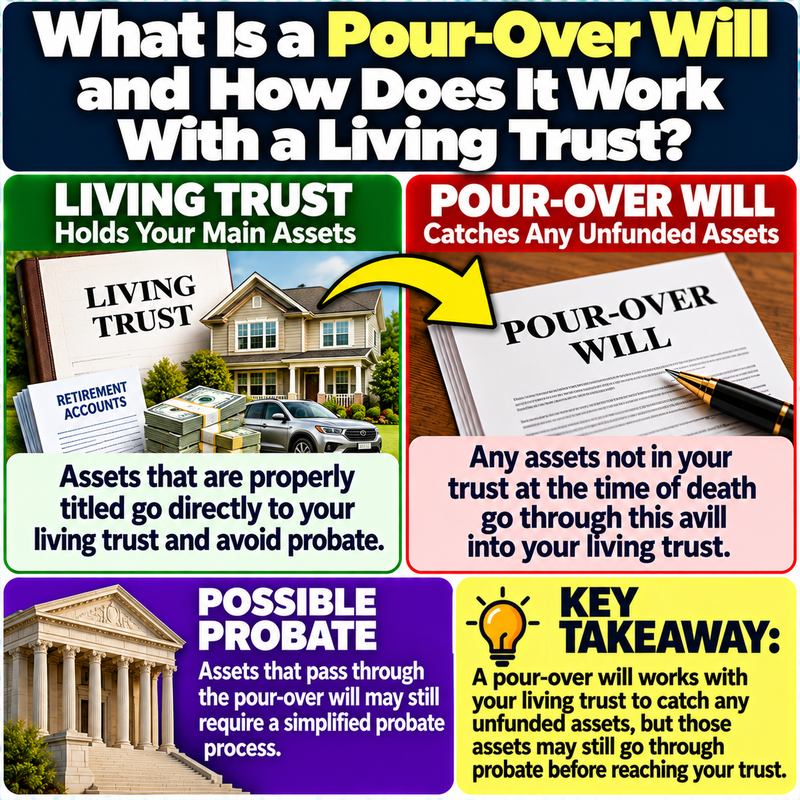
    • A pour-over will to catch assets left outside the trust
    • Guidance on naming and updating beneficiaries
    • Support identifying and documenting successor trustees
    • Access to legal, tax, and financial professionals for questions

    These features address the legal and administrative backbone of an estate plan. They don’t, however, replace the kind of ongoing coordination a life care plan requires—someone still has to track caregivers, medical appointments, and day-to-day funding decisions separately.

    Why a Standard Trust Package Is Not an Automatic SNT

    It bears repeating here: a standard living trust package, including the eState Living Trust, is not the same thing as a specialized special needs trust. The plan materials don’t claim to include first-party, third-party, or pooled SNT drafting, professional care management, ABLE account administration, or Medicaid benefits counseling. Families needing those specific services should expect to work with a special needs planning attorney or benefits specialist in addition to—not instead of—their general estate planning arrangement.

    Placing a life care plan next to an ordinary trust, even a well-funded one, doesn’t change this. The trust’s legal structure determines what it can and can’t do, and no amount of supplementary documentation turns a standard revocable trust into a qualifying SNT. That distinction has to be built into the trust itself, typically by an attorney familiar with both estate planning and public benefits rules.

    Steps to Take Before Meeting With an Attorney

    Walking into an attorney’s office with scattered notes and half-formed questions tends to slow things down and run up billable hours. A little preparation beforehand makes the consultation far more productive, whether you’re reviewing a standard living trust or exploring whether a special needs trust fits your family’s situation.

    Documenting Your Planning Goals

    Start by writing down, in plain language, what you’re actually trying to accomplish. Are you trying to protect a family member’s public benefits eligibility? Make sure a specific caregiver has clear authority to act? Set aside funds for future housing changes? Vague goals lead to vague advice, while specific goals give an attorney something concrete to work with.

    It also helps to separate “must-have” goals from “nice-to-have” preferences. Attorneys can usually solve for clearly prioritized objectives much faster than for an open-ended wish list.

    Example of a documented goals list a family might bring to a consultation:

    • Ensure our daughter’s SSI eligibility is protected if she receives an inheritance
    • Name a successor trustee who isn’t also her primary caregiver
    • Confirm our current revocable trust doesn’t need to be restructured
    • Identify whether a third-party special needs trust makes sense for our situation

    Bringing a list like this—even a rough one—signals to the attorney exactly where to focus the conversation. It also helps you catch, on your own, which questions you genuinely need professional input on versus which ones you can likely answer yourselves with a bit of research.

    Don’t worry about getting the legal terminology exactly right before the meeting. Attorneys expect to translate everyday language into the correct legal framework; your job is just to be clear about the underlying goal.

    Listing Asset Ownership and Current Benefits

    Before any meeting, gather a clear list of who actually owns which assets—this matters enormously in special needs planning, where the distinction between assets belonging to the beneficiary versus assets belonging to a parent or grandparent changes which trust structure applies. Include retirement accounts, real estate, life insurance policies, and any accounts already designated for a family member’s benefit.

    Alongside asset ownership, list any public benefits currently received, including program names and approximate eligibility category if known. This single piece of homework often saves the most time during a consultation, since benefits eligibility frequently drives which trust structure actually works.

    Identifying Trustee and Caregiver Roles

    Finally, write down who currently serves—or who you’re considering—for each role: trustee, successor trustee, caregiver, healthcare agent, and financial agent. Note any overlaps and any concerns about those overlaps, such as a sibling who’s both the primary caregiver and a potential trustee. Flagging this ahead of time lets the attorney address potential conflicts directly rather than discovering them later.

    Your Plan Deserves Ongoing Attention, Not a One-Time Signature

    A life care plan and a living trust both work best when they’re treated as living documents rather than paperwork to file away and forget. Needs change, benefits rules shift, and family circumstances evolve, which means the real value comes from revisiting both documents regularly and adjusting the legal pieces whenever the care picture genuinely changes. If you’re ready to build or review the estate planning foundation that supports this kind of ongoing coordination, a Free Estate Planning Webinar is a practical place to start.

    Frequently Asked Questions

    These questions come up frequently as families work through how a personalized life care plan and a living trust fit together, and the answers below address the most common points of confusion.

    Can I write my own life care plan without an attorney?

    Yes. A life care plan is an informal planning document, not a legal instrument, so there’s no requirement that an attorney draft it. Many families start with their own notes about daily needs, caregivers, and goals.

    That said, if the plan is being used in a clinical, rehabilitation, or litigation context, it may benefit from professional involvement, such as a certified care manager or rehabilitation specialist, to ensure it’s thorough and consistent.

    Either way, remember that the care plan itself won’t carry legal authority—pairing it with proper legal documents is still necessary to give specific instructions enforceable weight.

    Does naming a trustee automatically make them my care manager?

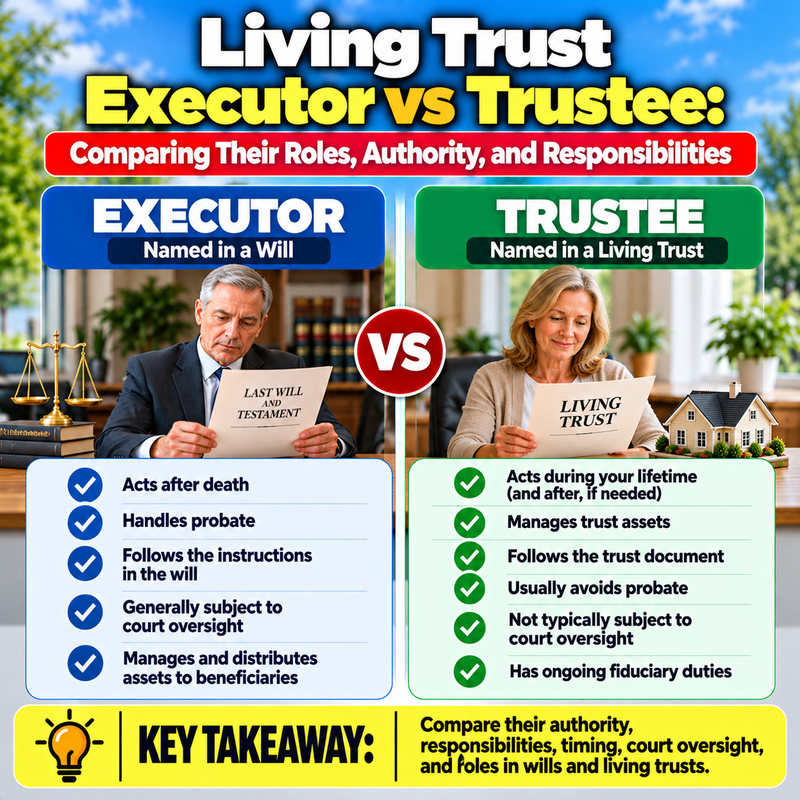
    No. A trustee’s job is managing trust property according to the trust’s terms and fiduciary duty. Day-to-day caregiving, medical coordination, and personal support are separate responsibilities that may fall to a different family member or a professional care manager entirely.

    What happens to my life care plan if my trust becomes irrevocable?

    A trust becoming irrevocable—whether because the grantor passed away or due to specific trust terms—doesn’t change the life care plan itself, since the two documents operate independently. However, it may limit how flexibly the successor trustee can respond to new needs described in the care plan, depending on the trust’s exact language.

    This is a good moment to review whether the trust’s distribution standards still align with the current care plan, since irrevocability often removes the option to simply amend the trust later.

    Can a living trust pay for daily caregiving expenses directly?

    It can, but only if the trust document actually authorizes the trustee to make those kinds of distributions. A trustee isn’t obligated to pay for every expense listed in a life care plan just because it’s documented somewhere.

    If direct payment for caregiving is a priority, it’s worth discussing specific distribution language with an estate planning attorney so the trustee has clear authority to act without guessing at their obligations.

    How is an ABLE account different from a special needs trust?

    An ABLE account is a tax-advantaged savings account available to eligible individuals with disabilities, generally allowing funds to be used for qualified disability expenses without jeopardizing certain means-tested benefits, subject to contribution limits and eligibility rules. A special needs trust, by contrast, has no equivalent contribution cap and is managed by a trustee rather than the beneficiary directly, making the two tools suited to different purposes and often used together.

    Will an inheritance left through my trust affect my family member’s Medicaid?

    Potentially, yes. If a beneficiary receiving Medicaid or SSI inherits assets directly, even through a standard revocable living trust, it can affect their eligibility depending on the program’s resource limits. This is exactly the scenario a third-party special needs trust is often designed to prevent, so it’s worth reviewing with a benefits specialist before finalizing inheritance plans.

    Who should I name as a backup advocate in my life care plan?

    Choose someone who understands the individual’s needs, has the time and willingness to act, and ideally doesn’t have a conflicting role like also serving as trustee over significant assets. Some families name a trusted friend or professional care manager as a backup advocate specifically to avoid overloading one family member with every responsibility.

    How often should I update my life care plan versus my trust?

    A life care plan generally benefits from more frequent updates—at least annually, or whenever care needs shift—since it tracks day-to-day realities. A trust needs updating less often, typically when major life events occur or when the care plan reveals a gap that requires new legal language.

    Can a pooled trust replace the need for a personal life care plan?

    No. A pooled trust manages financial resources through a nonprofit administrator, but it doesn’t replace the broader planning work of tracking healthcare, housing, transportation, and daily support needs. Families using a pooled trust still benefit from maintaining a separate life care plan to coordinate those day-to-day details.

    What’s the difference between a guardianship and a life care plan?

    A guardianship is a court-authorized legal arrangement giving someone authority to make decisions for a person who can’t make them independently. A life care plan, by contrast, is an informal planning document with no court involvement, describing needs and preferences rather than granting legal authority.

    These two can coexist. A guardian might rely heavily on a life care plan to understand the person’s needs and preferences, but the guardianship itself comes from a separate legal process, typically involving a judge’s determination of incapacity.

    Some families pursue supported decision-making arrangements instead of guardianship, which preserve more autonomy for the individual while still providing structured assistance—another reason it’s worth discussing the full range of options with an attorney familiar with your state’s laws.

    What is a personalized life care plan?

    A personalized life care plan is an evolving document that tracks a person’s healthcare, daily support, housing, transportation, education, advocacy, and anticipated financial needs. It’s typically built collaboratively by family members, care managers, or healthcare professionals and updated as circumstances change.

    How can a life care plan work alongside a living trust?

    A life care plan provides context and priorities, while a living trust legally manages designated assets. They complement each other when a family uses the care plan’s information to inform trustee decisions and, where appropriate, incorporates specific goals into enforceable trust language through an attorney.

    Is a life care plan legally binding on a trustee?

    No. A trustee’s obligations come from the trust instrument and applicable fiduciary law, not from a separate care plan. Attaching or referencing a care plan alongside trust documents doesn’t make its recommendations legally enforceable on their own.

    Can an ordinary revocable living trust replace a special needs trust?

    No. A standard revocable living trust doesn’t automatically preserve SSI or Medicaid eligibility for a beneficiary with a disability. Families in this situation typically need a properly drafted first-party, third-party, or pooled special needs trust instead.

    What expenses should a life care budget consider?

    A life care budget should cover healthcare, personal care assistance, housing, transportation, therapy, education or vocational support, assistive technology, recreation, care coordination, and emergency reserves. Individualized estimates should come from actual providers and professionals rather than general assumptions.

    Who should help prepare and update a life care plan?

    Family members, professional care managers, healthcare providers, and financial advisers often collaborate on a life care plan. There’s no universally required credential, but complex situations may benefit from professional involvement to ensure nothing important gets overlooked.

    Can trust distributions affect SSI or Medicaid eligibility?

    Yes, depending on how distributions are made and which program applies. Direct cash payments can affect SSI eligibility differently than payments made for specific services, and Medicaid rules can vary by state. Professional guidance is essential before assuming any distribution is benefits-safe.

    What happens when a beneficiary’s care needs change?

    Changing needs should prompt a review of the life care plan first, followed by an assessment of whether existing estate documents still fit. Significant changes may require formally updating powers of attorney, healthcare directives, or trust provisions through proper legal channels.

    Does updating a life care plan require amending a living trust?

    Not automatically. A care plan update and a trust amendment are two separate processes. If the care plan reveals a need that the trust doesn’t currently address, a family should consult an attorney about whether a formal amendment is warranted.

    How often should a family review its life care plan and estate documents?

    An annual review is a practical habit for most families, with additional reviews after major health, financial, family, or legal changes. This isn’t a universal legal requirement, but it helps catch gaps before they become urgent problems.


  • Step-by-Step Guide to Setting Up a First-Party Special Needs Trust

    Step-by-Step Guide to Setting Up a First-Party Special Needs Trust

    Key Steps for Establishing a First-Party Special Needs Trust

    Walk through eligibility, allowable funding, trustee selection, benefit coordination, and legal review, including applicable payback requirements.

    A first-party special needs trust lets someone with a disability hold their own money—like a settlement or inheritance—without losing SSI or Medicaid, but only if it’s built and funded exactly right.

    Key Takeaways: Article-at-a-Glance

    • A first-party special needs trust is funded with assets that legally belong to the beneficiary, and it must follow specific federal and state rules to protect means-tested benefits.
    • Setting one up generally involves identifying the right assets, choosing between an individual trust and a pooled trust, hiring a qualified attorney, and completing proper funding.
    • Medicaid payback provisions are a required feature of most first-party trusts, which distinguishes them sharply from third-party special needs trusts created by parents or grandparents.
    • Trustee selection can make or break the trust’s effectiveness, since the person managing the money needs to understand both fiduciary duty and public-benefit rules.
    • Later in this guide, you’ll find a full chronological checklist, a hypothetical example comparing three planning paths, and answers to the ten questions families ask most often.
    First-Party-Special-Needs-Trust

    Key Steps for Establishing a First-Party Special Needs Trust

    Walk through eligibility, allowable funding, trustee selection, benefit coordination, and legal review, including applicable payback requirements

    A first-party special needs trust is a specialized legal arrangement funded with assets that already belong to a person with a disability—think settlement proceeds, an inheritance received outright, or savings that would otherwise disqualify someone from need-based programs. The trust holds those assets under court-recognized rules so the beneficiary can still qualify for SSI and Medicaid while having funds available for extras those programs don’t cover.

    Getting one established generally means working through several stages: identifying exactly which assets belong to the beneficiary, confirming which statutory pathway applies to their situation, consulting an attorney who focuses on special needs planning, drafting trust language that meets federal and state requirements, choosing a trustee who can handle the job, completing whatever legal formalities apply (including court approval in some cases), funding the trust correctly, and then keeping public-benefit agencies informed as the trust operates.

    None of this is one-size-fits-all. The right path depends on the beneficiary’s age, the source of the funds, whether a court is already involved in a related case, and which benefits programs are in play. A trust that works perfectly for one family’s personal injury settlement might be the wrong tool entirely for another family managing an inheritance.

    What a First-Party Special Needs Trust Actually Is

    At its core, this type of trust exists because owning too much money outright can disqualify a disabled person from Medicaid or SSI. Both programs use strict resource limits, and a lump sum sitting in a personal checking account can push someone over the line almost overnight. Placing those same funds into a properly drafted first-party special needs trust removes them from the resource calculation, as long as the trust meets the legal requirements tied to its specific statutory category.

    How This Trust Differs From a Third-Party Special Needs Trust

    The distinction comes down to ownership history. A first-party trust holds money that was always the beneficiary’s own—settlement proceeds, an inheritance received directly, or personal savings. A third-party trust, by contrast, holds money that belonged to someone else, like a parent or grandparent, who never wanted it to pass directly into the beneficiary’s name. This matters enormously because third-party trusts typically carry no Medicaid payback obligation, while first-party trusts almost always do.

    Why It Exists to Protect Means-Tested Benefits Like Medicaid and SSI

    SSI and Medicaid aren’t automatic entitlements tied to a disability diagnosis alone—they’re means-tested, which means financial resources are scrutinized closely. A first-party special needs trust gives families a legally recognized way to manage a beneficiary’s own assets without triggering disqualification, provided the trust is drafted and funded according to the applicable rules. It doesn’t erase the fact that the money originated with the beneficiary, and it doesn’t eliminate the eventual Medicaid reimbursement obligation tied to that history.

    Where Pooled Trusts Fit Into the First-Party Category

    Pooled trusts are a specific type of first-party arrangement managed by a nonprofit organization rather than an individual trustee. The nonprofit combines the assets of many beneficiaries for investment purposes while still tracking separate subaccounts for each person. This structure can be a practical option for someone who doesn’t have enough assets to justify the cost of an individually drafted trust, but it comes with its own administrative rules and potential differences in how remaining funds are treated after the beneficiary’s death.

    Federal Rules vs. State-Specific Variations You Must Check

    First-party special needs trusts sit at the intersection of federal Medicaid law and state implementation. Federal statutes establish the basic categories—individual trusts and pooled trusts—but states administer Medicaid and SSI-related rules with their own procedures, forms, and sometimes additional requirements.

    Federal Law Baseline Under SSI and Medicaid Guidelines

    At the federal level, these trusts generally fall under two recognized statutory pathways: one for individually established trusts and one for pooled trust arrangements managed by nonprofits. Both pathways are designed to let a disabled person retain access to their own assets without losing eligibility for Medicaid, but the establishment procedures and reimbursement treatment differ between the two.

    FeatureIndividual First-Party TrustPooled Trust
    Who manages itAn individual or professional trustee selected for the beneficiaryA nonprofit organization administering pooled subaccounts
    Typical use caseLarger settlements or inheritances justifying custom draftingSmaller asset amounts or when no suitable individual trustee is available
    Remaining funds at deathSubject to Medicaid payback per trust termsMay differ—some pooled trusts retain remaining funds subject to applicable rules

    Why State Law Changes Trust Language, Court Involvement, and Age Rules

    Even though the federal framework sets the outer boundaries, each state’s Medicaid agency interprets and applies the rules through its own regulations. Some states require specific trust language beyond the federal minimum, some involve courts more heavily in approving the trust, and procedural timelines can vary. A trust document that satisfies one state’s Medicaid agency might need revisions to pass muster in another.

    When to Bring In a Special Needs Attorney or Benefits Counselor

    Because of this patchwork of federal and state requirements, generic trust templates rarely hold up. An attorney who regularly handles special needs planning in your state will know which language your local Medicaid agency expects, whether a court petition is needed, and how your specific benefits mix affects drafting choices. A benefits counselor can complement that work by walking through how distributions might affect SSI or Medicaid specifically for your beneficiary’s situation.

    Whose Assets Can Fund This Trust

    Not every asset is a candidate for this type of trust, and not every disabled person who receives money needs one. The defining feature is ownership—these are assets that legally belong to the beneficiary already, not assets someone else plans to leave them later.

    • Personal injury or medical malpractice settlement proceeds awarded directly to the beneficiary.
    • Inheritances already received outright, rather than directed into a trust by the person leaving them.
    • Certain insurance proceeds payable directly to the beneficiary.
    • Savings, investment accounts, or other assets legally titled in the beneficiary’s name.
    • Divorce-related payments, such as equitable distribution or alimony, when the recipient qualifies for benefits.

    Personal Injury Settlements and Lawsuit Proceeds

    Settlement proceeds are one of the most common funding sources for first-party trusts. A settlement often includes both a lump-sum payment and a structured annuity, and both components can potentially be directed into the trust depending on how the settlement is structured and whether court approval is involved. Settlement administrators and courts frequently require specific documentation before releasing funds directly into a trust account, so this step benefits from early legal coordination rather than last-minute scrambling.

    Inheritances Received Directly by the Beneficiary

    When a will or beneficiary designation leaves money directly to a person with a disability—rather than into a properly drafted third-party trust—that inheritance becomes the beneficiary’s own asset the moment it’s received. At that point, a first-party trust may be the only remaining option to prevent the inheritance from disqualifying the person from Medicaid or SSI, since the ownership transfer has already happened.

    Divorce Settlements, Alimony, and Equitable Distribution Payments

    Divorce can create a similar funding scenario when one spouse has a disability and relies on public benefits. A settlement calling for a lump-sum equitable distribution payment plus ongoing alimony can sometimes be directed into a first-party trust rather than paid straight to the recipient, helping preserve benefit eligibility throughout the payment schedule. This arrangement typically requires careful drafting within the divorce decree itself, not just the trust document.

    Accumulated Savings That Exceed Benefit Limits

    Sometimes there’s no dramatic settlement or inheritance involved—just years of savings, gifts, or wages that have quietly built up past the resource limit. Real estate can complicate this picture further.

    Transferring a house into an ordinary revocable living trust is a very different transaction than moving beneficiary-owned real estate into a first-party special needs trust, since the special needs trust carries additional restrictions tied to Medicaid payback and discretionary control. Readers researching the mechanics of putting a house in a living trust should understand that standard living trust funding guidance doesn’t automatically apply to specialized SNT real estate transfers, which may involve deed restrictions, mortgage considerations, insurance updates, and in some cases court approval before the property can move.

    Common Legal Pathways to Create the Trust

    Who can actually set up a first-party special needs trust depends on the beneficiary’s legal capacity and the statutory pathway involved. This isn’t a question with one universal answer—it hinges on current law and the specific circumstances at hand.

    Self-Settled Trusts Created by the Beneficiary

    Under certain statutory pathways, a beneficiary with legal capacity may establish the trust themselves. This typically applies to adults who can understand and sign legal documents, though the specific rules governing who may serve as the establishing party can vary depending on the trust category and applicable state procedures.

    Trusts Established by a Parent, Grandparent, or Legal Guardian

    When the beneficiary lacks capacity to establish the trust independently, a parent, grandparent, legal guardian, or court may step in to create it on their behalf. Each of these pathways comes with its own documentation requirements, and an attorney needs to confirm which authority actually applies before drafting begins.

    Court-Ordered Trusts From Litigation or Guardianship Proceedings

    Trusts arising from a lawsuit settlement or a guardianship/conservatorship proceeding often require direct court involvement and approval. This is especially common when the funds originate from litigation, since the court overseeing the case typically retains authority over how the proceeds are distributed and protected going forward.

    Core Requirements for a Valid First-Party Trust

    A properly built first-party special needs trust needs more than good intentions—it has to satisfy specific legal criteria before Medicaid or SSI will recognize it as exempt from resource calculations. Missing even one required element can mean the trust fails its entire purpose, leaving the beneficiary’s benefits exposed to the very risk the trust was supposed to prevent.

    Disability Certification and Age Considerations

    The beneficiary generally needs to be certified as disabled under the applicable program’s definition, and age can matter significantly depending on which statutory pathway applies. Some individual trust arrangements carry age-related establishment rules tied to when the trust must be created, so confirming current eligibility windows with an attorney before drafting begins is essential rather than optional.

    Disability certification isn’t always a one-time checkbox, either. If the beneficiary’s disability status is reviewed periodically by SSI or Medicaid, that same documentation trail may need to support the trust’s continued validity, which is one more reason ongoing coordination with benefits agencies matters long after the signing ceremony is over.

    Irrevocability and Required Trust Language

    Most first-party special needs trusts must be irrevocable, meaning the terms can’t simply be changed or unwound once the trust is funded. This stands in sharp contrast to the flexibility built into an ordinary revocable living trust, where the person who created it typically retains full control to amend or dissolve it at will. Understanding the practical differences between revocable and irrevocable trust structures helps explain why a standard living trust template can’t simply be relabeled as a special needs trust—irrevocability alone doesn’t create SNT eligibility, and the specific statutory language required for Medicaid recognition has to be drafted intentionally.

    Beyond irrevocability, the trust document typically needs language affirming that distributions will supplement, not replace, any benefits the beneficiary receives from government programs. Courts and Medicaid agencies look for this kind of explicit intent statement, since it signals the trust was built to work alongside public benefits rather than as a workaround to avoid financial accountability.

    Why the Medicaid Payback Provision Must Be Included

    A first-party trust almost always requires a provision obligating the trustee to reimburse the state Medicaid program for benefits paid on the beneficiary’s behalf once the trust terminates, subject to applicable payment priorities under governing law. This payback requirement is non-negotiable in most individual first-party trust arrangements, and leaving it out—or drafting it incorrectly—can disqualify the entire trust from achieving its intended protective effect.

    The Trustee’s Role and Ongoing Duties

    Choosing a trustee is arguably the single most consequential decision in this whole process. The trustee controls distributions, handles recordkeeping, and bears legal responsibility for keeping the trust compliant with both its own terms and the public-benefit rules governing the beneficiary.

    Family members sometimes make excellent trustees because they understand the beneficiary’s needs intimately, but that closeness doesn’t automatically translate into the technical knowledge required to avoid benefit-disqualifying mistakes. Professional or institutional trustees bring that expertise but add cost and sometimes less personal familiarity with day-to-day needs—there’s no universally right answer, only the right fit for a specific family’s circumstances.

    Fiduciary Responsibility to Act Solely for the Beneficiary

    A trustee’s fiduciary duty means every distribution decision has to be made for the beneficiary’s benefit, not for the convenience of family members or anyone else connected to the trust. Minor, indirect benefits to others—like a family member attending an outing the trustee paid for on the beneficiary’s behalf—are generally tolerated, but distributions primarily benefiting someone other than the beneficiary can create serious compliance problems.

    What Distributions Are Allowed and What Crosses the Line

    Trustees typically have discretion to pay for things like a beneficiary’s share of rent and utilities, recreational activities, personal care items, and medical equipment not covered by Medicaid—usually only after Medicaid has been asked to cover the expense and has declined. Direct cash distributions to the beneficiary tend to create more benefits complications than vendor payments made straight to a landlord, utility company, or service provider, which is why experienced trustees lean toward paying third parties directly whenever possible.

    Annual Accounting Requirements and Reporting

    Most jurisdictions require the trustee to submit a yearly accounting showing exactly how trust funds were spent, including every transaction and any income the trust generated. This isn’t a casual summary—it’s a detailed financial report that benefits agencies and, in some cases, courts can review closely.

    Trustees are generally permitted to use trust funds to hire an accountant or financial professional to help prepare this accounting, which can be a smart move given how much detail these reports require. For a closer look at what trustees are expected to track and report, this overview of special needs trust trustee duties and annual accounting obligations walks through the recordkeeping expectations trustees commonly face.

    Handling SSI Funds Separately From Trust Assets

    SSI payments generally shouldn’t be deposited into the special needs trust account at all. If the beneficiary can manage their own money, SSI funds typically belong in a separate personal account in their own name; if a representative payee is involved, that person usually handles SSI deposits according to the Social Security Administration’s own guidelines, completely apart from the trust. Social Security retirement, survivor’s benefits, and SSDI, by contrast, can often be deposited directly into the trust, since those programs don’t carry the same resource restrictions as SSI.

    Coordinating the Trust With Government Benefits

    ProgramTypeResource Limit Applies?
    SSI (Supplemental Security Income)Means-testedYes—strict income and resource limits
    MedicaidMeans-tested, varies by state and categoryYes, though specific rules differ by state
    SSDI (Social Security Disability Insurance)Disability insurance, not means-testedNo resource test like SSI

    SSI, Medicaid, and SSDI don’t play by the same rulebook, and conflating them is one of the most common planning mistakes families make. SSI is strictly means-tested, with both income and resource limits that a lump-sum settlement or inheritance can blow past instantly. Medicaid eligibility rules vary by state and by eligibility category, so what counts as a disqualifying resource in one state’s Medicaid program might be treated differently elsewhere.

    SSDI, on the other hand, is an insurance-based program tied to work history, and it doesn’t use the same resource test that trips up SSI recipients—which is why a first-party trust’s protective value looks different depending on which programs the beneficiary actually relies on.

    Protecting Medicaid Eligibility While Supplementing Care

    The whole point of coordinating the trust with benefits programs is to let the beneficiary keep receiving Medicaid-funded medical care while the trust quietly covers the gaps—things like specialized equipment, therapies not covered by the state plan, or quality-of-life expenses Medicaid was never designed to pay for. That balance only holds if the trustee understands which expenses genuinely supplement care versus which ones might be read as replacing a benefit the beneficiary should otherwise be using.

    Avoiding Disqualifying Distributions That Trigger Benefit Loss

    Certain distributions carry more risk than others. Direct cash handed to the beneficiary can be counted as income in the month received, potentially reducing or suspending SSI payments. Even well-intentioned vendor payments for things like food or shelter can sometimes be treated as “in-kind support and maintenance” under SSI rules, which can reduce the monthly benefit amount depending on current program guidelines.

    This is exactly why trustees need to understand benefits rules before writing checks, not after. A single poorly timed distribution can trigger a benefits review that takes months to untangle, and in the meantime the beneficiary may lose access to Medicaid-covered services they depend on daily.

    How ABLE Accounts Work Alongside (Not Instead Of) This Trust

    ABLE accounts, created under federal law, give people with disabilities a tax-advantaged place to save smaller sums for day-to-day qualified disability expenses, but they aren’t a substitute for a special needs trust handling larger asset amounts.

    • ABLE accounts are typically limited to one per eligible individual, with annual and total contribution caps set by current federal and state rules.
    • If an ABLE account balance exceeds the applicable threshold, SSI benefits can be suspended until the balance drops back down.
    • Medicaid eligibility is generally not affected by the ABLE account balance the same way SSI is.
    • Contributions from third parties into an ABLE account are typically not counted as income to the beneficiary.

    Think of the ABLE account as a complementary tool rather than a replacement. A family might use the trust to hold a six-figure settlement while routing smaller, everyday spending money through the beneficiary’s own ABLE account, giving the beneficiary more day-to-day autonomy without jeopardizing the larger pool of protected assets.

    The two tools solve different problems, and understanding that distinction up front prevents families from assuming one eliminates the need for the other. A trust handles substantial, long-term asset protection with trustee oversight; an ABLE account offers smaller-scale, beneficiary-directed spending flexibility.

    Your Chronological Setup Checklist

    Below is a practical, chronological First-Party Special Needs Trust Setup Checklist families can use to prepare for a professional consultation. It’s not a substitute for legal advice, and it won’t cover every procedural nuance in every state—but it gives you a solid starting framework.

    1. Identify and Document the Beneficiary’s Assets

    Start by cataloging exactly what the beneficiary owns outright, including settlement proceeds, inheritances already received, savings accounts, and any other assets legally titled in their name. This step determines which Special Needs Trusts even applies.

    2. Consult a Special Needs Attorney Before Any Funds Transfer

    Bring in an attorney who focuses specifically on special needs planning before moving a single dollar. Early consultation prevents costly mistakes, like accepting an inheritance directly when it could have been redirected through proper legal channels.

    3. Draft the Trust With Required Payback Language

    Work with your attorney to draft trust language that satisfies both federal baseline requirements and your state’s specific Medicaid agency expectations, including the required reimbursement provision.

    4. Secure Court Approval Where Required

    If the funding source involves litigation, guardianship, or conservatorship, confirm whether court approval is required before the trust can be established or funded, and build that timeline into your planning.

    5. Fund the Trust and Select a Qualified Trustee

    Complete the actual asset transfer with proper documentation, and choose a trustee—family member, professional, or institutional—who understands both fiduciary duty and the public-benefit rules governing distributions.

    6. Establish Benefits Reporting and Annual Accounting Procedures

    Set up a system for ongoing accounting, benefits coordination, and periodic legal review from the outset, rather than scrambling to reconstruct records when the first annual report comes due.

    A Hypothetical Example: Comparing Three Planning Paths

    Consider a hypothetical adult who receives proceeds from a personal injury settlement while also receiving SSI and Medicaid. The family is weighing how to manage the money without accidentally jeopardizing benefits the individual relies on for medical care and monthly income.

    Planning OptionKey ConsiderationsPotential Benefits IssueProfessional Review Needed
    A. Keep settlement in personal accountSimplest option, no legal setup requiredLikely triggers SSI and Medicaid resource limit violationsYes—before accepting funds
    B. Fund an individual first-party SNTCustom drafting, dedicated trustee, Medicaid payback requiredPreserves eligibility if properly established and fundedYes—attorney and trustee selection essential
    C. Use a qualifying pooled trustNonprofit-managed, lower setup cost, shared investment poolMay suit smaller settlement amounts; remainder treatment can differYes—compare terms against individual trust option

    Option A almost certainly creates an immediate benefits problem, since the settlement proceeds would count as a resource the moment they land in a personal account. Option B offers more customization and control but typically costs more to establish and requires finding a trustee comfortable managing discretionary distributions under benefits rules.

    Option C can be a practical middle ground, particularly when the settlement amount doesn’t justify the expense of individual drafting, though families should compare how each pooled trust handles remaining funds after the beneficiary’s death. None of these paths guarantees a particular outcome—the right choice depends on the settlement amount, the beneficiary’s age and capacity, and which benefits programs are actually at stake.

    Common Mistakes to Avoid When Setting Up a First-Party Trust

    Families run into predictable trouble spots when establishing these trusts, and most of them are avoidable with the right guidance early in the process. For a comprehensive overview, consider reading this Special Needs Trusts guide.

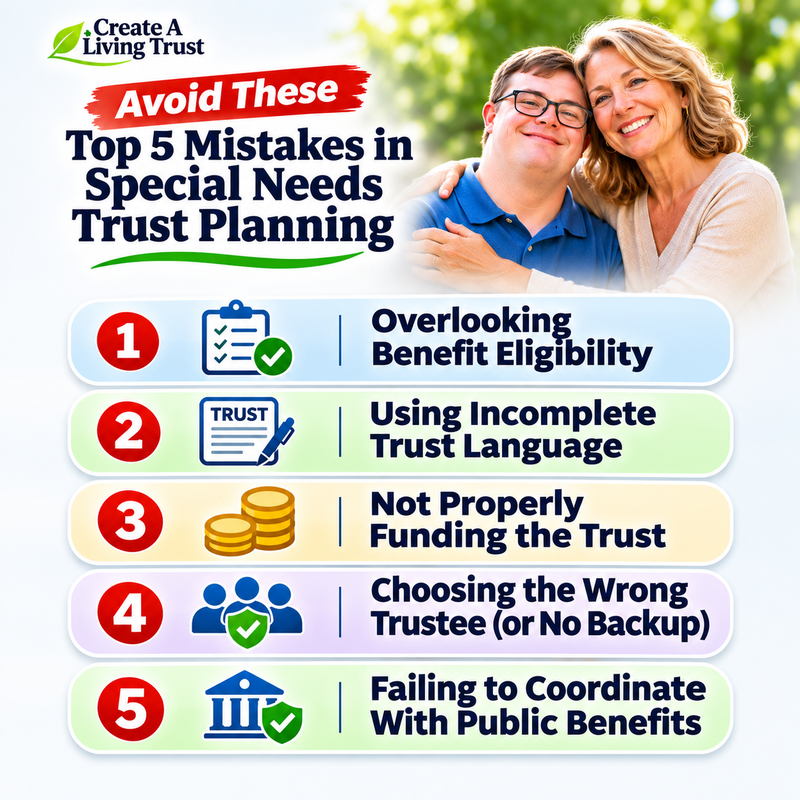
    • Misidentifying who legally owns the assets intended for the trust, confusing first-party funding with third-party funding.
    • Assuming an ordinary revocable living trust template can double as a special needs trust.
    • Choosing the wrong statutory pathway—an individual trust when a pooled trust fits better, or vice versa.
    • Overlooking required court approval tied to a settlement or guardianship proceeding.
    • Selecting a trustee unfamiliar with SSI and Medicaid distribution rules.
    • Failing to document asset transfers properly, leaving ownership questions unresolved.
    • Skipping benefits notification when the trust is created, funded, or amended.
    • Making cash distributions without first evaluating the SSI or Medicaid consequences.

    Before signing anything, it’s worth asking a prospective attorney how many first-party special needs trusts they’ve drafted, how they handle state-specific Medicaid payback language, and how they’d structure trustee selection given your family’s circumstances. For context on when these trusts tend to make the most sense—like settlements, inheritances received outright, or divorce proceeds—this discussion of when first-party special needs trusts are appropriate offers useful background on common funding scenarios families encounter.

    Where eState Fits Into Special Needs Trust Planning

    Why a Standard Living Trust Package Does Not Qualify as an SNT

    It’s worth being direct about this: an ordinary living trust plan, including the eState Living Trust offered through Bulletproof Legacy Financial, is not automatically a qualifying first-party special needs trust. Standard living trust packages are built for typical estate planning goals—avoiding probate, naming successor trustees, and organizing a pour-over will—not for the specialized drafting, Medicaid payback language, and court coordination a first-party SNT requires.

    How eState Can Support the Broader Estate Planning Picture

    Where a service like eState can add value is in the broader family estate plan surrounding the trust—things like healthcare and financial powers of attorney, a pour-over will, and organizing other documents families need regardless of whether a special needs trust is also in the picture. For the specialized SNT drafting itself, though, families still need an attorney with direct experience in this niche area of law.

    Next Steps to Protect Your Family Member’s Benefits and Future

    Setting up a first-party special needs trust the right way takes coordinated legal drafting, correct funding, and ongoing trustee attention—there’s no shortcut around individualized review with a qualified special needs planning attorney and benefits specialist, and a Free Consultation can be a reasonable starting point for sorting out which path fits your family’s specific situation.

    Create A Living Trust connects families with Bulletproof Legacy Financial to help build a stronger foundation for the broader estate plan surrounding your family’s needs.

    6. Establish Benefits Reporting and Annual Accounting Procedures

    Once the trust is funded, the trustee needs a system in place from day one for tracking distributions, documenting expenses, and preparing whatever accounting report the beneficiary’s state requires. Waiting until the first filing deadline approaches to figure out recordkeeping is a common misstep, and it usually means reconstructing months of transactions from memory and scattered receipts.

    Equally important is notifying the relevant benefits agencies when the trust is established, funded, amended, or makes certain distributions. SSI and Medicaid caseworkers may request a copy of the trust document, proof of funding, or periodic statements, and having that paperwork organized in advance keeps the beneficiary’s eligibility review process from stalling out.

    Revocable Living Trust or Special Needs Trust: Which Applies

    Families sometimes assume that any trust will do the job, especially if they’ve already set up a revocable living trust for broader estate planning purposes. That assumption can be costly. A revocable living trust and a first-party special needs trust solve completely different problems, and using the wrong one can leave a beneficiary’s Medicaid or SSI eligibility exposed.

    The easiest way to think about it: a revocable living trust is a flexible planning tool for the person who creates it, built around control and probate avoidance. A first-party special needs trust is a restrictive, statutorily governed vehicle built specifically to protect means-tested benefits, and it has to meet legal requirements a standard living trust was never designed to satisfy.

    When a Standard Revocable Living Trust Fits Into the Broader Estate Plan

    A revocable living trust still plays an important role for most families, including those with a disabled family member, just not as the vehicle holding that person’s own assets. It’s commonly used for things like:

    • Avoiding probate on assets owned by parents or other family members.
    • Naming a successor trustee to manage family assets if the grantor becomes incapacitated.
    • Coordinating a pour-over will and other core estate documents.
    • Directing inheritances into a properly drafted third-party special needs trust instead of passing assets directly to a disabled beneficiary.

    That last point matters enormously. Parents and grandparents who want to leave an inheritance to a family member with a disability should generally route those assets through a third-party special needs trust built into their estate plan, rather than naming the beneficiary directly on a will or account. Doing so prevents the inheritance from ever becoming the beneficiary’s personal asset in the first place, which sidesteps the entire first-party trust and Medicaid payback conversation.

    Where a revocable living trust and a first-party SNT intersect is often at the moment an inheritance is mishandled. If a parent’s living trust distributes funds directly to a disabled beneficiary instead of into a dedicated third-party SNT, that inheritance becomes the beneficiary’s own asset, and a first-party trust may become the only remaining option to protect it.

    Why a Beneficiary’s Own Assets Require a Specialized Trust Instead

    Irrevocability alone doesn’t turn a trust into a qualifying special needs trust, and that’s a distinction worth sitting with. Understanding the practical differences between revocable and irrevocable trust structures helps explain why: an irrevocable trust locks in its terms, but it still needs specific statutory language—disability certification references, supplemental needs distribution standards, and a Medicaid payback clause—before a state Medicaid agency will treat it as exempt from resource calculations.

    This is precisely why beneficiary-owned assets require purpose-built drafting rather than a repurposed estate planning template. A detailed look at when first-party special needs trusts are typically appropriate shows how settlement proceeds, inheritances received outright, and divorce payments all share one trait: the money already belongs to the beneficiary, which triggers the Medicaid reimbursement obligation a third-party trust simply doesn’t carry.

    Where eState Fits Into Special Needs Trust Planning

    It’s worth being candid about where a standard living trust service fits into this picture, because conflating the two can lead families down the wrong path entirely.

    Why a Standard Living Trust Package Does Not Qualify as an SNT

    An ordinary living trust package, including the eState Living Trust offered through Bulletproof Legacy Financial, is not automatically a qualifying first-party, third-party, or pooled special needs trust. Standard packages are built around revocable trust funding, powers of attorney, and a pour-over will—useful tools, but not the specialized drafting, Medicaid payback language, or court coordination a compliant SNT requires.

    That distinction matters for every family reading this. If a beneficiary has received a settlement, an inheritance outright, or any other asset that could disqualify them from SSI or Medicaid, a standard living trust consultation is not a substitute for working with an attorney who specifically handles special needs trust drafting.

    How eState Can Support the Broader Estate Planning Picture

    Where a service like eState genuinely helps is in organizing the rest of a family’s estate plan around the special needs situation—coordinating powers of attorney, a pour-over will, and successor trustee arrangements for the parents or grandparents involved. That groundwork, paired with a dedicated special needs planning attorney for the trust itself, gives families a more complete and coordinated plan overall.

    Frequently Asked Questions

    These are the questions families ask most often once they understand the basic shape of a first-party special needs trust and start weighing their own next steps.

    What is a first-party special needs trust?

    A first-party special needs trust is a legal arrangement funded with assets that already belong to a person with a disability, designed to hold those assets so the beneficiary can remain eligible for means-tested programs like SSI and Medicaid while still benefiting from the funds.

    What types of assets can fund a first-party SNT?

    Common funding sources include personal injury settlement proceeds, inheritances received directly by the beneficiary, certain insurance proceeds, and savings or other assets already legally owned by the beneficiary. For more information, you can read about the role of a Special Needs Trust in preserving financial security.

    Who can legally establish a first-party special needs trust?

    Depending on the applicable statutory pathway and the beneficiary’s legal capacity, the trust may be established by the beneficiary, a parent, grandparent, legal guardian, or a court.

    How does a first-party SNT differ from a third-party SNT?

    A first-party trust holds assets that originally belonged to the beneficiary and typically requires Medicaid payback. A third-party trust holds assets from someone else, like a parent, and generally doesn’t carry a Medicaid reimbursement obligation.

    What is the difference between an individual first-party SNT and a pooled trust?

    An individual trust is custom-drafted and managed by a chosen trustee, while a pooled trust is established and administered by a nonprofit organization that combines multiple beneficiaries’ assets for investment while tracking separate subaccounts.

    Can a first-party SNT help preserve SSI or Medicaid eligibility?

    It can, when properly established and funded according to applicable federal and state requirements, but creating a trust doesn’t automatically guarantee benefit preservation in every circumstance.

    What Medicaid payback requirements may apply?

    Many first-party trusts require reimbursement to the state Medicaid program from remaining trust assets after the beneficiary’s death, subject to governing law and applicable payment priorities, though specific terms can vary by trust type and state.

    Can a family member serve as trustee?

    Yes, a family member can serve as trustee in many cases, but they need a solid understanding of SSI and Medicaid distribution rules to avoid accidentally jeopardizing the beneficiary’s benefits.

    How often should a first-party special needs trust be reviewed?

    Periodic review with an attorney and benefits specialist is advisable, especially after changes in the beneficiary’s benefits status, state law updates, or significant trust distributions.

    Can a Disabled Person Set Up Their Own First-Party Special Needs Trust?

    In many cases, yes—if the individual has legal capacity, current law may allow them to establish the trust themselves. When capacity is in question, a parent, grandparent, legal guardian, or court may need to establish it instead, depending on the applicable statutory pathway.

    What Happens to Trust Funds After the Beneficiary Passes Away?

    Most first-party trusts include a Medicaid payback provision requiring reimbursement to the state Medicaid program from remaining assets, subject to applicable payment priorities under governing law. Any funds left after that obligation is satisfied are distributed according to the trust’s remaining terms.

    Does Every First-Party Trust Require Court Approval?

    No. Court approval isn’t universally required, but it often becomes necessary when the trust is funded through a lawsuit settlement, or when a guardianship or conservatorship is already supervising the beneficiary’s assets.

    Because this varies so much by situation, it’s one of the first questions an attorney should answer before drafting even begins.

    Can a First-Party Trust Pay for Housing or Rent Without Losing Benefits?

    Trustees can often pay a beneficiary’s share of rent or utilities, but these payments can sometimes be treated as in-kind support under SSI rules, which may reduce the monthly benefit amount depending on current program guidelines. For more information on how a Special Needs Trust can play an important role in preserving financial security, visit our detailed guide.

    This is one of the trickiest areas of trust administration, and it’s exactly why trustees need to understand SSI’s shelter and utility rules before making housing-related distributions.

    Is There a Minimum or Maximum Amount Needed to Fund the Trust?

    There’s no fixed minimum or maximum written into federal law that applies universally. In practice, the amount of money involved often influences whether an individually drafted trust or a pooled trust arrangement makes more financial sense.

    What’s the Difference Between a Pooled Trust and an Individual Trust?

    • An individual trust is custom-drafted and managed by a trustee selected specifically for that beneficiary.
    • A pooled trust is established and administered by a nonprofit organization, which combines multiple beneficiaries’ assets for investment while tracking separate subaccounts.
    • Remainder treatment after the beneficiary’s death can differ between the two, so comparing specific terms matters before choosing either path.

    Individual trusts tend to suit larger asset amounts where custom drafting is worth the added cost, while pooled trusts can be a practical fit when the funding amount is smaller or no suitable individual trustee is available.

    Neither option is automatically better—the right fit depends on the beneficiary’s asset level, the availability of a trustworthy individual trustee, and how comfortable the family is with nonprofit administration.

    Can the Beneficiary Change Trustees After the Trust Is Established?

    Trustee changes are often possible, but the process depends on what the trust document allows and whether court involvement is required for removal or resignation.

    Some trusts name a clear successor trustee in advance, which simplifies a transition considerably. Others may require a petition or formal approval process before a new trustee can take over.

    This is another reason trustee succession language deserves careful attention during drafting, rather than being treated as an afterthought.

    Does an ABLE Account Replace the Need for a Special Needs Trust?

    No. ABLE accounts are a complementary tool for smaller, day-to-day qualified disability expenses, not a replacement for a trust holding larger assets like a settlement or inheritance, which typically exceed ABLE account contribution limits.

    What Expenses Will Medicaid Reimbursement Cover From the Trust?

    Medicaid reimbursement from a first-party trust generally covers the cost of medical assistance benefits the state paid on the beneficiary’s behalf during their lifetime, subject to governing law and applicable payment priorities—separate from the broader rules governing general Medicaid estate recovery.

    How Long Does It Take to Legally Establish This Type of Trust?

    Timelines vary widely depending on whether court approval is required, how quickly documentation can be gathered, and how complex the funding source is. A straightforward individual trust might be drafted in a matter of weeks, while a court-supervised settlement trust can take considerably longer.

    Next Steps to Protect Your Family Member’s Benefits and Future

    At this point, the path forward should feel less like guesswork and more like a sequence of concrete decisions, each one informed by the beneficiary’s specific assets, benefits, and legal situation.

    Before transferring any beneficiary-owned asset, confirm three things with a qualified attorney: which statutory trust pathway applies, whether court approval is needed, and who is qualified to serve as trustee given the beneficiary’s ongoing needs.

    Every family’s situation looks a little different, which is exactly why a generic trust template or a rushed decision rarely holds up when a state Medicaid agency reviews it. The source of the funds, the beneficiary’s age and capacity, and the specific mix of benefits involved all shape which legal pathway actually fits.

    Working through this with a special needs planning attorney and a benefits specialist isn’t an extra step to skip—it’s the step that determines whether the trust actually does what it’s meant to do. A Free Consultation can be a reasonable starting point for sorting out how a first-party special needs trust fits into your family’s broader estate plan.

    Getting this right protects more than just assets; it protects a beneficiary’s daily access to the medical care and support services they rely on.

    Create A Living Trust connects families with Bulletproof Legacy Financial to help build a stronger, more coordinated foundation for the broader estate plan surrounding a loved one’s long-term care.

  • Exploring Third-Party Special Needs Trusts and How They Work

    Exploring Third-Party Special Needs Trusts and How They Work

    How Third-Party Special Needs Trusts Support Beneficiaries

    Learn who can establish and fund these trusts, how distributions are managed, and why trust design matters for public benefits.

    Key Takeaways

    • A third-party special needs trust is funded entirely with assets belonging to someone other than the disabled beneficiary, which is the single biggest factor separating it from first-party and pooled trusts.
    • Because the beneficiary never owned the funds inside the trust, Medicaid cannot seek reimbursement from a third-party SNT after the beneficiary passes away.
    • Parents, grandparents, and other relatives can fund these trusts using life insurance, real estate, retirement accounts, or straightforward cash gifts.
    • One dollar of the beneficiary’s own money placed into the wrong account can jeopardize the entire trust structure, so correct drafting matters more than most families realize.
    • Working with a firm like ours alongside a special needs attorney can help families avoid the costly mistakes that come with generic estate planning templates.
    Third-Party-Special-Needs-Trust

    Setting up a trust for a child or relative with a disability sounds straightforward until you hit the fine print on government benefits. One wrong move — an inheritance left directly to a disabled beneficiary, a life insurance payout with the wrong name on it — can disqualify that person from Medicaid or Supplemental Security Income for months or years. Third-party special needs trusts exist precisely to prevent that outcome, and understanding how they work is one of the most protective things a family can do.

    Estate planning platforms such as ours have made it easier for families to understand where standard trust documents end and specialized special needs drafting begins. That distinction isn’t cosmetic. A trust built without the right discretionary language, successor trustee provisions, or distribution restrictions can unintentionally knock a beneficiary off the benefits they depend on for housing, medical care, and daily living support.

    This article breaks down exactly how third-party special needs trusts function, who can fund them, how they compare to first-party and pooled trust alternatives, and what happens when a well-meaning relative skips the trust altogether and leaves money directly to a disabled loved one.

    What Is a Third-Party Special Needs Trust?

    Plain-English Definition and Purpose

    A third-party special needs trust is funded by someone other than the disabled person — typically a parent, grandparent, or sibling — using assets that never belonged to the beneficiary and to which the beneficiary never had a legal claim. The “third party” in the name refers to that donor. This differs from a first-party trust, which is filled with money that was actually the beneficiary’s own, such as a personal injury settlement or an inheritance received directly.

    The purpose is simple: give a disabled beneficiary access to supplemental resources — things like vacations, electronics, uncovered medical treatments, or a specially equipped vehicle — without those resources counting against the strict asset limits tied to SSI and Medicaid.

    How This Trust Protects SSI and Medicaid Eligibility

    SSI recipients generally cannot hold more than $2,000 in countable resources. Medicaid eligibility in many states follows similarly tight limits. A third-party SNT holds assets outside the beneficiary’s name, so the trust’s value isn’t counted when benefit programs calculate eligibility. The trustee, not the beneficiary, controls distributions, which keeps the funds legally separate from the beneficiary’s own resources.

    Because the money in a third-party trust was never the beneficiary’s property to begin with, the government has no claim to it — during the beneficiary’s lifetime or after their death.

    That last point is worth sitting with. It’s the feature that makes third-party trusts so appealing compared to the alternatives, and it’s covered in more detail below.

    Where It Fits Among First-Party, Pooled, and Third-Party Options

    Special needs planning generally involves three trust types: first-party, third-party, and pooled trusts. First-party trusts hold the beneficiary’s own assets and require strict Medicaid payback provisions. Pooled trusts are managed by nonprofit organizations that combine resources from multiple beneficiaries while keeping individual sub-accounts, and they’re often used when a disabled person is older than 65 or lacks family members willing to serve as trustee. Third-party trusts stand apart because they’re funded by someone else entirely, which removes the Medicaid payback requirement and gives families far more flexibility in how leftover funds are distributed after the beneficiary’s death.

    Federal Rules and State-Specific Differences You Need to Know

    SSI and Medicaid Resource Limits Explained Simply

    SSI and Medicaid are means-tested programs, which means eligibility depends on how much income and how many resources a person has — not just on their disability status. That’s different from SSDI and Medicare, which are based on work history rather than financial need. Families sometimes assume all “disability benefits” work the same way; they don’t, and confusing the two can lead to planning mistakes that jeopardize coverage.

    Here’s a quick breakdown of how the two means-tested programs typically treat trust assets:

    • SSI counts cash, bank accounts, and most property as resources unless they’re held in a properly structured trust.
    • Medicaid eligibility rules often mirror SSI’s resource limits, though exact thresholds can vary by state program.
    • Assets inside a correctly drafted third-party SNT are excluded from both programs’ resource calculations.
    • Distributions made directly as cash to the beneficiary can count as income and reduce SSI payments dollar-for-dollar.

    This is why trustees are trained to pay vendors directly — a utility company, a dentist, a home health aide — rather than handing cash to the beneficiary.

    Why State Probate and Medicaid Rules Can Vary

    While the core federal framework around SSI applies nationwide, the probate procedures for establishing and terminating a special needs trust are set at the state level. In California, for example, trustees must notify the Department of Health Care Services at least 15 days before certain court hearings under Probate Code Sections 3600–3605 and 3610–3613, and again when the trust terminates. Other states have their own notice requirements, filing deadlines, and court oversight rules. A trust document that works perfectly in one state may need adjustments if the family relocates.

    When to Call a Special Needs Attorney or Benefits Counselor

    Any time a family is unsure whether a planned gift, inheritance, or settlement might interfere with a loved one’s benefits, it’s worth a call to a special needs attorney before any money changes hands. The same goes for situations involving multiple trust types, out-of-state moves, or a sudden windfall like a life insurance payout. Benefits counselors can also clarify how a distribution might affect SSI or Medicaid on a case-by-case basis, since rules can shift based on household composition and state-specific Medicaid waivers.

    Who Can Fund a Third-Party Special Needs Trust

    Parents, Grandparents, and Other Family Members as Donors

    Virtually anyone except the beneficiary can contribute to a third-party SNT. Parents frequently set these trusts up while drafting their wills, directing a portion of their estate into the trust rather than leaving it outright to a disabled child. Grandparents, aunts, uncles, and even family friends can add contributions over time, whether through direct gifts, updated beneficiary designations, or bequests written into their own estate plans.

    Life Insurance, Real Estate, and Investment Accounts as Funding Sources

    Third-party SNTs aren’t limited to cash. These trusts can be named as the beneficiary of a life insurance policy, hold title to real estate, manage an investment portfolio, or even receive distributions from a retirement account. There’s no cap on how much a donor can contribute, and there’s no age limit on the beneficiary, which makes this structure usable for a lifetime of planning rather than a single transaction.

    Why the Beneficiary’s Own Money Can Never Go Into This Trust

    This is the rule that trips up the most families. A third-party SNT cannot hold a single dollar that legally belonged to the beneficiary — not back pay from a settled lawsuit, not an inheritance received outright, not even wages the beneficiary earned and saved. Mixing in beneficiary-owned funds can taint the entire trust, potentially triggering the same Medicaid payback requirements that apply to first-party trusts. If a beneficiary does come into possession of their own money, that money has to go into a first-party or pooled trust instead, not the third-party structure the family originally set up.

    Third-Party SNT vs. First-Party SNT: Key Differences

    Families often assume all special needs trusts work the same way, but the funding source changes nearly everything about how the trust is taxed, administered, and settled after the beneficiary’s death. Understanding these differences up front prevents a lot of confusion — and a lot of wasted legal fees — down the road.

    The clearest way to see the contrast is side by side.

    FeatureThird-Party SNTFirst-Party SNT
    Funding sourceAssets from someone other than the beneficiaryBeneficiary’s own assets (settlement, inheritance, etc.)
    Medicaid payback requiredNoYes
    Age limit for beneficiaryNoneGenerally must be under 65 at establishment
    Leftover funds at deathCan pass to other relativesMust reimburse Medicaid first

    Whose Assets Fund Each Trust

    The donor question is the defining feature of each trust type. A third-party SNT only ever holds money that belonged to someone other than the beneficiary — think of a parent’s life insurance proceeds or a grandparent’s bequest. A first-party SNT, by contrast, is built entirely from assets that were legally the beneficiary’s own, such as a personal injury award or back-paid Social Security benefits that pushed the beneficiary over the resource limit. That single distinction in ownership determines nearly every other rule that follows, from tax treatment to what happens to remaining funds after the beneficiary dies.

    Medicaid Payback Rules and Why They Differ

    First-party trusts must include federal and state provisions requiring notice and repayment to the state when the beneficiary dies or the trust terminates early. The Department of Health Care Services, or its equivalent agency in other states, is entitled to recover an amount equal to the total medical assistance paid out on the beneficiary’s behalf. Third-party trusts carry no such obligation. Since the money inside a third-party SNT never belonged to the beneficiary in the first place, the state has no legal claim against it, regardless of how much Medicaid spent on that person’s care over the years.

    What Happens to Leftover Funds at the Beneficiary’s Death

    When a beneficiary of a third-party SNT passes away, whatever remains in the trust can go wherever the donor originally specified — typically to siblings, other family members, or even charitable organizations. There’s no payback step required first. First-party trusts work differently: any remaining balance must satisfy the state’s Medicaid reimbursement claim before a single dollar reaches other heirs. This difference alone is often the deciding factor for families choosing how to structure an inheritance for a disabled relative.

    Directing Gifts and Inheritances Into the Trust Correctly

    None of these protections matter if the paperwork doesn’t actually route money into the trust. Families frequently assume that simply having a special needs trust drafted is enough, but the trust only works if assets are properly directed into it through wills, beneficiary designations, and payable-on-death accounts.

    Updating Wills and Beneficiary Designations to Name the Trust

    A parent or grandparent’s will needs to specifically name the third-party SNT as the recipient of any inheritance intended for the disabled beneficiary — not the beneficiary by name. The same goes for life insurance policies, retirement accounts, and payable-on-death bank accounts. Each of these documents operates independently of a will, so updating the will alone isn’t enough if a life insurance beneficiary form still lists the disabled relative directly.

    What Happens If an Inheritance Skips the Trust

    If a relative leaves money directly to a disabled beneficiary instead of to the trust, that inheritance becomes the beneficiary’s own asset the moment it’s received. It then has to be redirected into a first-party special needs trust or a pooled trust, both of which carry Medicaid payback requirements the family could have avoided entirely. Worse, there’s often a narrow window — sometimes just a matter of months — to get that redirection done correctly before benefits are suspended.

    This is one of the most common and most avoidable mistakes in special needs planning. A well-meaning grandparent who leaves “my share to Sarah” in a handwritten will, without naming the trust, can unintentionally cost Sarah her Medicaid coverage for a period of time while the family scrambles to fix the paperwork.

    Coordinating With Relatives Who Want to Leave Money to the Beneficiary

    Because so many different family members might want to leave something behind — grandparents, aunts, uncles, even close family friends — it helps to circulate the trust’s name and tax identification number so everyone updates their own documents consistently. A single coordinated email or conversation with an estate planning attorney can prevent years of fragmented, inconsistent beneficiary designations scattered across a dozen different accounts.

    One missed beneficiary form on an old 401(k) account can undo years of careful special needs planning — it’s worth double-checking every account, not just the big ones.

    Attorneys who specialize in special needs planning often recommend an annual review of every account tied to the trust, precisely because life insurance policies and retirement plans get forgotten, refinanced, or rolled over without anyone remembering to update the beneficiary section.

    Why Trustee Discretion Determines the Trust’s Success

    A third-party SNT is only as strong as the person managing it. Even a flawlessly drafted trust document can fail a beneficiary if the trustee doesn’t understand how distributions interact with SSI and Medicaid rules.

    The trustee’s judgment calls — what to pay for, how to pay for it, and when to say no — shape the beneficiary’s quality of life far more than the trust’s dollar value does.

    Sole and Absolute Discretion Language Explained

    Most third-party SNTs include “sole and absolute discretion” language, giving the trustee full authority to decide whether and how to make a distribution. This isn’t just legal boilerplate — it’s what protects the trust from being treated as an asset the beneficiary controls. If a beneficiary had the legal right to demand distributions on request, benefits programs could count the entire trust balance as an available resource, defeating the trust’s purpose.

    Approved Supplemental Uses: Housing, Transportation, and Personal Care

    Trust funds generally work best covering expenses that supplement, rather than replace, what public benefits already provide. Common approved uses include:

    • Adaptive equipment, wheelchairs, and home modifications not covered by Medicaid
    • Transportation costs, including a vehicle purchase or rideshare accounts
    • Personal care attendants and respite care for family caregivers
    • Education, recreation, vacations, and electronics
    • Uncovered dental, vision, or therapy services

    Trustees typically pay vendors directly rather than depositing cash into the beneficiary’s own account, since cash distributions can be treated as income by SSI and reduce the monthly payment dollar for dollar.

    Choosing a Trustee Who Understands Public Benefits Rules

    A trustee doesn’t need to be a lawyer, but they do need to understand the basic rules governing SSI and Medicaid, or work closely with someone who does. Many families choose a combination — a family member who knows the beneficiary’s needs personally, paired with a professional trustee or trust company that handles the compliance side. Some families lean on platforms like ours to help structure successor trustee provisions clearly, so there’s no ambiguity about who steps in if the original trustee becomes unable to serve.

    Example: Grandparents Leaving an Inheritance the Right Way

    Consider a grandmother who wants to leave $50,000 to her grandson, who has autism and receives SSI and Medicaid. If she simply names him in her will, that inheritance becomes his personal asset the moment it’s distributed — pushing him well over the $2,000 resource limit and suspending his benefits until the money is spent down or redirected into a first-party trust with its Medicaid payback obligation attached.

    Instead, if her estate planning attorney drafts her will to leave that $50,000 directly into an already-established third-party special needs trust for her grandson, the money never touches his name. His benefits continue uninterrupted, the trustee can use the funds for supplemental needs over his lifetime, and whatever remains when he passes away can go to other grandchildren — with no state reimbursement required.

    Direct Inheritance vs. Funding a Third-Party SNT

    The dollar amount is identical in both scenarios; the outcome is not. One path risks months of benefit suspension and a Medicaid payback requirement down the line. The other preserves eligibility and keeps the family in full control of where remaining assets eventually go.

    How a General Living Trust Falls Short for a Disabled Beneficiary

    Some families assume that naming a disabled relative as a beneficiary in their existing revocable living trust solves the problem. It doesn’t, unless that trust includes special needs provisions specifically drafted for means-tested benefits. A standard living trust is built to organize assets and designate successor management — it’s not automatically equipped to shield a beneficiary’s eligibility for SSI or Medicaid. Without the right language, a disabled beneficiary named in a general living trust can lose benefits just as quickly as if they’d received an inheritance outright.

    Revocable Living Trust or Special Needs Trust: Which Do You Need?

    These two trust types solve different problems, and understanding where one ends and the other begins prevents a lot of costly rework later.

    What a Standard Revocable Living Trust Can and Cannot Do

    A conventional revocable living trust is excellent for organizing a family’s assets, avoiding probate, and naming successor trustees to manage property after someone’s death. It can hold real estate, investment accounts, and personal property, and it gives the grantor flexibility to amend the trust during their lifetime. What it can’t do, on its own, is protect a disabled beneficiary’s eligibility for means-tested public benefits.

    Special needs trusts differ from ordinary living trusts in several practical ways — eligibility rules, trustee control, permitted distributions, administrative fees, and Medicaid reimbursement provisions all work differently once a beneficiary receiving SSI or Medicaid enters the picture.

    It’s also worth remembering that SSI and Medicaid aren’t the same as SSDI and Medicare. SSDI and Medicare are based on work history, not financial need, so a beneficiary receiving those benefits alone may not face the same resource restrictions. Families sometimes skip special needs planning because they assume their relative’s benefits aren’t means-tested, when in fact they are.

    Signs Your Family Needs a Specialized Special Needs Trust Instead

    A few warning signs suggest a standard living trust isn’t enough on its own:

    • A family member currently receives or will likely qualify for SSI or Medicaid
    • An inheritance, settlement, or gift is being planned for that family member
    • The existing trust names the disabled relative as an outright beneficiary rather than directing funds into a dedicated special needs structure
    • No one has reviewed life insurance or retirement account beneficiary designations since the disability diagnosis

    If any of these apply, it’s time to bring in a special needs attorney to review — and likely amend — the existing estate plan before more assets get directed the wrong way.

    Using Both Tools Together in One Estate Plan

    Many families end up using both structures side by side: a revocable living trust to manage the bulk of the family’s assets and avoid probate, with a provision directing the disabled beneficiary’s share into a properly drafted third-party special needs trust instead of to them directly. This layered approach lets a family handle general estate planning and specialized benefits protection within a single, coordinated plan rather than treating them as separate, disconnected documents.

    How eState Can Support Your Special Needs Planning

    Where a Standard Trust Package Ends and Specialized Drafting Begins

    Online and template-based trust services can be a fine starting point for organizing a family’s general assets, but special needs trusts require precision that generic templates typically don’t provide — specific discretionary language, successor trustee provisions, and coordination with each state’s probate notice requirements.

    Working With eState Alongside a Special Needs Attorney

    The strongest results come from pairing a platform like the eState plan, which helps organize a family’s broader estate plan, with an attorney who focuses specifically on special needs trusts and benefits law. That combination covers both the big-picture asset organization and the fine print that protects a disabled beneficiary’s eligibility for decades to come.

    Your Next Step Toward Protecting a Loved One’s Future

    Review your will, life insurance policies, and retirement account beneficiary designations today to confirm they name your third-party special needs trust — not your disabled relative directly. If you haven’t started that trust yet, a conversation with a special needs attorney this week could save your family years of benefit complications later.

    Using Both Tools Together in One Estate Plan

    A family’s complete estate plan often needs two documents working in tandem: one trust to organize the bulk of the estate, and a second, specialized trust to protect a disabled beneficiary’s share.

    Many families end up using both structures side by side. A revocable living trust manages the bulk of the family’s assets, avoids probate, and names successor trustees for property and investments. Layered into that same plan is a provision directing the disabled beneficiary’s inheritance into a properly drafted third-party special needs trust instead of handing it to them outright.

    This two-document approach isn’t redundant — it’s deliberate. The living trust handles general estate organization for the whole family, while the special needs trust carries the specific discretionary language, successor trustee provisions, and benefits-protection clauses that a generic trust simply doesn’t include. Trying to force one document to do both jobs usually ends up shortchanging the disabled beneficiary’s eligibility protections.

    Coordinating these two trusts typically falls to an estate planning attorney who reviews both documents together, making sure the living trust’s distribution instructions point cleanly into the special needs trust rather than naming the beneficiary directly. Done correctly, the rest of the family gets a streamlined, probate-avoiding plan, and the disabled beneficiary gets lifelong protection for their public benefits.

    How eState Can Support Your Special Needs Planning

    Building an estate plan that includes a family member with a disability requires more coordination than a standard will or trust package usually provides. Create A Living Trust helps families map out where their general estate planning documents end and where specialized special needs drafting needs to begin, so nothing falls through the cracks between a living trust, a will, and a dedicated special needs trust.

    Where a Standard Trust Package Ends and Specialized Drafting Begins

    A standard trust package is built to organize assets, name successor trustees, and avoid probate — all useful, but none of it automatically protects a disabled beneficiary’s SSI or Medicaid eligibility. The moment a family member with a disability enters the picture, the plan needs language specifically addressing discretionary distributions, supplemental needs restrictions, and Medicaid notice requirements.

    Working With eState Alongside a Special Needs Attorney

    The strongest results come from pairing a platform like eState — which organizes a family’s broader estate plan, successor trustees, and asset titling — with an attorney who focuses specifically on special needs trusts and public benefits law. That combination covers both the big-picture organization and the fine print that protects a disabled beneficiary’s eligibility for decades to come, without forcing families to choose one over the other.

    Families who pair general estate planning tools with specialized legal review tend to catch beneficiary-designation mistakes years before they become a crisis.

    That’s a meaningful distinction, because most special needs trust failures aren’t caused by bad intentions — they’re caused by paperwork that never got updated after a life insurance policy was renewed or a retirement account was rolled over.

    Reviewing both documents together, side by side, at least once every few years catches those gaps before they turn into a benefits suspension letter in the mail.

    Your Next Step Toward Protecting a Loved One’s Future

    Start by pulling together every document that names your disabled family member as a beneficiary — your will, life insurance policies, retirement accounts, and any payable-on-death bank accounts. Check each one for a single detail: does it name your family member directly, or does it name the third-party special needs trust?

    If even one of those documents lists your relative by name instead of the trust, that’s a gap worth closing immediately, not next year. A single overlooked beneficiary form can undo years of otherwise careful planning the moment that asset transfers.

    From there, schedule time with a special needs attorney to confirm the trust itself includes the discretionary language, successor trustee provisions, and state-specific notice requirements it needs to hold up under scrutiny. Planning documents that looked airtight five years ago may need updates if your family has moved states or if benefit program rules have shifted.

    None of this has to happen all at once. Even reviewing one document this month — a life insurance policy, a retirement account, a will — moves your family meaningfully closer to a plan that protects both your loved one’s benefits and their inheritance.

    A ten-minute review of a single beneficiary designation form today can prevent months of benefit suspension down the road.

    Frequently Asked Questions

    • Third-party special needs trusts raise a lot of practical questions once families start applying the concept to their own situation.
    • Below are answers to the ones that come up most often during planning conversations.
    • If a specific question about your family’s situation isn’t covered here, it’s worth raising directly with a special needs attorney.

    Most of these questions come up after a family has already set up a third-party special needs trust and starts wondering about the day-to-day details — how distributions work, what happens with other savings tools, and who’s responsible for taxes.

    Others come up earlier, while a family is still deciding whether a third-party trust is even the right fit compared to a first-party trust or pooled trust arrangement.

    Either way, these answers are meant as a starting point, not a substitute for a conversation with an attorney who can review your family’s specific documents and state rules.

    Can a third-party special needs trust be revoked once it’s created?

    It depends on how the trust is drafted. Many third-party SNTs are set up as revocable while the donor is alive, which means the donor can change terms, update beneficiaries, or adjust trustee provisions as circumstances change.

    Once the donor passes away, however, these trusts typically become irrevocable, locking in the terms exactly as written at that point.

    Does a third-party SNT have to repay Medicaid after the beneficiary dies?

    No. Because the assets inside the trust never belonged to the beneficiary, the state has no reimbursement claim against it, and any remaining funds can pass to other family members exactly as the donor directed.

    Can siblings or friends contribute to a third-party special needs trust?

    Yes. Anyone other than the beneficiary can contribute to a third-party SNT, including siblings, friends, aunts, uncles, and grandparents, in addition to parents.

    Is there a maximum amount of money a third-party SNT can hold?

    No. Third-party SNTs can hold an unlimited amount of assets contributed by the donor, which sets them apart from tools like ABLE accounts that cap annual contributions.

    What happens if a beneficiary receives a personal injury settlement directly?

    Those funds become the beneficiary’s own property the moment they’re received, which means they can’t go into a third-party trust. Instead, the settlement typically needs to be placed into a first-party special needs trust or a pooled trust.

    Both of those alternatives carry a Medicaid payback requirement, which is one more reason families try to route settlements and inheritances through proper planning before the money changes hands.

    How does a third-party SNT interact with an ABLE account?

    The two tools can work well together rather than competing with each other. An ABLE account allows smaller, more flexible savings up to its annual contribution limit, giving the beneficiary a degree of direct control over modest day-to-day expenses.

    A third-party SNT, on the other hand, handles larger, long-term asset management without that annual cap, making it better suited for inheritances, life insurance proceeds, or substantial family gifts.

    Many families use an ABLE account for smaller discretionary spending while keeping larger assets inside the trust, where a trustee oversees distributions according to the benefits rules.

    Can a third-party SNT pay for a caregiver or guardian’s services?

    Yes. Trustees can use trust funds to pay for personal care attendants, respite care for family caregivers, and other caregiving services that supplement what Medicaid or other programs already cover.

    Does the trust need court supervision while the donor is alive?

    Generally, no. Third-party trusts almost never go through court monitoring processes while the donor is still living, which keeps administration simpler and less expensive compared to trusts that require ongoing judicial oversight.

    Who pays income tax on earnings inside a third-party SNT?

    While the donor is alive, income generated by the trust’s assets is typically taxed to the donor rather than to the beneficiary, since the donor is still considered the owner for tax purposes in most structures. For more information on how third-party special needs trusts work, click here.

    Can an existing living trust be amended to include special needs provisions?

    Sometimes, though it depends heavily on how the original trust was drafted and whether it’s revocable or irrevocable. A special needs attorney can review the existing document to determine whether an amendment is sufficient or whether a separate, dedicated special needs trust offers better protection.

    In many cases, attorneys recommend keeping the two documents separate — one for general estate assets, one specifically for the disabled beneficiary’s supplemental needs — simply because it reduces the risk of conflicting language down the line.

    Whichever path a family chooses, the goal stays the same: protect the beneficiary’s public benefits while still making sure they receive the full support the family intended to provide.

    Whatever stage of planning you’re at, working with a resource like Create A Living Trust can help make sure your family’s documents are coordinated and ready to protect the people who matter most.

  • Financial Strategies for Funding a Special Needs Trust with Annuities

    Financial Strategies for Funding a Special Needs Trust with Annuities

    Using Annuities to Fund a Special Needs Trust

    Explore annuity payout structures, trust ownership considerations, liquidity, taxes, and benefits eligibility when evaluating a funding strategy.

    Yes, an annuity can help fund a special needs trust, but the outcome depends entirely on who owns the contract, who receives the payments, and how the trust itself is written.

    Families exploring strategies for funding a special needs trust with annuities often assume that naming a trust as a beneficiary automatically solves the problem of providing long-term financial support without risking Supplemental Security Income (SSI) or Medicaid.

    That assumption can be costly. An annuity is a contract, not a magic wrapper, and its tax treatment, payout schedule, and effect on public benefits shift depending on whether the trust owns it, is named as its beneficiary, or has no legal connection to it at all. Before purchasing a new annuity, transferring an existing one, or changing a beneficiary form, it helps to understand exactly how these pieces fit together.

    Key Takeaways

    • Funding a special needs trust with annuities requires matching ownership, annuitant, payee, and beneficiary roles to the trust’s actual legal structure — not just naming the trust on a form.
    • An ordinary revocable living trust is not automatically a qualifying special needs trust, even if it’s well-drafted for general estate planning.
    • Annuity payments made directly to a person with a disability can create countable income or resources that jeopardize SSI and Medicaid eligibility.
    • Liquidity matters: surrender charges, fixed payout schedules, and irrevocable elections can clash with a trustee’s need for flexible cash flow.
    • Later sections walk through a full funding checklist, a side-by-side hypothetical comparing three annuity arrangements, and the tax questions worth raising with a qualified professional.
    Funding-Special-Needs-Trust-With-Annuities

    Explore annuity payout structures, trust ownership considerations, liquidity, taxes, and benefits eligibility when evaluating a funding strategy.

    The Short Answer: Can an Annuity Fund a Special Needs Trust?

    An annuity can provide scheduled payments or other financial resources to a properly structured special needs trust, but it isn’t a one-size-fits-all solution. The contract’s terms, who legally owns it, how the trust is drafted, and which public benefits the beneficiary receives all determine whether the arrangement actually works as intended. Some annuities integrate smoothly with a special needs trust. Others create tax headaches, liquidity gaps, or benefit disqualification risks that could have been avoided with different planning.

    There are three distinct arrangements worth separating in your mind right away:

    • An annuity legally owned by a properly structured special needs trust.
    • An annuity owned by another person or entity that names a special needs trust as its beneficiary or designated recipient.
    • An annuity personally owned by, or payable directly to, the individual with a disability.

    These three setups are not interchangeable. Each carries different consequences for taxes, creditor protection, probate, and most importantly, public-benefit eligibility. Simply naming a trust as an annuity beneficiary does not guarantee that SSI or Medicaid eligibility will be preserved, that the arrangement will be taxed favorably, or that the money will avoid probate. Every one of those outcomes depends on the specific contract and trust language involved.

    Why Ownership Structure Matters More Than the Annuity Itself

    It’s tempting to think the type of annuity — fixed, variable, immediate, deferred — is the most important decision in this process. It isn’t. The ownership structure typically matters more than the product type. An annuity is defined by four contractual roles: the owner, the annuitant, the payee, and the death beneficiary. These roles can belong to four different parties, and each one carries separate legal and tax implications.

    Think of it this way: two families could buy the exact same annuity contract from the exact same insurer, yet end up with completely different outcomes for Medicaid eligibility, income tax reporting, and trustee control simply because they structured ownership and beneficiary designations differently. That’s why families considering special needs trust funding with an annuity need to slow down and map out each role before signing anything.

    What It Means to Fund a Special Needs Trust With an Annuity

    How Annuities Work as a Financial Product

    An annuity is a contract with an insurance company. In exchange for a lump sum or a series of payments, the insurer promises to make payments back to someone — either immediately or at a future date. That’s the basic mechanics of it, but the details matter a great deal for special needs planning. Depending on the contract, payments might last for a set number of years, for the annuitant’s lifetime, or according to some other formula written into the policy.

    Several features typically show up in annuity contracts used for trust planning:

    • A stated owner who controls the contract and can usually change beneficiaries or request withdrawals.
    • An annuitant whose life expectancy or other characteristics may determine the payout formula.
    • A payee who actually receives the periodic payments.
    • A death beneficiary who receives remaining value or benefits after a triggering death occurs.

    Because these roles can be split among different people or entities, a single annuity contract can be structured many different ways. That flexibility is useful, but it also means mistakes are easy to make without careful review.

    Why Families Consider Annuities for Special Needs Planning

    Families often turn to annuities because they want predictable, scheduled income rather than a lump sum that a trustee has to manage and invest indefinitely. A monthly or annual payment stream can simplify budgeting for recurring expenses like housing support, caregiving costs, or therapies not covered by Medicaid. This is especially common when a structured settlement from a personal injury claim is already part of the picture, since structured settlement annuities are specifically designed to deliver payments over time rather than all at once.

    Consider the difference between receiving a $500,000 lump sum and receiving $2,500 a month for life. The lump sum demands active investment management and carries market risk; the monthly payment offers predictability but locks in a fixed schedule that may not flex with changing care needs.

    That tradeoff — predictability versus flexibility — sits at the center of nearly every decision about whether an annuity belongs in a special needs trust funding strategy.

    How This Differs From Funding a Trust With Cash or Real Estate

    Funding a trust with cash or a brokerage account is relatively straightforward: retitle the account, and the trust owns it. Annuities don’t work quite the same way. Ownership transfers may require insurer approval, could be restricted by contract provisions, and sometimes trigger tax consequences that wouldn’t occur with a simple bank account transfer. This is one of the reasons funding a special needs trust with annuities deserves separate, careful analysis rather than being lumped in with general trust funding steps.

    It’s worth noting that how to fund a living trust generally involves retitling bank accounts, deeds, and investment holdings into the trust’s name — a process that’s conceptually different from establishing annuity ownership, payment rights, or beneficiary designations. An ordinary living trust funding checklist won’t address insurer-specific transfer rules, annuitant designations, or the public-benefit consequences unique to annuity contracts. Special needs trust funding with annuities requires its own due diligence process layered on top of standard trust funding mechanics.

    Federal Rules and State Variations You Need to Know

    SSI and Medicaid Asset Rules at the Federal Level

    SSI is a federal, means-tested program with strict income and resource limits. Historically, the individual resource limit has been set at $2,000 for an eligible individual, though families should confirm current figures directly with the Social Security Administration since program rules can be updated. Medicaid, on the other hand, isn’t a single program — it’s a collection of programs with eligibility and financial rules that vary by category and by state. SSDI is different still: it’s a disability insurance program tied to work history, and it doesn’t use the same resource test that SSI does.

    These distinctions matter enormously for annuity planning because:

    • An annuity’s surrender value, assignability, and ownership rights may determine whether it counts as a resource under SSI rules.
    • Scheduled annuity payments received directly by an individual may count as income in the month received, potentially reducing or eliminating SSI benefits.
    • Medicaid eligibility categories tied to SSI often borrow those same resource and income tests, while other Medicaid eligibility pathways may apply different standards.

    Even when a properly structured trust is excluded as a countable resource, certain distributions from that trust can still affect SSI or Medicaid eligibility depending on how and what the trustee pays for. That nuance trips up a lot of well-intentioned families.

    Why State Medicaid Programs Apply Rules Differently

    Medicaid is a joint federal-state program, and each state administers its own version within federal guidelines. That means trust administration rules, Medicaid payback requirements, creditor protections, and even certain annuity-related insurance regulations can vary from state to state. A strategy that works cleanly in one state might require adjustments in another. This article offers general, nationwide guidance, but any state-specific example should be treated as just that — an example, not a universal rule. Readers should verify current Medicaid rules with their state’s Medicaid agency before finalizing any annuity-funded trust strategy.

    When to Bring in a Special Needs Attorney or Benefits Counselor

    Given how much ownership structure, state law, and program-specific rules can shift the outcome, this is not the kind of decision to make from a general internet search alone. A qualified special needs planning attorney can review the actual trust document, the annuity contract’s language, and the family’s specific benefit situation before any ownership change, assignment, or beneficiary designation is finalized. A benefits counselor familiar with SSI and Medicaid rules in the relevant state adds another layer of protection against costly mistakes.

    Why Beneficiary Designation Errors Can Disqualify Benefits

    A beneficiary form might seem like a minor administrative detail, but it carries enormous weight in special needs planning. The form must identify the exact legal name of the trust, not the individual, and it must match the trust’s actual provisions — not an outdated draft or a trust that was later amended.

    Common errors include listing an old trust name after the document was restated, accidentally naming the individual with a disability directly instead of the trust, or forgetting to update the designation after the trust was revised. Any of these mistakes can unravel years of careful planning, so every beneficiary form deserves a second look from someone who has actually read the current trust document.

    Annuities Owned Personally by the Beneficiary

    Of the three arrangements discussed throughout this guide, personal ownership by the individual with a disability carries the highest risk for means-tested benefits. When an annuity contract is owned by, or pays benefits directly to, a person receiving SSI or Medicaid, those payments and the contract’s value may be treated as countable income or a countable resource. That’s often the opposite of what families intended when they purchased the annuity in the first place.

    This doesn’t mean personal ownership is always disastrous. Someone who doesn’t currently receive means-tested benefits, or who relies solely on SSDI (which uses work history rather than a resource test), may not face the same immediate consequences. But circumstances change. A person’s benefit status today doesn’t guarantee their status five or ten years from now, and an annuity contract is a long-term commitment that’s hard to unwind once it’s in place.

    Direct ownership also removes the layer of trustee oversight that special needs trusts are designed to provide. Without a trustee managing distributions, there’s no buffer between the money and the individual’s eligibility for public programs. That buffer is often the entire point of using a trust in the first place.

    Before any family member purchases an annuity payable directly to a loved one with a disability, it’s worth pausing to ask a few questions:

    • Does the beneficiary currently receive SSI, Medicaid, or another means-tested program?
    • Could that eligibility status change in the foreseeable future?
    • Would a third-party special needs trust better protect the same financial goal?
    • Has a benefits counselor reviewed how the specific contract’s payout structure would be treated?

    Why Personal Ownership Can Jeopardize SSI and Medicaid

    SSI counts most unearned income in the month it’s received, which can reduce or eliminate a monthly benefit check. Medicaid eligibility categories tied to SSI often apply the same standard. An annuity payment landing directly in a beneficiary’s bank account, even a modest one, can trigger exactly the kind of income reporting that puts benefits at risk.

    Countable Asset Risks With Direct Annuity Ownership

    Beyond income, the annuity contract itself — particularly its surrender value and whether it can be assigned or cashed out — may be evaluated as a resource. If that value, combined with other countable resources, pushes the individual over SSI’s resource limit, benefits can be suspended until the excess is spent down.

    Situations Where Personal Ownership Still Happens by Mistake

    This outcome often happens unintentionally: a grandparent names a grandchild directly as a death beneficiary without knowing about the special needs trust, or a workplace retirement annuity defaults to a named individual because no one updated the paperwork after the trust was created. These aren’t signs of bad planning so much as signs that beneficiary designations need to be reviewed every time a family’s estate plan changes.

    Liquidity, Surrender Charges, and Access to Funds

    Predictable income is one of the biggest selling points of an annuity, but predictability has a cost: reduced flexibility. Most annuity contracts include a surrender period, typically several years long, during which early withdrawals trigger a penalty known as a surrender charge. For a trustee managing a special needs trust, that penalty can be a serious obstacle if an unexpected expense arises before the surrender period ends.

    Disability-related expenses rarely follow a predictable calendar. A wheelchair might need urgent replacement. A housing situation might change on short notice. Medical equipment not covered by Medicaid might need to be purchased immediately. An annuity’s fixed payout schedule doesn’t always bend to meet these moments, which is why financial professionals generally caution against using an annuity as the sole funding source for a trust that needs to stay flexible.

    It helps to think through a few practical scenarios before committing funds to an annuity:

    • What happens if the trust needs $10,000 for an emergency during the surrender period?
    • Does the contract allow partial withdrawals without full surrender?
    • Is there a secondary source of liquid funds the trustee can draw on instead?
    • How does inflation affect the purchasing power of a fixed payment over 10 or 20 years?

    How Surrender Periods Limit Early Withdrawals

    Surrender charges typically decline over a period of years before disappearing entirely, but during that window, pulling money out ahead of schedule can mean losing a meaningful percentage of the contract’s value. Trustees need to know these dates and percentages before they’re ever in a position where they need the cash.

    Matching Payout Schedules to the Beneficiary’s Needs

    A monthly payment that covers rent and groceries works well until a major one-time expense shows up. That’s why payout timing should be discussed and mapped against anticipated expenses before the contract is purchased, not after. Immediate annuities begin payments right away, while deferred annuities wait through an accumulation phase before distributions start — and that timing choice should reflect the beneficiary’s actual, current financial picture.

    Life expectancy and changing care needs also deserve consideration. A young beneficiary with decades of potential care ahead faces very different planning challenges than an older beneficiary with a shorter expected timeline, and payout elections made today may be irrevocable once locked in.

    What Happens If the Trust Needs Cash Before Payout Starts

    This is precisely why financial professionals often recommend holding at least some liquid assets outside the annuity — cash reserves, a brokerage account, or another accessible fund — so the trustee isn’t forced to trigger surrender charges or wait out a deferral period during a genuine emergency.

    Tax Implications of Annuity-Funded Trusts

    Annuity taxation is not one-size-fits-all. It depends on the type of contract (qualified versus nonqualified), the tax basis, who funded it, how it’s owned, and how distributions are structured. None of this is automatically resolved just because a special needs trust is involved, and no one should assume that payments flowing into a trust are tax-free simply because the recipient is a trust established for benefits planning.

    How Trust Tax Rates Differ From Individual Rates

    Trusts are often taxed on undistributed income at compressed tax brackets, reaching higher marginal rates at much lower income thresholds than individuals do. Whether income is taxed at the trust level or passed through to the beneficiary depends on the trust’s specific distribution provisions and applicable tax rules — another reason a tax professional needs to review the actual trust language before funding decisions are finalized.

    Taxable Portions of Annuity Payments Explained

    Nonqualified annuities purchased with after-tax dollars generally return a portion of each payment as a tax-free return of principal and a portion as taxable earnings, calculated using an exclusion ratio. Qualified annuities, funded with pre-tax retirement dollars, are typically taxed differently, often with the entire distribution treated as ordinary income. Death benefits may also carry separate tax treatment compared to lifetime payments. For families working through a broader special needs trust funding process, it’s worth remembering that annuities add a layer of tax complexity that cash or real estate funding typically doesn’t involve.

    Why Professional Tax Review Matters Before Funding

    An ordinary living trust package, including offerings like the eState Living Trust plan, is designed for general estate planning — organizing assets, naming successor trustees, and avoiding probate. It is not built to analyze annuity exclusion ratios, qualified versus nonqualified tax treatment, or trust income tax brackets specific to special needs planning. Those calculations call for a tax professional who understands both annuity contracts and trust taxation, reviewed alongside the special needs attorney handling the trust document itself.

    Funding Decision Checklist for Annuity-Based Trusts

    Before purchasing an annuity, changing ownership, or updating a beneficiary form, it helps to walk through a structured checklist. Treat this as preparation for a conversation with your attorney and tax professional, not a substitute for their review. When it comes to planning the financial future of a loved one with disabilities, it’s crucial to make informed decisions.

    1. Confirm the Annuity Owner

    Who legally owns the contract, and what rights does that create? Ownership typically includes the power to change beneficiaries, request withdrawals, or surrender the contract — powers that may conflict with a trust’s intended structure if held by the wrong party.

    Verify this directly with the insurance carrier’s current contract documentation, not just the original application paperwork.

    2. Identify the Annuitant

    Whose life or circumstances determine the payment terms? The annuitant isn’t always the same person as the owner or the payee, and payout calculations typically hinge on this designation.

    3. Designate the Correct Payee

    Who actually receives the payments, and can those payment rights be assigned to someone else, such as a trustee? Some contracts restrict assignment entirely.

    4. Name the Death Beneficiary Carefully

    Is the designation consistent with the trust’s current legal name and provisions? Cross-check this against the most recently signed trust document, not an earlier draft.

    5. Align Income Timing With Benefit Eligibility Reviews

    When do payments begin, how often are they made, and can the schedule change later? Compare this timing against the beneficiary’s anticipated SSI or Medicaid review dates.

    If payments could be construed as countable income, map out exactly how that might affect eligibility before the first payment arrives.

    6. Schedule a Tax and Benefits Review Before Funding

    What are the consequences of ownership changes, transfers, distributions, and death benefits? Bring the actual contract and trust documents to this meeting rather than relying on summaries.

    Both a tax professional and a benefits specialist should weigh in separately, since their areas of expertise rarely overlap completely.

    7. Confirm Benefits Eligibility Impact

    Could the contract or its payments affect SSI, Medicaid, or other programs the beneficiary currently relies on? This question deserves its own dedicated review, separate from the general tax analysis.

    8. Verify Trustee Oversight Capacity

    Can the trustee actually administer these payments — maintaining liquidity, documenting every distribution, and coordinating with benefits requirements? A trustee without this capacity may need professional support or a co-trustee.

    A few additional items round out a thorough review:

    • Surrender charge schedule and remaining penalty period.
    • Insurer-specific restrictions on ownership transfers or assignments.
    • Successor trustee provisions in case the current trustee can no longer serve.
    • Complete contract documentation stored alongside the trust’s records.
    • A periodic review schedule — annually or whenever family circumstances change.

    Working through this list doesn’t replace professional advice, but it does make those professional conversations far more productive. Walking into an attorney’s office with clear answers to these questions saves time and often saves money.

    Hypothetical Example: Comparing Three Annuity Arrangements

    Consider a parent who wants to provide long-term financial support for an adult child with a disability who currently receives SSI and Medicaid. The parent is weighing whether to purchase an annuity and how to coordinate it with an existing third-party special needs trust. Three approaches are on the table, and each carries distinct tradeoffs.

    ApproachPotential AdvantagePotential Risk
    A. Name the adult child directly as annuity beneficiarySimple to set up; no trust paperwork requiredPayments could count as income, risking SSI and Medicaid eligibility
    B. Name a properly drafted third-party special needs trust as beneficiaryTrustee controls distributions, helping preserve benefit eligibilityRequires the trust to be correctly named and currently valid; payout timing still needs coordination
    C. Explore trust ownership or administration of the annuity, subject to insurer rulesPotentially tighter integration between contract terms and trust provisionsMay require insurer approval; not all contracts permit trust ownership; tax treatment needs separate review

    Approach A offers simplicity but carries the highest benefits risk. Approach B is more commonly used in special needs planning because it keeps a trustee between the money and the beneficiary, but it only works if the trust document and beneficiary form are both current and correctly drafted. Approach C might offer tighter alignment between the contract and the trust’s authority, but it depends heavily on whether the specific insurer permits trust ownership and how the arrangement would be taxed.

    No single approach is universally correct, and not every option is available under every annuity contract. An attorney would need to examine the actual trust instrument, the annuity’s contract terms, the original source of the funds, and the applicable public-benefit rules before recommending any one path over another. This example illustrates the kinds of questions worth asking — it isn’t a specific recommendation for any individual family’s situation.

    Common Mistakes and Questions for Qualified Professionals

    Several recurring errors show up again and again in annuity-funded special needs planning. Recognizing them in advance can save a family from an expensive correction later:

    • Naming the individual with a disability directly as beneficiary without evaluating means-tested benefit consequences.
    • Assuming a special needs trust beneficiary designation automatically protects benefits, regardless of the trust’s actual wording.
    • Confusing contract ownership with payment or beneficiary rights — they are not the same thing.
    • Overlooking surrender charges and underestimating how long funds will be locked up.
    • Changing annuity ownership before reviewing the tax consequences of that transfer.
    • Using the beneficiary’s own assets to fund an annuity without confirming first-party special needs trust requirements are met.
    • Assuming every irrevocable trust automatically qualifies for favorable benefit treatment — it depends entirely on the drafting.
    • Selecting a trustee without the administrative background to manage annuity distributions and benefits coordination.
    • Failing to coordinate the payout schedule with the beneficiary’s actual, ongoing expenses.
    • Neglecting to update beneficiary designations after the trust is amended or family circumstances shift.

    A resource like overview of first-party, third-party, and pooled special needs trust structures can help families understand which type of trust applies to their situation before they ever sit down with an attorney. Coming prepared with that background tends to make professional consultations faster and more focused.

    Useful questions to bring to that consultation include: Does this specific trust qualify for SSI and Medicaid protection under current program rules? Will this annuity’s payout structure be treated as income or a resource? What insurer-specific restrictions apply to transferring ownership into the trust? And who should serve as trustee given the complexity of managing annuity distributions over the long term?

    Revocable Living Trust vs. Specialized Special Needs Trust

    It’s worth pausing on a point that trips up many families: an ordinary revocable living trust is not automatically a special needs trust, no matter how well it’s drafted for general estate purposes. A revocable living trust is excellent for avoiding probate, organizing assets, and naming successor trustees — but it typically lacks the specific discretionary distribution language, payback provisions, and benefit-preservation drafting that means-tested programs require.

    Understanding the difference between revocable and irrevocable trust structures is a useful starting point, but irrevocability alone doesn’t establish that a trust qualifies as a special needs trust. Qualification depends on the trust’s specific provisions, not simply whether it can be changed later.

    How Living Trust Services Fit Into Annuity and Trust Funding Plans

    General living trust packages, including the eState Living Trust plan, typically cover digital estate-planning documents, standard trust-funding assistance, a pour-over will, healthcare and financial powers of attorney, and successor-trustee guidance. These services are valuable for organizing a family’s overall estate plan, but they are not a substitute for specialized special needs trust drafting, annuity ownership review, or benefits counseling.

    A standard living trust package does not guarantee SSI or Medicaid eligibility, favorable tax treatment, or a particular legal outcome for annuity-funded planning. Families pursuing the strategies discussed in this article should pair any general estate-planning service with a special needs attorney and a benefits specialist familiar with annuity contracts.

    Bringing It All Together

    Annuities can play a meaningful role in funding a special needs trust, but they work best as one piece of a broader strategy rather than a standalone solution, since their value depends on contract structure, funding source, tax treatment, public-benefit rules, and a trustee’s capacity to manage long-term payments.

    Families serious about getting this right should sit down with a qualified special needs planning attorney, a benefits specialist, and a tax professional before changing any ownership or beneficiary designation. For those still organizing the broader estate plan around this strategy, a free consultation can be a reasonable educational next step, and Create A Living Trust’s connection to Bulletproof Legacy Financial continues to help families understand how these pieces fit into a complete plan.

    Key Takeaways

    • Funding a special needs trust with annuities depends on who owns the contract, who’s named as annuitant and payee, and how the beneficiary designation matches the trust’s actual legal language — not just whether a trust’s name appears on a form.
    • An ordinary revocable living trust is not automatically a qualifying special needs trust, even when it’s thoughtfully drafted for general estate purposes.
    • Annuity payments made directly to a person with a disability can create countable income or resources that put SSI and Medicaid eligibility at risk.
    • Liquidity tradeoffs matter: surrender charges, fixed payout schedules, and irrevocable elections can clash with a trustee’s need for flexible cash on short notice.
    • Later sections walk through an eight-point funding checklist, a side-by-side comparison of three real-world annuity arrangements, and the tax questions worth bringing to a qualified professional.

    Can an annuity fund a special needs trust? Yes, but only under the right conditions — the answer hinges on contract ownership, beneficiary designations, trust drafting, and the specific public-benefit rules that apply to the person involved.

    Families exploring funding a special needs trust with annuities often assume that naming a trust as beneficiary automatically solves the problem of providing long-term support without risking Supplemental Security Income (SSI) or Medicaid. That assumption can be expensive to unwind later. An annuity is a contract, not a protective shield on its own, and its tax treatment, payout timing, and effect on public benefits shift depending on whether the trust owns it, is simply named as beneficiary, or has no legal connection to it at all. Before purchasing a new annuity, transferring an existing one, or updating a beneficiary form, it helps to understand how these pieces actually interact.

    Explore annuity payout structures, trust ownership considerations, liquidity, taxes, and benefits eligibility when evaluating a funding strategy.

    There are three distinct arrangements worth separating in your mind from the start, since mixing them up is where most planning mistakes begin.

    • An annuity legally owned by a properly structured special needs trust.
    • An annuity owned by another person or entity that names a special needs trust as its beneficiary or designated recipient.
    • An annuity personally owned by, or payable directly to, the individual with a disability.

    These three setups are not interchangeable. Each carries different consequences for taxes, creditor protection, probate, and — most importantly — public-benefit eligibility. Simply naming a trust as an annuity beneficiary does not guarantee that SSI or Medicaid eligibility will be preserved, that the arrangement will be taxed favorably, or that the money will avoid probate. Every one of those outcomes depends on the specific contract and trust language involved, and that’s exactly why this decision deserves more scrutiny than a quick beneficiary-form update.

    Why Ownership Structure Matters More Than the Annuity Itself

    It’s tempting to focus on the type of annuity — fixed, variable, immediate, deferred — as the most important decision in this process. It usually isn’t. The ownership structure typically matters more than the product type. An annuity is defined by four contractual roles: the owner, the annuitant, the payee, and the death beneficiary. These roles can belong to four different parties, and each one carries separate legal and tax implications.

    Two families could buy the identical annuity contract from the identical insurer, yet end up with completely different outcomes for Medicaid eligibility, income tax reporting, and trustee control, simply because they structured ownership and beneficiary designations differently. That’s why anyone considering special needs trust funding with an annuity should map out each role before signing anything.

    Annuity Ownership, Beneficiary Designations, and Payment Rights

    An annuity contract typically assigns four roles, and understanding each one is the foundation for everything else in this article.

    • Owner: The person or entity possessing contractual ownership rights — usually including the power to change beneficiaries, request withdrawals, or surrender the contract.
    • Annuitant: The person whose life or other characteristics determine certain contract benefits, including payout calculations in many annuity designs.
    • Payee: The person or entity entitled to receive particular payments, which may or may not be the same as the owner or annuitant.
    • Death beneficiary: The designated recipient of applicable benefits after a triggering death occurs under the contract.

    These roles can belong to different parties, and the legal and tax consequences depend heavily on how they’re assigned. There’s also an important distinction between purchasing an annuity directly within a trust, transferring an existing annuity into a trust, and simply naming a trust as a death beneficiary. Transferring ownership of an existing contract may require insurer approval, may be restricted by the contract’s own provisions, and can trigger tax or other consequences that wouldn’t apply to a brand-new purchase.

    A beneficiary designation must identify the correct legal trust by its full, current name and must coordinate with the trust’s actual provisions — not an earlier draft or an informal description of the trust. Common errors include listing an outdated trust name after a restatement, accidentally naming the individual with a disability directly instead of the trust, or forgetting to update the form after the trust was amended. It’s also worth distinguishing a beneficiary designation from an irrevocable assignment of payment rights; an assignment isn’t always permitted under a given contract, and redirecting payments doesn’t automatically change how those payments are treated for SSI purposes.

    First-Party, Third-Party, and Pooled Special Needs Trusts

    A conventional revocable living trust can serve general estate-planning purposes well, but it does not automatically include the specialized provisions that means-tested benefit programs require. Qualification as a special needs trust depends on specific drafting choices, not simply on whether the trust exists or is well-organized.

    Trust TypeFunding SourceMedicaid Payback
    First-party SNTAssets belonging to the individual with a disability (settlement, inheritance)Generally required
    Third-party SNTAssets from parents, relatives, or other third partiesGenerally not required
    Pooled SNTManaged by a qualifying nonprofit, combining resources from multiple beneficiariesMay apply to the beneficiary’s share, depending on the program

    First-party special needs trusts are funded with assets that legally belong to the individual with a disability — a personal injury settlement is a common example. Third-party special needs trusts are funded with assets supplied by someone else, such as a parent or grandparent, and generally don’t carry the same payback obligation.

    Pooled trusts, administered by qualifying nonprofit organizations, offer another option, particularly for smaller estates or families without an available individual trustee. Irrevocable and discretionary trust provisions matter here too, since their legal effects depend on the entire trust structure rather than any single clause in isolation. Not every irrevocable trust qualifies as a special needs trust, and not every special needs trust follows identical payback rules.

    When a structured settlement arises from a personal injury claim, it’s worth distinguishing proceeds that belong to the injured individual from assets supplied by a third party. An annuity purchased or funded with the beneficiary’s own settlement money may require different planning than an annuity a parent purchases independently for a third-party trust. Funding source, ownership, beneficiary control, distribution rights, remainder provisions, tax classification, and Medicaid payback obligations can all differ significantly depending on which category applies.

    Public Benefits and Eligibility Accuracy

    SSI is a federal, means-tested program with specific income and resource rules administered by the Social Security Administration. Medicaid isn’t a single program — it’s a collection of programs with eligibility and financial rules that can vary by category and by state. SSDI is different still: it’s a disability insurance program tied to work history, and it doesn’t use the same resource test that SSI applies.

    These distinctions matter for annuity planning in several concrete ways:

    • An annuity’s surrender value, assignability, available payments, and ownership rights may determine whether it’s treated as a countable resource.
    • Scheduled payments received directly by an individual may count as income in the month received, potentially reducing or eliminating SSI benefits.
    • Medicaid eligibility categories tied to SSI often apply similar resource and income tests, while other Medicaid pathways may use different standards entirely.

    Even when a properly structured trust is excluded as a countable resource, certain distributions from that trust can still affect SSI or Medicaid eligibility, depending on what the trustee pays for and how. Direct cash payments to a beneficiary are generally treated differently than payments made by a trustee for the beneficiary’s benefit, and the specific classification of in-kind support can shift depending on current SSA guidance.

    No annuity or trust arrangement should be assumed to automatically preserve benefits; readers should confirm current rules directly with the Social Security Administration and their state Medicaid agency, and loop in a qualified special needs planning attorney before finalizing any structure.

    Annuity Types, Liquidity, and Financial Tradeoffs

    No single annuity type is universally superior for special needs planning — each comes with tradeoffs worth weighing against the beneficiary’s actual needs. Immediate annuities begin payments right away, which can suit a trust that needs income flowing from day one. Deferred annuities pass through an accumulation phase before distributions start, which may fit a situation where income isn’t needed immediately.

    Fixed annuities offer set payment guarantees, while variable annuities involve investment exposure and therefore carry more uncertainty about future payment amounts. Structured settlement annuities, often tied to personal injury awards, are specifically designed to deliver scheduled payments over time rather than a single lump sum.

    Predictable income is one of the biggest draws of an annuity, but predictability comes at a cost: reduced flexibility. Most annuity contracts include a surrender period, often spanning several years, during which early withdrawals trigger a penalty. For a trustee managing a special needs trust, that penalty can become a real obstacle if an unexpected expense shows up before the surrender period ends.

    Disability-related expenses rarely follow a predictable calendar. A wheelchair might need urgent replacement. A housing situation might change without warning. Medical equipment not covered by Medicaid might need to be purchased immediately. A fixed annuity payout schedule doesn’t always bend to meet these moments, which is one reason financial professionals generally caution against relying on an annuity as the sole funding source for a trust that needs ongoing flexibility.

    Several factors deserve attention before committing funds to any annuity contract:

    • Availability of emergency funds outside the annuity itself.
    • Surrender charges and any withdrawal restrictions written into the contract.
    • Inflation and the purchasing-power risk tied to fixed payment amounts.
    • Payment guarantees and the contractual limitations attached to them.
    • The insurer’s financial strength and claims-paying ability over the contract’s lifetime.
    • Contract fees and any investment risk present in variable products.
    • Whether payout elections, once made, become irrevocable.
    • Beneficiary life expectancy and how care needs might evolve over time.

    An annuity can offer meaningful predictability, but it may be a poor fit as the sole funding mechanism for a trust that needs substantial flexibility to respond to unpredictable disability-related costs.

    Tax Consequences and Professional Review

    Annuity taxation depends on the type of contract, the tax basis, who funded it, how it’s owned, and how distributions are structured. None of this resolves automatically just because a special needs trust happens to be involved, and no one should assume that payments flowing into a trust are tax-free simply because a trust is the recipient. Naming an SNT as beneficiary does not, by itself, eliminate income taxes or estate taxes on the underlying contract.

    A few distinctions matter here. Qualified annuities, typically funded with pre-tax retirement dollars, are often taxed differently than nonqualified annuities purchased with after-tax money. Nonqualified contracts generally return a portion of each payment as a tax-free return of principal and a portion as taxable earnings, calculated using the contract’s exclusion ratio.

    Trusts themselves are frequently taxed on undistributed income at compressed brackets, reaching higher marginal rates at much lower income thresholds than individuals face — whether income is taxed at the trust level or passed through to the beneficiary depends on the trust’s specific distribution provisions. Lifetime payments and death benefits can also carry separate tax treatment. Qualified retirement arrangements, inherited annuities, and structured settlements may involve additional specialized rules beyond what’s covered here.

    None of these figures or classifications should be taken as a substitute for individualized review. An estate-planning attorney and a tax professional familiar with both annuities and special needs trusts should examine the actual contract and trust language before any ownership or beneficiary change is made.

    Special Needs Trust Annuity Funding Checklist

    Before purchasing an annuity, changing ownership, or updating a beneficiary form, it helps to walk through a structured checklist. Treat this as preparation for a conversation with your attorney and tax professional — not a substitute for their review.

    1. Annuity owner: Who legally owns the contract, and what rights does that ownership create? Verify this directly with the insurance carrier’s current contract documentation, not just the original application paperwork.
    2. Annuitant: Whose life or circumstances determine the payment terms? Confirm this designation separately, since it isn’t always the same person as the owner or payee.
    3. Payee: Who actually receives the payments, and can those payment rights be assigned to a trustee? Some contracts restrict assignment entirely.
    4. Death beneficiary: Is the designation consistent with the intended trust and estate plan? Cross-check it against the most recently signed trust document, not an earlier draft.
    5. Income timing: When do payments begin, how frequently are they made, and can the schedule change later? Compare this timing against anticipated expenses and benefit review dates.
    6. Benefits eligibility: Could the contract or its payments affect SSI, Medicaid, or other programs? This deserves its own dedicated review, separate from the tax analysis.
    7. Tax review: What are the consequences of ownership changes, transfers, distributions, and death benefits? Bring the actual contract and trust documents to this meeting rather than relying on summaries.
    8. Trustee oversight: Can the trustee actually administer these payments — maintaining liquidity, documenting distributions, and coordinating with benefits requirements?

    A few additional items round out a thorough review: the surrender charge schedule and remaining penalty period, any insurer-specific restrictions on ownership transfers, successor trustee provisions in case the current trustee can no longer serve, complete contract documentation stored alongside the trust’s records, and a periodic review schedule — annually, or whenever family circumstances change. Working through this list doesn’t replace professional advice, but it makes those professional conversations far more productive.

    Hypothetical Example: Comparing Three Annuity Arrangements

    Hypothetical Example. Consider a parent who wants to provide long-term financial support for an adult child with a disability who currently receives SSI and Medicaid. The parent is weighing whether to purchase an annuity and how to coordinate it with an existing third-party special needs trust. Three approaches are on the table, and each carries distinct tradeoffs.

    ApproachPotential AdvantagePotential Risk
    A. Name the adult child directly as annuity beneficiarySimple to set up; no trust paperwork requiredPayments could count as income, risking SSI and Medicaid eligibility
    B. Name a properly drafted third-party special needs trust as beneficiaryTrustee controls distributions, helping preserve benefit eligibilityRequires the trust to be correctly named and currently valid; payout timing still needs coordination
    C. Explore trust ownership or administration of the annuity, subject to insurer rulesPotentially tighter integration between contract terms and trust provisionsMay require insurer approval; not all contracts permit trust ownership; tax treatment needs separate review

    Approach A offers simplicity but carries the highest benefits risk. Approach B is more commonly used in special needs planning because it keeps a trustee between the money and the beneficiary, but it only works if the trust document and beneficiary form are both current and correctly drafted. Approach C might offer tighter alignment between the contract and the trust’s authority, but it depends heavily on whether the specific insurer permits trust ownership and how the arrangement would be taxed.

    A predictable payment stream under any of these approaches could help fund recurring expenses, but it may also create liquidity or administrative challenges if the schedule doesn’t match the beneficiary’s actual needs. No single approach is universally correct, and not every option is available under every annuity contract. An attorney would need to examine the actual trust instrument, the annuity’s contract terms, the original source of the funds, and the applicable public-benefit rules before recommending any one path over another. This example illustrates the kinds of questions worth asking — it isn’t a specific recommendation for any individual family’s situation.

    Trustee Responsibilities and Long-Term Administration

    Once an annuity is integrated into a special needs trust, the trustee’s job doesn’t end at funding — it’s really just getting started. A trustee needs to track payment schedules, maintain clear documentation of every distribution, and coordinate those distributions with the beneficiary’s ongoing benefit eligibility. Distributions that look harmless on paper can sometimes create unintended income or resource issues if they aren’t carefully structured around current program rules.

    It’s worth distinguishing this work from the process of how to fund a living trust in a general estate-planning context, which typically focuses on retitling bank accounts, deeds, and investment holdings. Funding a special needs trust with an annuity involves additional layers: establishing the correct ownership and payment rights on the contract itself, confirming insurer-specific transfer rules, and ongoing coordination between the trustee and the beneficiary’s public-benefit caseworkers. A trustee managing an annuity-funded SNT typically needs more specialized knowledge than one managing a straightforward revocable living trust, and families should factor that into their trustee selection process.

    Revocable Living Trust vs. Specialized Special Needs Trust

    It’s worth pausing on a point that trips up a lot of families: an ordinary revocable living trust is not automatically a special needs trust, no matter how well it’s drafted for general estate purposes. A revocable living trust is excellent for avoiding probate, organizing assets, and naming successor trustees — but it typically lacks the specific discretionary distribution language, payback provisions, and benefit-preservation drafting that means-tested programs require.

    Irrevocability alone doesn’t establish that a trust qualifies as a special needs trust. Qualification depends on the trust’s specific provisions, not simply on whether it can be changed later.

    Understanding the difference between revocable and irrevocable trust structures is a useful starting point for families new to this terrain, but it’s only a starting point. A properly drafted special needs trust requires specific language addressing discretionary distributions, payback obligations (where applicable), and coordination with SSI and Medicaid rules — elements that a standard revocable living trust template simply isn’t built to provide.

    What a Revocable Living Trust Can and Cannot Protect

    A revocable living trust can protect a family’s privacy, streamline asset transfer at death, and give the grantor ongoing control over assets while alive. What it generally cannot do, without specific amendment, is protect a beneficiary’s eligibility for means-tested public benefits. That gap is exactly what dedicated special needs trusts are designed to close.

    When a Dedicated Special Needs Trust Becomes Necessary

    A dedicated special needs trust becomes necessary whenever a beneficiary currently receives, or might reasonably receive in the future, means-tested benefits like SSI or Medicaid. Waiting until a crisis forces the issue rarely produces the best outcome, since specialized drafting and funding coordination take time to get right.

    National Coverage and State-Specific Variation

    Medicaid is a joint federal-state program, and each state administers its own version within federal guidelines. That means trust administration rules, Medicaid payback requirements, creditor protections, and certain insurance regulations affecting annuities can vary meaningfully from one state to the next. This article offers general, nationwide guidance; any state-specific example referenced elsewhere should be treated strictly as an example, not a universal rule. Readers should verify current Medicaid rules with their own state’s Medicaid agency and confirm SSI program details directly with the Social Security Administration before finalizing any annuity-funded trust strategy.

    Common Mistakes and Questions for Qualified Professionals

    Several recurring errors show up again and again in annuity-funded special needs planning. Recognizing them ahead of time can save a family from an expensive correction later. For more insights, check out this article on financial future planning for loved ones with disabilities.

    • Naming the individual with a disability directly as beneficiary without evaluating means-tested benefit consequences.
    • Assuming a special needs trust beneficiary designation automatically protects benefits, regardless of the trust’s actual wording.
    • Confusing contract ownership with payment or beneficiary rights — they are not the same thing.
    • Overlooking surrender charges and underestimating how long funds will be locked up.
    • Changing annuity ownership before reviewing the tax consequences of that transfer.
    • Using the beneficiary’s own assets to fund an annuity without confirming first-party SNT requirements are met.
    • Assuming every irrevocable trust automatically qualifies for favorable benefit treatment.
    • Selecting a trustee without the administrative background to manage annuity distributions and benefits coordination.
    • Failing to coordinate the payout schedule with the beneficiary’s actual, ongoing expenses.
    • Neglecting to update beneficiary designations after the trust is amended or family circumstances shift.

    Useful questions to bring to a professional consultation include: Does this specific trust qualify for SSI and Medicaid protection under current program rules? Will this annuity’s payout structure be treated as income or a resource? What insurer-specific restrictions apply to transferring ownership into the trust? And who should serve as trustee, given the complexity of managing annuity distributions over the long term?

    A comparison of first-party, third-party, and pooled special needs trust structures can help families identify which category applies to their situation before sitting down with an attorney, which tends to make that consultation faster and more productive. It’s also worth reviewing current guidance on special needs trust funding mechanics and asset transfer steps, since annuities introduce additional contract-specific details beyond the standard funding checklist for cash, real estate, or investment accounts.

    Frequently Asked Questions

    Can an annuity be used to fund a special needs trust?

    Yes, an annuity can provide scheduled payments or other resources to a properly structured special needs trust. The outcome depends on the contract’s ownership, beneficiary designation, and how the trust itself is drafted, so professional review is strongly recommended before purchase or transfer.

    Should a special needs trust own an annuity or be named as its beneficiary?

    Both arrangements are possible, but they produce different legal and tax effects. Trust ownership may offer tighter control over the contract, while beneficiary designation is often simpler to set up but depends heavily on whether the trust’s name and provisions are current and accurate.

    Can annuity payments affect SSI eligibility?

    Yes. SSI counts most unearned income in the month it’s received, so annuity payments made directly to an individual can reduce or eliminate benefits. Payments made to a properly structured trust may be treated differently, depending on how the trustee handles distributions.

    Does receiving annuity income affect Medicaid eligibility?

    It can, particularly for Medicaid categories tied to SSI’s income and resource rules. Because Medicaid eligibility varies by state and by category, families should confirm specific treatment with their state Medicaid agency before assuming any outcome.

    What is the difference between first-party and third-party SNT annuity funding?

    First-party trusts are funded with assets that legally belong to the individual with a disability, such as a settlement, and typically include a Medicaid payback requirement. Third-party trusts are funded with assets from parents or other relatives and generally don’t carry that same payback obligation.

    Are annuity payments received by a special needs trust taxable?

    Possibly, depending on the contract type, tax basis, and distribution structure. Trusts may face compressed tax brackets on undistributed income, and taxable treatment can differ between lifetime payments and death benefits, so a tax professional should review the specific contract before funding decisions are finalized.

    Can an existing annuity be transferred into a special needs trust?

    Sometimes, but transfers often require insurer approval and may be restricted by the contract’s own terms. Ownership changes can also trigger tax consequences, so this step should be reviewed carefully before proceeding.

    What happens when an annuity names a person with a disability directly as beneficiary?

    Direct ownership or payment can create countable income or resources that jeopardize SSI and Medicaid eligibility. This is one of the most common and costly mistakes in special needs planning, often happening unintentionally after an outdated beneficiary form is left unchanged.

    What responsibilities does a trustee have when managing annuity payments?

    Trustees must track payment schedules, maintain documentation, coordinate distributions with public benefit rules, and ensure the trust retains enough liquidity to cover needs that fall outside the annuity’s fixed schedule.

    Which professionals should review an annuity-funded special needs trust?

    A qualified special needs planning attorney, a tax professional familiar with annuity taxation, and a benefits specialist knowledgeable about SSI and Medicaid rules should all be involved before finalizing ownership or beneficiary changes.

  • Integrating an ABLE Account with Your Living Trust: A Guide

    Integrating an ABLE Account with Your Living Trust: A Guide

    How an ABLE Account Can Work Alongside a Living Trust

    Understand how ABLE accounts and trusts serve different purposes, with attention to eligibility, contributions, distributions, and beneficiary planning.

    Key Takeaways: ABLE Accounts and Living Trusts at a Glance

    • An ABLE account can complement a well-structured estate plan, but it does not replace a living trust or a special needs trust (SNT) for larger asset protection.
    • ABLE accounts and living trusts solve different problems: one handles everyday spending for an eligible individual with a disability, the other organizes family assets and inheritance.
    • Contribution rules, spending categories, and Medicaid payback requirements differ between ABLE accounts, first-party SNTs, and third-party SNTs.
    • Coordinating a trustee’s distributions into an ABLE account requires careful review of the trust document, current program rules, and the beneficiary’s specific benefits.
    • Keep reading to see a practical decision matrix, a conditional trust-to-ABLE funding example, and the questions worth asking a special needs planning attorney before you act.
    ABLE-Account-And-Living-Trust

    Families caring for a loved one with a disability often hear two phrases tossed around interchangeably: “ABLE account” and “special needs trust.” They are not the same thing, and treating them that way can create real problems with Medicaid or Supplemental Security Income (SSI) eligibility down the road.

    An ABLE account can genuinely strengthen a well-built estate plan, but it is not a substitute for a properly drafted living trust or special needs trust. Educational resources like those available through Create A Living Trust can help families understand where each tool fits, though the specific legal and tax outcomes always depend on individual facts, state program rules, and current federal guidance.

    How an ABLE Account Can Work Alongside a Living Trust

    Think of it this way: an ABLE account is a spending and savings tool for the person with the disability, while a living trust is a planning tool for the family that owns and transfers assets. When these two work together instead of against each other, a beneficiary can gain more day-to-day financial independence without accidentally losing access to Medicaid or SSI.

    The coordination question isn’t whether one replaces the other. It’s how a trustee, a parent, or the beneficiary themselves can use both tools so that routine expenses flow through the ABLE account while larger, long-term assets stay protected inside an appropriately drafted trust.

    Understand how ABLE accounts and trusts serve different purposes, with attention to eligibility, contributions, distributions, and beneficiary planning.

    Before getting into coordination strategies, it helps to separate the two tools entirely. An ABLE account is a tax-advantaged savings account created under the ABLE Act of 2014 and governed by Section 529A of the Internal Revenue Code. A living trust, by contrast, is a legal entity that holds title to assets like a house, investment accounts, or life insurance proceeds, and directs how those assets pass to beneficiaries.

    Neither one is automatically the right fit for every family situation. The right combination depends on the size of the assets involved, the beneficiary’s specific public benefits, and how much day-to-day financial control makes sense for that individual.

    What an ABLE Account Is and Who Qualifies

    An ABLE account is owned directly by the eligible individual with a disability, not by a trustee. Eligibility generally depends on the age at which the disability began, and current federal guidance should always be checked through the ABLE National Resource Center or the Social Security Administration, since eligibility rules have been adjusted over time.

    Each state runs its own ABLE program, even though the underlying federal law is the same nationwide. That means investment options, fees, debit card features, and even enrollment procedures can vary depending on which state program a family selects. A person isn’t required to use their home state’s program in every case, since many state ABLE plans accept out-of-state residents, but program terms differ enough that it pays to compare before enrolling.

    Contributions can come from the beneficiary, parents, grandparents, friends, or anyone else who wants to help. Annual contribution limits and lifetime account balance thresholds are set by federal law and adjusted periodically, so rather than quoting a specific dollar figure here, it’s worth confirming the current numbers directly with your state’s ABLE program or the ABLE National Resource Center before making contributions.

    What a Living Trust Is and What It Actually Controls

    A living trust is built to manage a family’s ordinary assets during the grantor’s lifetime and direct how those assets transfer after death, often without going through probate court. It typically holds things like a home, bank accounts, and investment portfolios, and it names a successor trustee to step in if the original trust creator becomes incapacitated or passes away.

    Here’s the catch: a standard revocable living trust written for general estate planning purposes is not automatically designed to protect a beneficiary’s means-tested government benefits. If a family member with a disability receives an outright inheritance through a basic living trust distribution, that lump sum could push them over SSI’s resource limits or disrupt Medicaid eligibility entirely.

    Why These Two Tools Solve Different Problems

    An ABLE account exists to give the beneficiary direct spending authority over smaller amounts of money for disability-related costs, without the account being treated the same way a bank account in their own name would be treated for SSI resource limits, up to current program thresholds. A living trust, or more specifically a properly drafted special needs trust, exists to manage larger sums over a lifetime without disqualifying the beneficiary from the benefits they depend on.

    Mixing up these roles is one of the most common mistakes families make. A grandparent who names a disabled grandchild directly as a trust beneficiary, assuming the living trust alone will “handle everything,” may unintentionally create a benefits crisis that a specialized third-party special needs trust could have avoided.

    FeatureABLE AccountLiving Trust (General)
    Who owns itThe eligible individual with a disabilityThe trust, managed by a trustee
    Best suited forDay-to-day disability-related spendingFamily asset management and inheritance planning
    Public benefits protectionQualified use may avoid counting against certain resource limits, within program rulesNot automatic; requires special needs trust drafting for means-tested beneficiaries
    Who can set it upThe beneficiary or an authorized individual acting on their behalfThe person creating the trust (the grantor)

    What a General Revocable Living Trust Is Designed to Do

    A general revocable living trust is the workhorse of most estate plans. It holds a family’s home, investment accounts, and other property, lets the grantor manage everything during their lifetime, and names a successor trustee to step in without court involvement if the grantor dies or becomes incapacitated. For families without a disabled beneficiary, this structure alone often gets the job done.

    The flexibility is the point. A revocable living trust can be amended or revoked at any time while the grantor is alive and competent, assets can be added or removed, and beneficiaries can be changed as family circumstances shift. That flexibility, though, is exactly what makes it a poor fit for protecting a beneficiary who relies on means-tested government benefits.

    Why a Standard Living Trust May Not Protect Public Benefits

    Here’s the problem: if a basic revocable living trust distributes an inheritance outright to a beneficiary receiving SSI or Medicaid, that lump sum becomes the beneficiary’s personal asset the moment they receive it. Depending on the amount and the specific program’s resource limits, that single distribution could trigger a suspension or termination of benefits until the money is spent down. A trust document that doesn’t include special needs language simply isn’t built to prevent this outcome.

    First-Party, Third-Party, and Pooled Special Needs Trusts Compared

    Special needs trusts come in three main varieties, and the differences matter enormously for Medicaid and SSI planning. A first-party special needs trust is funded with assets that already belong to the beneficiary, often from a personal injury settlement or an inheritance received outright before proper planning was in place. Because the funds originated with the beneficiary, federal law generally requires Medicaid payback provisions in these trusts.

    A third-party special needs trust, by contrast, is funded with assets belonging to someone else, such as a parent or grandparent, specifically for the benefit of the disabled individual. These trusts are typically drafted so that remaining funds pass to other family members at the beneficiary’s death rather than reimbursing Medicaid, though the exact terms depend entirely on how the trust is written and current state and federal rules.

    A pooled special needs trust is managed by a nonprofit organization that combines funds from multiple beneficiaries for investment purposes while maintaining separate accounts for each individual. This option can work well for families who don’t have a trusted individual available to serve as trustee or who are managing smaller amounts that wouldn’t justify the cost of a standalone trust.

    Signs Your Family Needs a Specialized Special Needs Trust

    If your family member with a disability currently receives or expects to receive SSI, Medicaid, or similar means-tested benefits, and you’re planning to leave them any inheritance, life insurance proceeds, or a personal injury settlement, a specialized special needs trust almost always needs to be part of the conversation. The same holds true if a grandparent or other relative wants to leave a gift directly to the beneficiary rather than through a trust. A properly drafted trust can prevent a well-meaning gift from accidentally disqualifying someone from the benefits they depend on.

    Decision Matrix: ABLE Account, Special Needs Trust, or Both?

    Not every dollar needs to go through the same vehicle. The table below walks through common categories of spending and saving, along with what to verify before deciding where the money should live.

    Need or expenseABLE account considerationsSNT considerationsCoordination or verification step
    Ordinary disability-related spendingOften well-suited for direct, frequent purchases like therapy co-pays or medical suppliesCan also pay these costs, but may involve more administrative steps through a trusteeConfirm what counts as a qualified disability expense under current ABLE program rules
    Housing and foodMay be used, but certain housing-related distributions can affect SSI’s income calculation depending on how funds are spent and retainedSNT distributions for housing have long required careful handling under SSI in-kind support rulesReview current SSA guidance on in-kind support and maintenance before large housing distributions
    TransportationCommonly treated as a qualified expense, including vehicle purchases or modificationsCan fund vehicles or transportation costs as wellDocument the expense’s connection to the beneficiary’s disability-related needs
    Education or assistive technologyFrequently an appropriate use of ABLE funds for tuition, training, or adaptive equipmentEqually appropriate for SNT distributions, especially for larger equipment purchasesCompare account balance against ABLE program limits before funding large purchases
    Larger inherited assetsGenerally not well-suited due to balance and contribution constraintsTypically the better long-term holding vehicle, especially for real estate or large settlementsWork with an estate planning attorney before any distribution is finalized
    Ongoing support and long-term asset managementUseful for day-to-day liquidity and spending flexibilityBetter suited for decades-long asset management and professional trustee oversightRevisit the plan periodically as the beneficiary’s needs and benefits change

    Everyday Expenses Best Suited for an ABLE Account

    Routine, smaller purchases tend to work well through an ABLE account because the beneficiary (or an authorized individual acting on their behalf) can access funds directly, often through a debit card, without routing every purchase through a trustee. Things like groceries tied to specific dietary needs, transportation costs, assistive technology, and ongoing therapy expenses fit naturally into this category, as long as they align with the account’s qualified disability expense rules.

    Larger or Long-Term Needs Better Suited for a Trust

    Larger sums, especially inheritances, legal settlements, or retirement account proceeds, generally belong inside a properly drafted special needs trust rather than an ABLE account. Trusts don’t carry the same balance constraints that ABLE accounts do, and a trustee can manage investments professionally over a beneficiary’s entire lifetime, which matters when planning for decades rather than years.

    A Conditional Example: Moving Trust Funds Into an ABLE Account

    Here’s a scenario worth walking through. A parent sets up an ordinary revocable living trust to manage the family home and investment accounts, and separately works with an attorney to establish a third-party special needs trust for a child with a disability. Years later, the SNT trustee considers whether to distribute a portion of trust funds into the beneficiary’s ABLE account so the beneficiary can have more direct spending flexibility for everyday needs.

    This kind of transfer is not automatic, and it’s not guaranteed to be tax-free or benefits-neutral. Whether the trustee can and should make this distribution depends on the specific language in the trust document, the trustee’s fiduciary duties, the beneficiary’s current eligibility for the ABLE program, current contribution limits, and how the receiving state’s program treats funds coming from a trust versus funds coming from the beneficiary’s own earnings or gifts.

    A trustee who moves forward without checking each of these points risks either breaching their fiduciary duty or inadvertently disrupting the beneficiary’s benefits. This is a meaningfully different situation than a beneficiary receiving an inheritance directly or through a poorly structured beneficiary designation, where there’s often no trustee oversight at all to catch problems before they happen.

    Where a Living Trust Fits in a Broader Special Needs Estate Plan

    A living trust and a special needs trust aren’t competitors in a family’s estate plan. They typically work side by side, each handling a different piece of the puzzle, as long as someone takes the time to make sure the pieces actually connect.

    Using a Living Trust for Family Asset Organization

    Most families use a revocable living trust to hold the house, bank accounts, and other property during the parents’ lifetimes, then direct how those assets pass to children or other beneficiaries at death. This works fine for beneficiaries who don’t receive means-tested benefits. For a beneficiary with a disability, the trust document itself needs to redirect that beneficiary’s share into a separate special needs trust rather than distributing it to them outright.

    Real estate adds another layer of complexity. Placing a parent’s home into their own living trust is a separate action from transferring that home, or the proceeds from its sale, to a beneficiary or into a special needs trust after the parent’s death. Families handling the process of placing a house in a living trust should also think ahead about what happens to that property, or its sale proceeds, when it’s time to distribute assets to a beneficiary with a disability.

    Deed preparation, mortgage considerations, and insurance updates all carry state-specific nuances that go beyond the scope of ABLE and trust coordination alone. A title company, lender, or real estate attorney can help confirm those details are handled correctly in your state before any transfer takes place.

    Why Properly Funding Assets Still Requires Careful Coordination

    A trust only controls assets that have actually been retitled or assigned into it. A living trust that owns nothing in practice provides no protection at all, regardless of how well it’s drafted. This is why trust funding, the process of actually transferring account titles, deeds, and beneficiary designations into the trust’s name, matters just as much as the trust document itself.

    Reviewing Trust Language for Public Benefits Compatibility

    Even a well-funded trust can cause problems if its distribution language doesn’t account for a beneficiary’s public benefits. An attorney reviewing the trust should specifically check how the document treats distributions to any beneficiary receiving SSI, Medicaid, or similar programs, and whether a separate special needs trust is referenced or needs to be created to receive that beneficiary’s share.

    Medicaid Payback and Estate Recovery Rules to Watch

    Medicaid’s recovery rights work differently depending on which vehicle holds the funds at the time of the beneficiary’s death, and getting this wrong can surprise families who assumed all disability-related accounts work the same way.

    How Medicaid Estate Recovery Applies to ABLE Accounts

    Many state ABLE programs require that remaining funds in the account be used to reimburse Medicaid for benefits paid during the beneficiary’s lifetime, before any remaining balance passes to heirs. This payback requirement isn’t identical across every state program, so verifying the specific terms through your state’s ABLE plan documentation matters before assuming how remaining funds will be handled.

    According to an overview of ABLE account rules and Medicaid considerations, this estate recovery feature is one of the clearest distinctions between ABLE accounts and third-party special needs trusts, which generally aren’t subject to the same payback obligation.

    How Third-Party Special Needs Trusts Can Avoid Payback

    Third-party special needs trusts, funded entirely with assets that never belonged to the beneficiary, are typically drafted so remaining funds pass to other named beneficiaries at the disabled individual’s death rather than reimbursing Medicaid. First-party special needs trusts, funded with the beneficiary’s own assets, generally do carry a Medicaid payback requirement under federal law. Not every third-party trust is drafted identically, though, so the actual document language and state requirements always control the outcome.

    Building Your Family’s Coordinated Planning Checklist

    Coordinating an ABLE account with a living trust and, where appropriate, a special needs trust isn’t a one-time task. It benefits from a structured review, especially any time the beneficiary’s benefits, health, or family circumstances change.

    • List every asset the family owns, noting which are titled in a living trust and which aren’t
    • Identify which beneficiary receives means-tested benefits like SSI or Medicaid
    • Confirm whether a special needs trust already exists, and if not, whether one is needed
    • Check current ABLE program rules in the beneficiary’s state of residence, including contribution and balance limits
    • Name a successor trustee and, if relevant, an authorized individual to manage the ABLE account
    • Schedule a periodic review with a special needs planning attorney and benefits specialist

    Document Your Goals and List Asset Ownership

    Start by writing down, in plain language, what you actually want to happen for your family member with a disability. Do you want them to have more day-to-day spending freedom? Are you trying to protect a future inheritance? Naming the goal first makes it much easier to figure out which tool, or combination of tools, actually gets you there.

    Next, make a complete list of assets: the family home, retirement accounts, life insurance policies, savings, and anything the beneficiary might inherit or already owns. Note which assets are currently titled in a living trust, which pass through a will, and which transfer by beneficiary designation. Gaps here are where plans tend to fall apart later.

    Finally, write down every public benefit the beneficiary currently receives or may need in the future, including SSI, Medicaid, and SSDI. This list becomes the foundation your attorney uses to recommend whether an ABLE account, a special needs trust, or both make sense for your situation.

    Identify Trustee and Caregiver Roles

    Someone has to manage the special needs trust, and someone has to manage the ABLE account, and those don’t have to be the same person. A trustee for the SNT should understand fiduciary duties, distribution rules, and how to avoid jeopardizing benefits with an improper disbursement. The ABLE account, by contrast, may be managed directly by the beneficiary if they’re capable, or by an authorized individual acting on their behalf if they’re not.

    Successor trustees and guardians matter just as much as the people serving today. Name backups for every role, confirm they understand the beneficiary’s benefits situation, and make sure they have access to account documentation, trust paperwork, and contact information for the family’s attorney and benefits specialist.

    Questions to Ask a Qualified Special Needs Attorney

    Bring a short list of specific questions to your planning meeting rather than a vague request to “look everything over.” Ask whether your current living trust language properly redirects the beneficiary’s share into a special needs trust, whether a first-party or third-party SNT fits your situation, and whether the SNT trustee has authority to fund the beneficiary’s ABLE account under the trust’s existing terms.

    It’s also worth asking how your specific state’s ABLE program handles qualified expenses, since program features like debit card access, investment menus, and even which types of purchases qualify can differ meaningfully by state. A broader look at how qualified disability expenses and state ABLE programs are structured can help you come prepared with the right questions before your attorney meeting.

    How eState Can Support Your Living Trust Planning

    Create A Living Trust connects families with Bulletproof Legacy Financial’s eState Living Trust offering, which includes digitally accessible estate planning documents, ordinary trust-funding assistance, a pour-over will, powers of attorney, and successor-trustee guidance. This offering is built for general estate planning needs and does not include specialized special needs trust drafting, ABLE account opening or administration, or benefits counseling, so families navigating disability-related planning should pair this resource with a qualified special needs attorney for those specific pieces.

    Take the Next Step in Protecting Your Family Member’s Future

    A coordinated plan that respects both your family’s broader estate goals and your loved one’s benefits eligibility starts with the right conversation. Schedule a free consultation to talk through how your living trust and your family member’s long-term needs can work together.

    Frequently Asked Questions

    Can someone have both an ABLE account and a living trust?

    Yes. A beneficiary can have an ABLE account for everyday spending while also being named in a family’s living trust, provided the trust properly directs that beneficiary’s share into a special needs trust rather than an outright distribution. The two tools are designed to work at different scales and for different purposes.

    Does a revocable living trust replace an SNT?

    No. A general revocable living trust organizes family assets and manages inheritance for most beneficiaries, but it doesn’t automatically include the protective language a special needs trust needs to preserve means-tested benefits like SSI or Medicaid. Families need to specifically draft or incorporate special needs provisions if a beneficiary receives these benefits.

    Who qualifies for an ABLE account?

    Eligibility generally depends on when the individual’s disability began, and current federal and state program requirements should be confirmed directly with the ABLE National Resource Center or the Social Security Administration, since onset-age rules and documentation requirements are set by federal law and may be updated over time.

    Can a trust contribute to an ABLE account?

    A special needs trust’s trustee may be able to distribute funds into a beneficiary’s ABLE account, but this depends on the specific trust document’s language, the trustee’s fiduciary obligations, current ABLE contribution rules, and the beneficiary’s account eligibility. This isn’t automatic for every trustee or every trust, and it should be reviewed individually before any transfer happens.

    What expenses can ABLE funds pay for?

    ABLE funds are generally meant for qualified disability expenses, a broad category that can include things like:

    • Education and job training costs
    • Housing-related expenses
    • Transportation and vehicle modifications
    • Assistive technology and personal support services
    • Health, wellness, and basic living expenses tied to the disability

    The exact scope of what qualifies should be confirmed with current IRS and state ABLE program guidance, since interpretations can vary.

    Can an ABLE account affect SSI or Medicaid?

    It can, depending on account balance, how distributions are spent, and whether funds are retained in a way that affects SSI’s resource or income calculations. Housing-related distributions in particular can interact with SSI’s in-kind support rules, so it’s worth checking current SSA guidance before making large housing-related withdrawals from an ABLE account.

    Does SSDI use the same resource rules?

    No. SSDI is not a means-tested program in the same way SSI and many Medicaid eligibility categories are, so SSDI generally doesn’t apply the same resource limits. That said, someone can receive SSDI and still separately qualify for Medicaid or SSI under different eligibility rules, so it’s important to review each program individually rather than assuming SSDI rules apply across the board.

    How do Medicaid payback rules differ for ABLE accounts and SNTs?

    Many state ABLE programs require that remaining account funds reimburse Medicaid after the beneficiary’s death, though the specifics vary by state. First-party special needs trusts generally carry a similar Medicaid payback requirement under federal law, while properly drafted third-party special needs trusts are typically structured so remaining funds pass to other beneficiaries instead. Not every trust is written the same way, so the actual document controls.

    What happens to an ABLE account or trust when the beneficiary dies?

    For an ABLE account, many state programs apply Medicaid estate recovery to remaining funds before any balance passes to heirs. For a special needs trust, the outcome depends on whether it’s a first-party trust (which often has a payback requirement) or a third-party trust (which is often drafted to pass remaining assets to other family members). Reviewing the specific trust document and state ABLE program rules is the only reliable way to know the outcome in a given situation.

    Who should review the coordinated plan?

    A qualified special needs planning attorney should review the trust documents and overall structure, a benefits specialist should confirm how any proposed distributions interact with SSI, Medicaid, or SSDI, and a tax professional can address how contributions and distributions are reported. Revisiting this team periodically, especially after a benefits change, inheritance, or family event, helps keep the plan aligned with current rules.

  • Avoid These Top 5 Mistakes in Special Needs Trust Planning

    Avoid These Top 5 Mistakes in Special Needs Trust Planning

    Five Special Needs Trust Planning Mistakes to Avoid

    Review common mistakes involving eligibility, trust language, funding, trustee duties, and coordination with public benefits.

    Article at a Glance

    • The five biggest special needs trust planning mistakes involve flawed trust structure or language, incorrect funding sources, risky distributions, poor trustee selection, and failure to coordinate the trust with other benefits and estate documents.
    • A standard revocable living trust is not automatically a special needs trust, and calling something “irrevocable” does not by itself protect SSI or Medicaid eligibility.
    • Direct cash payments, unmanaged personal property, and casual gifts from trust funds can all trigger benefit reductions or disqualification if handled incorrectly.
    • Families exploring ordinary living trust services, such as those offered through Our Living Trust Plan from Create A Living Trust, should understand that specialized special needs trust drafting is a distinct service with its own requirements.
    • Later sections walk through exactly how trustee discretion, benefit coordination, and documentation practices separate a trust that works from one that backfires.
    Special-Needs-Trust-Planning-Mistakes

    A single wrong word in a trust document, or one poorly timed cash gift, can cost a loved one their Medicaid coverage for months.

    That’s the uncomfortable truth families learn the hard way when special needs trust planning goes sideways. The stakes are high because the trust isn’t just about leaving money behind; it’s about protecting access to healthcare, housing assistance, and income support that a person with a disability may depend on for life. Families working through ordinary estate planning tools, including services like those at Create A Living Trust, often discover that a loved one with special needs requires a fundamentally different kind of trust than a standard family trust.

    Five Special Needs Trust Planning Mistakes to Avoid

    Review common mistakes involving eligibility, trust language, funding, trustee duties, and coordination with public benefits.

    Special needs trust planning sits at the intersection of estate law and public benefits law, and that overlap is exactly where things go wrong. A trust can be perfectly valid under state trust law and still disqualify a beneficiary from Supplemental Security Income or Medicaid if it’s drafted, funded, or administered incorrectly. The five mistakes below show up again and again in real planning situations, and each one is preventable with the right guidance.

    What Is a Special Needs Trust and Why Does It Exist

    Plain-English Definition of a Special Needs Trust

    A special needs trust, sometimes called a supplemental needs trust, is a legal arrangement designed to hold assets for a person with a disability without counting those assets against income and resource limits tied to certain government benefits. The trust owns the money, not the beneficiary, and a trustee decides how and when funds get spent. That distinction between ownership and use is the entire reason the structure exists.

    The goal isn’t to hide assets or game the system. It’s to let a family member leave an inheritance, or let a beneficiary hold settlement proceeds, without forcing that person to spend everything down to qualify for Medicaid or SSI. Done correctly, the trust pays for things benefits don’t cover, like specialized equipment, travel, or personal care items, while leaving the core benefits intact.

    How SNTs Relate to SSI, Medicaid, and Other Means-Tested Benefits

    SSI and Medicaid are means-tested programs, which means eligibility depends on income and resource limits set by federal and state rules. Social Security Disability Insurance, or SSDI, works differently. SSDI eligibility is based on a worker’s earnings record and disability status, not on how many assets that person owns, so it isn’t subject to the same resource test that governs SSI. Medicare similarly isn’t a means-tested program the way Medicaid is. Mixing these programs up during planning is itself a common and costly error, because what disqualifies someone from SSI may have no bearing at all on their SSDI or Medicare eligibility.

    Not every Medicaid program applies identical eligibility standards, either. States administer their own Medicaid programs within federal guidelines, and specific income thresholds, resource limits, and treatment of trust distributions can vary by state and by which Medicaid waiver or program applies. That’s one reason generic online trust templates are risky for this particular purpose; they rarely account for program-specific nuances that determine whether a distribution counts as income.

    First-Party vs. Third-Party vs. Pooled Trusts

    Not all special needs trusts are built the same way, and the source of the money changes everything about how the trust must be structured.

    • First-party special needs trusts are funded with the beneficiary’s own assets, such as a personal injury settlement or an inheritance received directly in the beneficiary’s name before a trust was in place.
    • Third-party special needs trusts are funded by someone other than the beneficiary, typically a parent or grandparent, using their own assets rather than the beneficiary’s.
    • Pooled trusts are managed by nonprofit organizations that combine resources from many beneficiaries for investment purposes while keeping separate accounts for each individual.

    First-party trusts are generally treated as irrevocable once established, and they often carry Medicaid payback provisions requiring reimbursement to the state from remaining trust assets after the beneficiary’s death. Third-party trusts have more flexibility; they can sometimes be drafted as revocable or irrevocable, and because the funds never belonged to the beneficiary, Medicaid payback rules that apply to first-party trusts typically don’t apply in the same way. These are generalizations, though, and the actual terms depend on the trust document, applicable state law, and the beneficiary’s specific program enrollment.

    The Federal and State Rules You Need to Know

    Federal law establishes the basic framework for how special needs trusts interact with SSI and Medicaid, but states retain significant authority over how their own Medicaid programs apply those rules. That combination is part of why cookie-cutter approaches fail so often.

    Federal Framework Governing SSI and Medicaid Eligibility

    The Social Security Administration sets the rules for what counts as income and resources for SSI purposes, and those rules determine how trust distributions get treated. A properly structured special needs trust is generally excluded from a beneficiary’s countable resources, but the key word is “properly.” Trust language has to meet specific standards, including giving the trustee full discretion over distributions, for that exclusion to apply. Families should verify current SSA and Medicaid requirements directly or through a qualified professional, since program rules and interpretations can change.

    Why State Rules Can Differ and Why That Matters

    Because Medicaid is a joint federal-state program, each state has some latitude in how it structures eligibility rules, waiver programs, and treatment of trust assets. A trust drafted correctly for one state’s Medicaid program might need adjustments to work properly in another. This matters enormously for families who move across state lines or who have beneficiaries receiving benefits in a different state than where the trust was originally drafted.

    A trust that worked perfectly for a beneficiary’s Medicaid waiver program in one state isn’t guaranteed to produce the same result if that beneficiary later moves, or if the state updates its program rules. Verifying current, program-specific treatment before relying on any trust structure is not optional.

    When to Bring In a Special Needs Attorney or Benefits Counselor

    Because of this federal-state interplay, special needs trust planning almost always benefits from a professional who focuses specifically on disability and benefits law, not just general estate planning. A special needs attorney typically has drafted a high volume of these trusts and stays current on how local Medicaid offices interpret distribution rules. Pairing that attorney with a benefits counselor, who understands the beneficiary’s specific program enrollment, closes gaps that a single generalist might miss.

    Mistake 1: An Improperly Drafted or Funded Trust

    The first and most foundational mistake is assuming any trust will do. A trust can be legally valid and still fail its entire purpose if the language inside it doesn’t meet the standards SSI and Medicaid require for resource exclusion.

    Ambiguous Trust Language That Invites Disputes

    Vague provisions create two problems at once: they invite family disputes over interpretation, and they give benefits caseworkers room to interpret the trust unfavorably. If a trust says funds are available for the beneficiary’s “general welfare” without defining limits, a caseworker reviewing the document for SSI purposes may read that as giving the beneficiary too much control or access, which can jeopardize the resource exclusion the family was counting on.

    Trust Terms That Accidentally Give the Beneficiary Control

    Some trust documents include language suggesting the beneficiary can demand distributions or access principal upon request. Even if that was never the family’s intent, those words matter. Benefits agencies look closely at whether the beneficiary has any legal right to compel distributions, and language that implies that right can undo the protective purpose of the entire trust, regardless of how the family actually intended to use it.

    Why “Sole and Absolute” Trustee Discretion Matters

    Special needs trusts typically need to give the trustee “sole and absolute” discretion over distributions, a specific legal standard that benefits agencies look for when evaluating whether trust assets count against SSI or Medicaid resource limits. This isn’t boilerplate language; it’s a functional requirement. Without it, the trust may not qualify for the resource exclusion families are relying on, which defeats the purpose of creating the trust at all.

    MistakePotential ConsequencePractical Prevention
    Vague or non-compliant trust languageTrust assets may be counted as a resource, risking SSI or Medicaid disqualificationWork with a special needs attorney to confirm trustee discretion language meets current program standards
    Funding with the wrong source of assetsUnexpected Medicaid payback obligations or improper trust classificationIdentify whether assets are first-party or third-party before drafting, and match the trust type accordingly
    Uninformed distributionsReduced SSI payments or temporary loss of benefitsRoute payments directly to vendors or service providers rather than to the beneficiary
    Conflicted or inexperienced trusteeMismanaged funds, family disputes, or improper distributionsConsider a professional trustee, co-trustee, or trust protector with oversight authority
    Uncoordinated beneficiary designations and estate documentsInheritance bypasses the trust and goes directly to the beneficiary, risking benefitsAudit all beneficiary designations, wills, and account titling alongside the trust

    Mistake 2: Funding the Trust With the Wrong Source of Assets

    Even a well-drafted trust can run into trouble if it’s funded incorrectly. The source of the money, and how it gets into the trust, determines the trust’s classification and its tax and Medicaid payback treatment.

    This is also where the difference between a special needs trust and an ordinary revocable living trust becomes critical. A conventional revocable living trust, built for general estate planning purposes like avoiding probate or managing assets during incapacity, is not automatically structured to protect means-tested benefits eligibility. Understanding the distinction between revocable and irrevocable trust structures is a useful starting point, but revocability alone doesn’t determine whether a trust qualifies as a proper special needs trust under SSI and Medicaid rules.

    Families sometimes assume that because a trust avoids probate, it must also protect benefits eligibility. Those are two separate planning objectives, and conflating them is a mistake with real consequences. In fact, understanding whether a living trust avoids probate is a completely different question from whether that same trust protects a beneficiary’s SSI or Medicaid eligibility. A trust can accomplish one goal perfectly while doing nothing for the other.

    Using First-Party Assets When a Third-Party Trust Would Work Better

    Consider a family that wants to leave an inheritance to a relative receiving SSI and Medicaid. If the family member dies and leaves the inheritance directly to that relative by name, rather than into a properly structured trust, the inheritance becomes the beneficiary’s own asset the moment it’s received. That triggers first-party trust rules, including likely Medicaid payback requirements, even though the money originally came from someone else. Planning ahead, by naming a properly drafted third-party special needs trust as the beneficiary of the inheritance instead of the individual directly, can avoid this outcome, though results still depend on the trust’s actual terms and the beneficiary’s specific program enrollment.

    Placing Personal Property Like a Home or Car Without a Clear Purpose

    Real estate and vehicles can be valuable trust assets, but only when the trust document and trustee practices clearly establish how that property serves the beneficiary. A home placed into the trust without defined maintenance responsibilities, insurance arrangements, or occupancy terms creates administrative headaches and can raise questions during a benefits review about how the asset is actually being used. The same goes for a vehicle; if it’s not clearly designated and used for the beneficiary’s transportation needs, its presence in the trust can complicate an otherwise straightforward resource exclusion.

    Excess Cash and Unmanaged Stocks or Bonds Inside the Trust

    Holding too much uninvested cash inside a special needs trust creates a different kind of risk. Large cash balances sitting idle can tempt mismanagement, and if a trustee isn’t actively monitoring how stocks, bonds, or other securities are performing, the trust may lose value it was meant to preserve for decades of the beneficiary’s life. A trustee has a duty to manage trust assets prudently, which usually means working with a financial professional rather than letting cash sit in a low-yield account or letting an investment portfolio run on autopilot.

    Mistake 3: Problematic Distributions From the Trust

    Funding the trust correctly is only half the battle. How the trustee actually spends the money, month after month, determines whether the beneficiary keeps their benefits or loses them.

    This is where good intentions go wrong most often. A trustee who hands a beneficiary cash to “make things easier,” or who pays a utility bill without understanding how that payment gets classified, can trigger a benefits reduction without realizing it until a notice arrives from the Social Security Administration.

    Direct Cash Payments to the Beneficiary

    Giving a beneficiary cash directly from the trust, even for something reasonable like groceries or a haircut, is one of the fastest ways to jeopardize SSI eligibility. The Social Security Administration generally treats cash given directly to an SSI recipient as unearned income, which can reduce or eliminate the monthly SSI payment for that period. The safer approach is for the trustee to pay vendors, service providers, or stores directly, rather than routing money through the beneficiary’s hands first.

    Covering Food or Shelter and the In-Kind Income Risk

    Food and shelter expenses deserve special caution. When a special needs trust pays for a beneficiary’s rent, mortgage, or groceries, that payment can be counted as in-kind support and maintenance, which may reduce the beneficiary’s SSI payment under current program rules. This doesn’t mean a trust can never help with housing, but it does mean a trustee needs to understand exactly how that category of expense is treated before writing the check.

    Because these rules can be detailed and program-specific, a trustee shouldn’t guess. Confirming current treatment with a benefits counselor or the local Social Security office before making a large housing-related distribution is a small step that prevents a much bigger headache later.

    Gifts or Loans to Family Members From Trust Funds

    A trustee technically controls the trust, but that control doesn’t mean the money is theirs to lend out or gift to other relatives. Special needs trust funds exist solely for the named beneficiary’s supplemental needs. A trustee who loans trust money to a sibling, or gifts cash to a grandchild, isn’t just breaching fiduciary duty; they’re also inviting scrutiny during any benefits eligibility review or family dispute, since those transactions rarely have a clear paper trail tying them back to the beneficiary’s actual needs.

    What Counts as a Permissible Trust Expense

    Special needs trusts are built to supplement government benefits, not replace them, which means trustees should think in terms of what SSI and Medicaid don’t already cover. Common permissible expenses include:

    • Medical and dental care not covered by Medicaid or other insurance
    • Education, tutoring, or vocational training programs
    • Transportation, including a vehicle purchased and maintained for the beneficiary’s use
    • Personal care attendants or specialized caregiving services
    • Recreation, hobbies, electronics, and computers
    • Home modifications that improve accessibility, such as ramps or widened doorways

    Even within this list, context matters. A computer purchased for the beneficiary’s use is typically fine; cash handed over so the beneficiary can “buy whatever they want” is not. The distinction almost always comes down to whether the trustee maintained control over the purchase and can document that it served the beneficiary directly. Creating a Special Needs Trust is an essential step in ensuring these needs are met.

    Trustees who keep this distinction in mind save themselves enormous headaches later. A distribution that technically benefits the beneficiary but was handled sloppily, without receipts or documentation, can still cause problems during a benefits redetermination, even if nothing improper actually happened.

    That’s why the next mistake on this list, choosing the wrong trustee, so often compounds every mistake that came before it. A thoughtful trust document and correctly sourced funding can still fail in the hands of a trustee who doesn’t understand these distribution rules.

    Mistake 4: Trustee Conflicts and Mismanagement

    Choosing a trustee is one of the most consequential decisions in special needs trust planning, and it’s often treated as an afterthought. Families frequently default to the most available relative rather than the most qualified one, and that shortcut can undo years of careful drafting.

    Why a Sibling Trustee Often Creates Family Tension

    Naming an adult sibling as successor trustee feels natural; they know their brother or sister, they’re invested in the outcome, and they’re usually willing to serve. But that closeness can become a liability. A sibling trustee may feel guilty saying no to a request, may face pressure from other family members about how funds get spent, or may simply lack the financial and legal knowledge to navigate SSI and Medicaid distribution rules correctly.

    These tensions don’t always show up immediately. They tend to surface years into the trust’s administration, often around major expenses like a vehicle purchase or a move to a new residence, when the sibling trustee has to make a judgment call under pressure from other relatives who disagree with the decision.

    Alternatives: Professional Trustees, Trust Advisors, and Trust Protectors

    Families don’t have to choose between “family member” and “stranger” when selecting a trustee. A few structures can soften that tradeoff. A professional trustee, such as a trust company or an attorney experienced in special needs administration, brings expertise but less personal connection to the beneficiary. A hybrid approach names a family member as trustee alongside a professional trust advisor who handles investment decisions and benefits compliance. Another option appoints a trust protector, an independent party with authority to remove and replace a trustee who isn’t meeting fiduciary standards, giving the family a built-in check without requiring day-to-day professional management.

    According to guidance on special needs trust administration, trustees are expected to maintain detailed records and communicate directly with beneficiaries and caregivers about what the trust can and cannot cover, a standard that applies regardless of whether the trustee is a family member or a professional. guidance on trustee recordkeeping obligations underscores just how central documentation is to defending trust decisions later.

    Recordkeeping and Documentation Trustees Must Maintain

    Good recordkeeping isn’t bureaucratic overkill; it’s the trustee’s best protection against both government scrutiny and family disputes. That means keeping receipts, invoices, and expense logs tied to every distribution, along with records of deposits, withdrawals, and any communication with the beneficiary or caregivers about spending decisions. Organizing these records digitally, with consistent file naming and regular backups, makes it far easier to respond quickly if a benefits agency requests documentation during an eligibility review.

    Setting Clear Distribution Policies to Avoid Disputes

    A written distribution policy, even an informal one, gives a trustee something to point to when a family member questions a decision. Spelling out what categories of expenses the trust will and won’t cover, and how requests get evaluated, takes emotion out of individual decisions and replaces it with a consistent standard. This doesn’t require legal language; it just requires the trustee to think through common scenarios in advance rather than improvising under pressure.

    None of this works, though, if the trust itself isn’t coordinated with the rest of the family’s estate plan. A perfectly managed trust can still be undermined by a will or beneficiary designation that sends assets around it entirely, which brings us to the final mistake on this list.

    Mistake 5: Failing to Coordinate Benefits and Estate Documents

    A special needs trust doesn’t exist in isolation. It has to work alongside wills, beneficiary designations on life insurance and retirement accounts, and any other estate planning documents the family has in place. When these pieces aren’t coordinated, even a well-drafted trust can get bypassed entirely.

    Disinheritance Versus a Properly Structured Trust

    Some families, worried about jeopardizing benefits, consider simply leaving a loved one with a disability out of the will altogether. That approach can protect eligibility for SSI, Medicaid, and housing assistance, but it also means the beneficiary receives nothing extra beyond what those programs already provide. A properly structured special needs trust offers a middle path, allowing the family to provide for discretionary spending needs without interfering with the beneficiary’s public benefits eligibility, though the actual outcome always depends on how the trust is drafted, funded, and administered.

    Estate Tax Language That Can Drain Trust Funds

    Estate planning documents need to specify exactly how estate taxes get allocated among beneficiaries and trusts. If a will or trust document doesn’t clearly state whether the special needs trust is responsible for a share of estate taxes, that trust could end up funding part of the tax bill, reducing the very funds meant to support the beneficiary. This is a detail easy to overlook, but it has a direct dollar-for-dollar impact on what actually ends up available for the beneficiary’s supplemental needs.

    Aligning the SNT With Wills, Beneficiary Designations, and ABLE Accounts

    Here’s a scenario that plays out more often than families expect: A grandparent updates their will to leave an inheritance into a properly drafted third-party special needs trust for a grandchild receiving SSI and Medicaid. Years later, that same grandparent opens a new investment account and names the grandchild directly as a payable-on-death beneficiary, forgetting that the trust exists. When the grandparent passes away, that account bypasses the trust entirely and lands directly in the grandchild’s name, instantly creating a first-party asset issue and threatening the benefits the family worked so hard to protect.

    This kind of oversight happens because beneficiary designations operate outside the will and trust; they’re a separate layer of planning that needs its own periodic review. An ABLE account can play a complementary role here, allowing a beneficiary to hold limited funds in their own name for certain qualified expenses without affecting SSI or Medicaid eligibility, but an ABLE account is not a substitute for a special needs trust. Research summarized by an overview of common special needs trust distribution errors points out that unmanaged cash, undefined personal property, and disqualifying trust language all create compounding risks when they aren’t caught during a coordinated estate plan review.

    The fix isn’t complicated, but it does require discipline. Every time a family updates a will, opens a new account, or changes a beneficiary designation, that change needs to be checked against the special needs trust to confirm nothing accidentally routes assets directly to the beneficiary.

    Mistake, Consequence, and Prevention at a Glance

    Seeing these five mistakes side by side makes the pattern clear: none of them are exotic legal problems. They’re practical, preventable errors that stem from treating a special needs trust like an ordinary estate planning tool instead of the specialized instrument it actually is.

    The table earlier in this article lays out each mistake alongside its potential consequence and the practical step that prevents it. Reviewing that table with a special needs attorney, before finalizing any trust document or beneficiary designation, is one of the simplest ways to catch an error before it becomes expensive to fix.

    Revocable Living Trust vs. Special Needs Trust: Which Do You Need

    Families often come into estate planning already familiar with revocable living trusts, since they’re a common tool for avoiding probate and managing assets during incapacity. That familiarity sometimes leads to an assumption that a revocable living trust can simply be adapted to serve a family member with a disability. It can’t, at least not without specific special needs provisions built in from the start.

    The core issue is purpose. A revocable living trust is designed around flexibility and control for the person who created it. A special needs trust is designed around restricting access and control precisely so that a beneficiary’s government benefits remain intact. Those two goals pull in opposite directions, which is why a trust built for one purpose rarely serves the other well without substantial modification.

    What a Standard Revocable Living Trust Covers

    A standard revocable living trust typically holds a person’s assets during their lifetime, allows them to act as their own trustee, and directs how those assets get distributed after death, often without going through probate court. It’s a flexible tool built for the trust creator’s own benefit and control, which is exactly why it isn’t automatically suited to protecting a beneficiary’s SSI or Medicaid eligibility. The trust creator can amend or revoke it at will, and that same flexibility, so useful for the creator, becomes a liability when the goal is restricting a beneficiary’s access to principal for benefits purposes.

    When a Specialized Special Needs Trust Becomes Necessary

    A specialized special needs trust becomes necessary the moment a beneficiary with a disability stands to receive, or already owns, assets that could interfere with SSI or Medicaid eligibility. That trigger might be an inheritance named directly in a will, a personal injury settlement, a life insurance payout, or even savings the beneficiary accumulated before anyone realized it would affect benefits. The common thread is timing: the earlier a family recognizes this risk, the more planning options remain on the table.

    • A beneficiary is set to inherit money or property through a will, trust, or beneficiary designation
    • A personal injury or wrongful death settlement is payable to someone currently receiving SSI or Medicaid
    • A beneficiary has accumulated savings approaching the resource limits for their benefits program
    • Parents or grandparents want to leave a financial legacy without disrupting existing government support

    Once any of these situations applies, a generic revocable living trust no longer fits the job. The trust needs language specifically addressing trustee discretion, distribution standards, and, where applicable, Medicaid payback provisions that satisfy both state and federal requirements.

    Waiting until after a windfall arrives makes the fix harder, not easier. If an inheritance lands in a beneficiary’s name before a first-party trust is established, the family may need to move quickly to set one up and transfer the funds in, often under a limited timeframe set by the relevant benefits program.

    This is exactly why proactive families name a properly drafted special needs trust as the designated beneficiary on wills, life insurance policies, and retirement accounts well before any funds are expected to transfer. It removes the scramble and keeps the beneficiary’s monthly benefits uninterrupted while the trust takes over the asset management role instead.

    Using Both Together as Part of a Complete Estate Plan

    Most families don’t actually choose between a revocable living trust and a special needs trust; they end up using both as part of a layered estate plan. A revocable living trust can hold and manage the broader family’s assets, direct how property passes to other heirs, and help the estate avoid probate delays. A special needs trust, meanwhile, handles the specific portion of the estate earmarked for the family member with a disability. Keeping these structures distinct, while making sure they’re coordinated so that distributions flow correctly from one into the other, gives families the benefits of both tools without compromising either one.

    Other Risks Families Should Weigh Before Setting Up an SNT

    Special needs trusts solve a real problem, but they’re not without tradeoffs. Families should go in with clear eyes about the costs and limitations involved, rather than assuming the trust is a one-time task that never needs revisiting.

    Costs, Fees, and Limited Beneficiary Control

    Setting up and administering a special needs trust typically costs more than a basic estate planning document, reflecting the specialized drafting and ongoing compliance work involved. Trustee fees, whether paid to a family member or a professional, add an ongoing expense on top of the initial drafting cost. Beneficiaries also give up a degree of control; since the trustee holds sole discretion over distributions, the beneficiary can’t simply withdraw funds whenever they want, which is the entire point of the structure but can still feel restrictive in daily life.

    How Changing Laws Can Affect Long-Term Planning

    Benefits programs don’t stay frozen in time. SSI resource limits, Medicaid waiver rules, and program administration can shift over the years, sometimes significantly. A trust drafted a decade ago under one set of rules may need updates to reflect current program requirements, which is why periodic review isn’t optional for a trust meant to last a beneficiary’s entire lifetime.

    This uncertainty isn’t a reason to avoid special needs trust planning altogether; it’s a reason to build in regular check-ins with a qualified attorney or benefits specialist. A trust that gets reviewed every few years, or whenever a major life event occurs, stays aligned with current law instead of quietly drifting out of compliance.

    Where eState Fits Into Your Broader Estate Plan

    Create A Living Trust connects families with Bulletproof Legacy Financial for ordinary living trust creation, including digital estate planning documents, trust-funding assistance, powers of attorney, and successor-trustee guidance. That kind of plan serves a valuable purpose for the broader family estate, covering wills, general trust administration, and probate avoidance goals for assets outside the special needs context.

    It’s worth being direct about scope, though. The standard eState Living Trust plan is not a substitute for a specialized first-party, third-party, or pooled special needs trust, and it doesn’t include ABLE account administration, court petitions, professional trustee services, or benefits counseling. Families with a loved one receiving SSI or Medicaid should treat the special needs trust as a separate, specialized document, built alongside the rest of their estate plan rather than in place of it.

    Your Next Step: Get Guidance Before You Sign Anything

    Special needs trust planning rewards families who ask detailed questions before signing anything, not after. Bring up trustee discretion language, funding sources, Medicaid payback provisions, and how the trust will coordinate with other beneficiary designations when you meet with a special needs attorney or benefits specialist. If you’re also reviewing your broader estate plan at the same time, a free consultation can help clarify where a standard living trust ends and specialized special needs planning needs to begin.

    Frequently Asked Questions

    These are the questions families ask most often once they start digging into special needs trust planning, covering eligibility, trustee duties, and how the trust fits with other benefits.

    Can a special needs trust guarantee my child keeps their SSI or Medicaid?

    No trust can guarantee benefits eligibility outcomes, because eligibility depends on the trust’s actual terms, how it’s funded, how distributions are made, and the specific rules of the program involved. A properly drafted and administered special needs trust is designed to support continued eligibility, but families should verify current SSA and Medicaid requirements with a qualified professional rather than assuming any trust structure produces an automatic result.

    The gap between “designed to protect benefits” and “guaranteed to protect benefits” is exactly where mistakes creep in, which is why ongoing trustee education and periodic legal review matter as much as the initial drafting.

    What’s the difference between a special needs trust and an ABLE account?

    A special needs trust is a legal entity that can hold larger amounts of assets and make a wide range of distributions on a beneficiary’s behalf, typically requiring a trustee and formal administration. An ABLE account is a tax-advantaged savings account that allows a person with a qualifying disability to hold limited funds in their own name for qualified disability expenses without affecting SSI or Medicaid. The two tools can complement each other, but an ABLE account isn’t a replacement for a properly structured trust, particularly for larger inheritances or settlements.

    Can I use a special needs trust to pay for a caregiver?

    Yes, personal care services and caregiver support are generally considered permissible special needs trust expenses, since they supplement rather than replace government-provided benefits. The trustee typically pays the caregiver or caregiving agency directly rather than giving cash to the beneficiary to hire and pay someone independently.

    Documentation matters here too. Keeping invoices and service agreements on file helps demonstrate that the payment served the beneficiary’s actual care needs if the trust’s distributions are ever reviewed.

    Who should I name as trustee if I don’t trust a family member to manage the funds?

    Professional trustees, such as trust companies or attorneys experienced in special needs administration, are a common alternative when no family member is well-suited to the role. Some families also use a hybrid structure, naming a family member as trustee alongside a professional trust advisor who handles investment decisions and benefits compliance, or appointing a trust protector with authority to remove a trustee who isn’t performing properly.

    The right choice depends on the family’s dynamics, the trust’s size, and how comfortable any given family member is with ongoing recordkeeping and benefits rules. There’s no single correct answer, but there is a wrong one: defaulting to whichever relative is most available without evaluating their actual capacity for the role.

    Is a first-party special needs trust the same as a third-party trust?

    No. A first-party trust is funded with the beneficiary’s own assets, such as a settlement or an inheritance received directly in their name, and it generally carries Medicaid payback requirements after the beneficiary’s death. A third-party trust is funded by someone else, like a parent or grandparent, using their own assets, and it typically doesn’t carry the same payback obligation since the funds never belonged to the beneficiary.

    Does a special needs trust affect guardianship decisions?

    A special needs trust and guardianship address different legal questions, though families often plan for both at the same time. Guardianship concerns who makes personal and medical decisions for a beneficiary who may not be able to make them independently, while a special needs trust concerns financial management and benefits preservation. Families planning for a loved one’s long-term care usually need to think through:

    • Whether the beneficiary needs a guardian, conservator, or less restrictive alternative for decision-making support
    • Who will serve as trustee for financial matters versus who will serve as guardian for personal care decisions
    • How the trustee and guardian will communicate and coordinate on the beneficiary’s behalf

    These two roles can be held by the same person or split between different individuals, depending on what best serves the beneficiary and keeps appropriate checks in place. There’s no requirement that a trustee and guardian be the same person, and in some families, splitting the roles actually reduces the potential for conflict.

    A family’s estate planning attorney can help map out how guardianship, if needed, interacts with the special needs trust so that both pieces work from the same understanding of the beneficiary’s needs.

    Can a special needs trust pay off medical debt the beneficiary already owes?

    This depends on the specific debt, the trust’s terms, and the beneficiary’s benefits program rules, since paying off existing debt can sometimes be treated differently than paying for ongoing medical care. A trustee facing this situation should confirm the treatment with a benefits specialist before making the payment, rather than assuming it falls under routine medical expense coverage.

    What happens to the money left in a first-party trust after the beneficiary passes away?

    First-party special needs trusts generally include a Medicaid payback provision, meaning remaining trust assets may need to reimburse the state for Medicaid benefits the beneficiary received during their lifetime, up to the amount provided. Whatever remains after that reimbursement typically passes to the remainder beneficiaries named in the trust document.

    Third-party trusts usually work differently, since the funds never belonged to the beneficiary in the first place, so payback provisions often don’t apply in the same way. The exact outcome always depends on the trust’s specific language and applicable state Medicaid rules.

    How often should a trustee review the trust’s spending rules?

    Trustees should revisit a special needs trust’s terms and the beneficiary’s current benefits status at least once a year, or sooner if the beneficiary experiences a major life change like a move, a new diagnosis, or a shift in income. Benefits program rules can change, and a trustee who isn’t tracking those updates risks making a distribution that was fine last year but creates a problem this year.

    A yearly review doesn’t need to be a formal legal proceeding. It can be as simple as the trustee checking current SSI and Medicaid guidelines, confirming the beneficiary’s program enrollment hasn’t changed, and updating any informal distribution policy accordingly. If you’re the parent of a child with special needs, you are well aware of the financial, emotional challenges involved.

    Some trustees build this review into a broader annual checklist that includes:

    • Confirming current SSI and Medicaid resource and income limits for the beneficiary’s state
    • Reviewing trust account statements and reconciling them against receipts and distribution records
    • Checking whether the beneficiary’s living situation, caregivers, or medical needs have changed
    • Verifying that no beneficiary designations outside the trust have been added or changed without review

    A trustee who treats this as a routine annual habit, rather than a one-time setup task, is far less likely to be caught off guard by a benefits agency’s eligibility redetermination.

    Can grandparents fund a special needs trust without affecting the beneficiary’s inheritance?

    Yes, grandparents can fund a third-party special needs trust directly, using their own assets, without the funds ever becoming the beneficiary’s personal property. This approach lets a grandparent leave a meaningful inheritance to a grandchild receiving SSI or Medicaid while keeping those funds outside the resource calculation that governs the grandchild’s eligibility.

    The key is making sure the trust, not the grandchild personally, is named as the beneficiary on any account, will, or life insurance policy the grandparent intends to use for this purpose. A grandparent who skips this step and names the grandchild directly undoes the planning entirely, since the inheritance then becomes a first-party asset the moment it’s received.

    Coordinating this with the rest of the family’s estate plan matters too. If multiple grandparents, parents, or other relatives intend to leave assets to the same beneficiary, they should align on using the same trust rather than creating multiple separate structures that complicate administration later.

    • Confirm the trust is properly drafted as a third-party special needs trust before naming it as a beneficiary
    • Update account and policy beneficiary designations to point to the trust, not the individual
    • Communicate with other family members who may also want to contribute, to avoid creating redundant trusts

    Getting this coordination right at the outset is far simpler than untangling a first-party asset problem after the inheritance has already transferred.

  • What Is Ancillary Probate and How Can It Affect Out-of-State Property?

    What Is Ancillary Probate and How Can It Affect Out-of-State Property?

    Ancillary Probate Explained: Why Out-of-State Real Estate Can Create a Second Proceeding

    Understand Why Real Estate in Another State Can Create a Second Probate Proceeding and How Estate Planning May Help

    Owning a vacation home in another state can turn into a legal headache your family never saw coming.

    When someone dies owning real estate outside their home state, that property often can’t be handled through the regular probate process alone. A second, separate court case—called ancillary probate—may need to open in the state where the land sits, even while the main estate is being settled back home.

    For families who didn’t plan ahead, this can mean months of extra delay and a second round of legal fees just to transfer a single piece of property. Resources like the living trust planning guides available through CreateALivingTrust.org walk owners through exactly how this risk gets created, and how it’s commonly avoided.

    Article at a Glance

    • Ancillary probate is a second, separate court proceeding required in a state other than the decedent’s home state, usually because of real estate owned there.
    • The home state handles the “main” probate, but it has no legal authority over land located in another state’s borders.
    • Extra filings often mean a second attorney, separate court fees, and added months before the property can be sold or transferred.
    • Not every state follows identical rules, so the specific steps and costs can vary quite a bit depending on where the property sits.
    • Later in this article, you’ll see how retitling property into a properly funded trust can often remove this second filing entirely.
    Ancillary-Probate

    What Ancillary Probate Means for Property Owners

    Ancillary probate is a supplemental court proceeding that happens in addition to the main probate case, triggered specifically because the deceased person owned an asset—usually real estate—in a state where they didn’t live. The word “ancillary” literally means supporting or supplementary, and that’s exactly the role this proceeding plays. It doesn’t replace the primary probate case; it runs alongside it, handling only the piece of the estate located within that state’s borders.

    A Second Court Proceeding in a Different State

    Think of it as two courts working on the same estate but only one piece of the puzzle each. The home state court oversees the decedent’s primary assets, debts, and final wishes under its own probate code. The second state’s court only cares about what’s physically sitting within its jurisdiction, typically a house, cabin, or parcel of land.

    Why This Mostly Applies to Real Estate

    Real property is treated differently than most other assets in the eyes of the law. Bank accounts, vehicles titled through a central state registry, and investment accounts usually transfer based on the decedent’s domicile. Land, however, is governed by the laws of wherever it physically sits, which is why a second filing becomes necessary almost any time out-of-state real estate is involved.

    Illustration: Imagine someone who lived in Oregon their entire life but bought a lake cabin in Wisconsin years ago, keeping the deed in their own name. When they pass away, their Oregon estate goes through probate at home—but the Wisconsin cabin may require its own separate ancillary filing before an heir can legally sell or transfer it.

    Why Real Estate Triggers This Extra Step

    States don’t automatically recognize rulings made by another state’s probate court when real property is involved. Each state wants its own court to confirm who has legal authority to transfer title to land sitting inside its borders, which is the entire reason ancillary probate exists.

    Each State Controls Property Within Its Borders

    This is rooted in a legal concept sometimes called situs, meaning the location of an asset determines which state’s laws apply to it. A will validated in Illinois doesn’t automatically clear title on a condo in Florida. Florida’s probate court typically needs its own confirmation that the executor has authority, even if that exact person was already appointed back home.

    How This Differs From Bank Accounts and Other Assets

    Financial accounts, by contrast, usually follow the owner wherever they live, since banks and brokerages operate under agreements that respect the domicile state’s probate ruling. That’s a major reason why ancillary probate almost never comes up for cash, retirement accounts, or securities, but shows up constantly for vacation homes, rental properties, and land.

    Primary Probate vs. Ancillary Probate

    It helps to picture these as a main event and a side event tied to the same estate. The primary, or “domiciliary,” probate proceeding opens in the state where the decedent legally resided at death. This is where the will gets validated, the executor gets formally appointed, debts get addressed, and most assets get distributed.

    Where the Main Proceeding Happens

    Domicile isn’t necessarily where someone owned the most property or spent the most time near the end of life—it’s their legal, permanent home. Courts look at factors like voter registration, driver’s license, and where someone intended to permanently reside to determine this.

    How the Two Proceedings Work Together

    Once the primary probate case is underway, the executor (or their attorney) typically needs to open the ancillary case separately in the second state, often submitting certified copies of the will, the death certificate, and proof of the executor’s authority from the home state court. The ancillary court then issues its own local authority, sometimes called “ancillary letters,” allowing the executor to act on the property within that state.

    Not every estate needs this second step. If the out-of-state property was already titled in a way that avoids probate entirely, such as inside a properly funded trust, the ancillary filing simply never comes up.

    Example: How a Second-State Filing Can Arise

    Here’s an illustration, not a real case: Picture a widow who lived in New York for forty years but bought a small condo in Clearwater, Florida, to spend winters away from the cold. She kept the condo titled in her own name and never updated her estate plan after the purchase. When she passes away, her family opens probate in New York where she lived—but that New York ruling has no automatic authority over the Florida condo. Her executor has to separately petition a Florida court, provide certified New York documents, and wait for Florida’s own confirmation before the condo can be sold or transferred to her children.

    Costs, Delays, and Extra Paperwork to Expect

    Ancillary probate rarely bankrupts an estate, but it does add real friction at an already difficult time. Families should expect some combination of added legal fees, court costs, and months of extra waiting before out-of-state property can change hands.

    Burden TypeWhat It Often Involves
    Local CounselMany states require or strongly recommend hiring an attorney licensed in that state to handle the filing
    Court FeesA separate filing fee is typically paid to the second state’s probate court, on top of fees already paid at home
    TimelineDepending on the state and court backlog, resolution can add weeks to several months before title clears
    Executor BurdenThe executor may need to coordinate paperwork across two states, sometimes requiring travel or notarized remote filings

    Attorney and Court Fees in a Second State

    Because probate procedure is set by each state individually, an attorney licensed only in the home state usually can’t file in the second state’s court. This means hiring local counsel, which adds a separate legal bill on top of whatever the primary probate attorney is already charging the estate.

    Added Time and Travel for the Executor

    Executors already juggling the primary probate process now have a second court’s deadlines, forms, and local rules to track. Depending on the state, this might require notarized documents sent by mail, a local representative signing on the executor’s behalf, or in some cases, in-person appearances.

    None of this is impossible to manage, but it does stretch out the time before heirs can actually sell, refinance, or move into the property in question.

    Some States Offer Shortcuts

    Not every ancillary probate case requires a full, drawn-out second proceeding. Many states offer simplified or expedited procedures for smaller estates or lower-value property, which can meaningfully cut down on both cost and time.

    Simplified Procedures for Smaller Estates

    Some states allow a simplified affidavit process when the out-of-state property falls below a certain value threshold, skipping much of the formal court process entirely. Others may recognize the primary state’s executor more readily if specific paperwork is filed promptly.

    Why You Should Never Assume a Shortcut Applies

    These simplified options vary enormously by state, by property value, and sometimes by the type of property involved. A shortcut available in one state may not exist at all in another, which is exactly why guessing isn’t a safe strategy here. For example, when dealing with property in multiple states, it’s crucial to understand the specific probate rules that apply.

    Anyone holding out-of-state real estate should have the specific state’s current rules checked directly, rather than assuming their situation will qualify for an easier path.

    How a Living Trust Can Help With Out-of-State Property

    This is usually the part of the conversation where families start asking, “Could this have been avoided entirely?” In most cases involving real estate, the answer is yes. A properly funded living trust can sidestep the entire ancillary probate process, because the property technically isn’t owned by the individual anymore at the time of death—it’s owned by the trust.

    Why a Revocable Living Trust Avoids a Second Court Process

    Probate exists to transfer assets that are still legally owned by a deceased individual. A revocable living trust changes that equation by holding legal title to the property while the person is alive, with the individual acting as trustee. When that person dies, the trust itself doesn’t die—a successor trustee simply steps in and continues managing or distributing the property according to the trust’s instructions, with no court filing required in either state.

    Illustration: Imagine a couple who live in Arizona but also own a rental property in Tennessee. If that Tennessee property were deeded directly to their revocable living trust years before either of them passed away, their successor trustee could simply transfer or sell the property after death using the trust document itself—no Tennessee probate court involvement necessary.

    This is precisely why trusts have become such a common planning tool for anyone holding real estate in more than one state. It’s not just about avoiding probate in general; it’s specifically about avoiding a second, separate court process layered on top of the first.

    That said, the trust only works this way if the property was actually retitled into the trust’s name while the owner was alive. A trust document sitting in a drawer, with the deed still in the individual’s own name, won’t prevent ancillary probate at all.

    This is the detail that trips up a surprising number of families—they create the trust but never finish the second step of actually moving the property into it.

    How to Create a Living Trust for Multistate Property

    For anyone holding property across state lines, the process of setting things up correctly typically starts with drafting the trust document itself, then working through each property individually to confirm it gets properly retitled. Guides such as how to create a living trust walk through the sequence of steps involved, but multistate owners specifically need to loop in professionals familiar with each state where they hold real estate, since the retitling step isn’t one-size-fits-all.

    Properly Funding the Trust With a Deed

    Funding is the step where a trust goes from a legal document to something that actually controls property. For real estate, that means recording a new deed that transfers ownership from the individual’s name into the name of the trust.

    This step has to be handled with real precision, because every state has its own requirements for how a valid deed must be worded, witnessed, notarized, and recorded.

    Why the Deed Must Match the State’s Rules

    A deed that’s valid in one state may not meet the technical requirements of another. Some states require specific statutory language, particular notarization formats, or distinct recording fees and transfer tax filings at the time of recording. Getting this wrong doesn’t just create an inconvenience—it can mean the deed is rejected by the county recorder, or worse, accepted but later challenged as invalid, which can undo the entire point of avoiding ancillary probate in the first place.

    Mortgage, Title Insurance, and Tax Issues to Check First

    Before recording a new deed into a trust, there are several details worth checking carefully rather than assuming they’ll sort themselves out later.

    • Mortgage due-on-sale clauses: Most lenders allow transfers into a revocable trust without triggering a loan acceleration, but this should be confirmed directly with the lender rather than assumed.
    • Title insurance continuity: An existing title insurance policy may or may not automatically extend coverage after a transfer into a trust, depending on the policy terms and the title company involved.
    • Property tax reassessment: Some states reassess property value upon any change in ownership, while others specifically exempt transfers into a grantor’s own revocable trust.
    • Homestead protections: States such as Florida and Texas offer homestead exemptions and creditor protections tied to individual ownership, and these benefits can be affected depending on how the transfer into a trust is structured.
    • State-specific transfer taxes: Certain states impose a transfer tax any time a deed changes hands, even between an individual and their own trust, while others specifically waive this for revocable trust transfers.

    None of these issues are reasons to avoid using a trust. They’re simply reasons to involve someone familiar with that particular state’s deed, tax, and title rules before recording anything.

    Skipping this step is how well-intentioned trust plans sometimes create new problems instead of solving the original one.

    Other Ways People Try to Avoid Probate (and Their Tradeoffs)

    A living trust isn’t the only tool available, though it’s generally the most comprehensive one for multistate property owners. Several other options exist, each with its own set of tradeoffs worth understanding before choosing one.

    Illustration: A father who owns a cabin in Montana might consider simply adding his adult son’s name to the deed instead of setting up a trust, thinking it’s a faster fix—without realizing it could expose the property to his son’s creditors or complicate a future sale while the father is still alive.

    Here’s a closer look at the most common alternatives families consider.

    1. Selling or Gifting the Property

    If the property isn’t being used or has sentimental value that’s faded over time, selling it outright or gifting it to an heir while still alive removes it from the probate equation entirely. This isn’t always practical, particularly if the property has appreciated significantly, since gifting can carry its own tax consequences that deserve a closer look before moving forward.

    2. Adding a Family Member to the Title

    Adding a child or relative directly to the deed as a joint owner can allow property to bypass probate at death. However, it also means that person has an ownership interest immediately, exposing the property to their creditors, divorce proceedings, or financial decisions while the original owner is still alive.

    3. Lady Bird Deeds

    Available in a limited number of states, a Lady Bird deed (also called an enhanced life estate deed) allows the current owner to retain full control during their lifetime while naming a beneficiary who automatically receives the property at death, without probate involvement.

    This option tends to work well where it’s available, but it simply isn’t recognized everywhere, so confirming whether a specific state permits it is an essential first step.

    4. Joint Ownership With Survivorship Rights

    Joint tenancy with right of survivorship automatically passes a deceased owner’s share to the surviving joint owner, skipping probate for that transfer. This is commonly used by married couples, but it comes with the same immediate ownership exposure issue as simply adding a name to a deed.

    It also only solves the problem for one transfer—once the surviving owner passes away alone, the property may still need to go through probate at that point, unless further planning has been put in place.

    This makes joint ownership more of a temporary patch than a long-term solution for multistate property.

    5. Transfer-on-Death Deeds

    Some states allow a transfer-on-death deed, sometimes called a beneficiary deed, which names a beneficiary who receives the property automatically at death while the current owner retains full control during their lifetime.

    This tool has grown more common in recent years, but like Lady Bird deeds, it isn’t recognized in every state, and its exact rules, revocability, and protections vary considerably where it is allowed.

    For someone who owns property in multiple states, this also means potentially needing a different solution for each individual property, depending on what that particular state permits.

    Owning Property in Several States at Once

    Multistate ownership adds a layer of complexity that single-property owners never have to think through. Each additional state where real estate sits represents its own potential ancillary probate exposure, its own deed rules, and its own tax considerations.

    Why Each State May Require Its Own Filing

    Because ancillary probate is triggered on a per-property, per-state basis, someone who owns vacation homes in three different states could theoretically face three separate ancillary proceedings if none of that property was retitled properly. This is precisely why a trust-based strategy tends to scale so much better for multistate owners—a single, properly funded trust can hold property across numerous states, with each piece retitled according to that state’s rules, but without each one triggering its own separate court process at death.

    Moving States? Review Your Estate Plan

    Relocating to a new state is one of life’s more common triggers for outdated estate planning, and it’s one people frequently overlook amid the busier logistics of an actual move.

    Why a New Domicile Changes Your Primary Probate State

    Once someone establishes a new permanent domicile, that new state typically becomes the one responsible for the primary probate proceeding going forward. Meanwhile, any property left behind in the old state, or newly purchased in yet another state, becomes a fresh candidate for ancillary probate exposure if it isn’t addressed.

    Checking Whether Your Trust Covers Property in Every State

    An existing trust doesn’t automatically cover property purchased after the trust was created, or property that was never formally retitled into the trust’s name in the first place.

    • Confirm every property owned is actually titled in the trust’s name, not just listed in a will or mentioned verbally as “intended” for the trust.
    • Revisit the plan any time a new property is purchased, inherited, or a move changes the primary domicile state.
    • Check that beneficiary designations, deed language, and state-specific requirements remain current after any major life change.

    Treating an estate plan as a living document, rather than a one-time task, is really the core habit that keeps multistate property out of probate court entirely.

    If you’re ready to look closer at how a properly structured trust could handle property across state lines, CreateALivingTrust.org offers resources built specifically for owners navigating exactly this situation.

    Multistate Property Planning Checklist

    Pulling all of this together, it helps to have a simple checklist on hand rather than trying to remember every moving piece on your own. Anyone who owns real estate in more than one state can use the following steps as a starting point for a conversation with an estate planning professional.

    None of these steps need to happen all at once, but each one closes a gap that could otherwise lead to an unexpected ancillary probate filing down the road.

    1. List Every Property and Its State

    Start with a simple inventory: every property owned, the state it sits in, and how the title is currently held. It sounds basic, but this single step is where most planning gaps get discovered, especially for older properties purchased decades ago and never revisited.

    A vacation home in another state bought in the 1990s, for example, might still be titled exactly the way it was at closing, with no connection whatsoever to a trust created years later.

    2. Confirm Title and Ownership Type

    Once every property is listed, check exactly how each one is titled today. This determines whether ancillary probate exposure exists at all.

    • Is the property titled in an individual’s name alone?
    • Is it held in joint tenancy, tenancy in common, or as community property?
    • Has it already been deeded into a revocable living trust?
    • Does the state offer a transfer-on-death or Lady Bird deed option currently in use?

    Any property still titled in an individual name alone is the one most likely to require ancillary probate later.

    This step often reveals surprises, particularly for inherited property or property acquired through a prior marriage, where title was never updated.

    3. Decide Whether a Trust Makes Sense

    For most people holding real estate in more than one state, a properly funded revocable living trust tends to be the most complete solution, since it can be used consistently across every state involved rather than requiring a different tool for each property.

    4. Get State-Specific Legal and Title Review

    Before any deed gets recorded, it’s worth having someone familiar with that specific state’s requirements review the plan. Deed language, notarization standards, transfer tax rules, and homestead protections can all differ meaningfully from one state to the next.

    Illustration: A couple retitling a Colorado ski cabin into their trust might find the process straightforward, while a second property in a state with strict homestead protections requires a more careful look at how the transfer affects those protections before moving forward.

    Skipping this review is how otherwise well-planned trusts end up with gaps that surface only after someone has passed away, which is exactly the wrong time to discover a problem.

    5. Revisit the Plan After Any Move or Purchase

    Buying a new property, selling an old one, or moving to a new home state should all trigger a fresh look at the plan. A trust that worked perfectly five years ago may simply be missing a property purchased last year.

    Frequently Asked Questions

    Is Ancillary Probate Always Required for Out-of-State Property?

    No. It depends on how the property is titled, the specific state’s rules, and sometimes the value of the property involved. Property already held in a properly funded trust, or titled using a transfer-on-death deed where available, often avoids ancillary probate entirely.

    What Assets Besides Real Estate Can Trigger Ancillary Probate?

    Tangible personal property physically located in another state, such as a boat, a vehicle, or an art collection, can sometimes trigger ancillary probate as well. This is less common than real estate but still worth checking if significant personal property is kept in a second state.

    How Long Does Ancillary Probate Usually Take?

    Timelines vary widely depending on the state, the court’s current caseload, and whether the estate qualifies for any simplified procedure. Some ancillary filings resolve in a matter of weeks, while others stretch into several months.

    Can I Avoid Ancillary Probate Without a Living Trust?

    Yes, in some cases. Tools like joint ownership, transfer-on-death deeds, or Lady Bird deeds can avoid ancillary probate for a specific property, though each comes with its own tradeoffs around control, creditor exposure, and state availability.

    Does a Will Prevent Ancillary Probate?

    No. A will actually confirms the need for probate rather than avoiding it. Even a valid, well-drafted will still has to go through the court process in each state where probate-eligible real estate is located.

    This is one of the more common misunderstandings families run into, often assuming a will alone handles everything. Also, when you die without a will or a trust in place, the probate process can lean more on the directives mandated by the probate court.

    A will directs how probate assets get distributed, but it doesn’t change the fact that real estate located in a second state still needs that state’s court involvement unless other planning steps were taken in advance.

    What Documents Are Typically Needed for an Ancillary Filing?

    Requirements vary by state, but commonly include a certified copy of the will, proof of the executor’s authority from the primary probate court, a death certificate, and documentation confirming ownership of the property in question.

    Who Pays for Ancillary Probate Costs?

    Ancillary probate costs are typically paid from the estate’s assets, the same way primary probate costs are covered.

    Cost TypeTypical Source
    Local attorney feesEstate funds
    Court filing feesEstate funds
    Executor travel or administrative costsEstate funds, sometimes reimbursed

    This means heirs don’t typically pay out of pocket directly, but the overall estate value available for distribution can shrink as these added costs accumulate.

    Can One Executor Handle Both Probate Proceedings?

    Often, yes, though the executor usually needs to work with a local attorney in the second state and may need to formally establish their authority there separately, even if they were already appointed in the primary proceeding.

    What Happens if I Own Vacation Property in Multiple States?

    Each additional state where real estate is held individually represents a separate potential ancillary probate proceeding. This is one of the clearest reasons multistate owners often turn to a single, properly funded trust rather than managing several separate planning tools across different states.

    Should I Update My Estate Plan After Buying Out-of-State Property?

    Yes. Any new property purchase is a good trigger point to confirm the title matches the rest of the estate plan, particularly if a trust is already in place and the new property hasn’t yet been retitled into it.

  • Does a Living Trust Avoid Probate? What It Does—and Doesn’t—Do

    Does a Living Trust Avoid Probate? What It Does—and Doesn’t—Do

    Does a Living Trust Avoid Probate? How Funding Determines What Stays Out of Court

    Learn Why Trust Funding Matters, Which Assets Can Still Face Probate, and Why a Pour-Over Will Remains Important

    Article at a Glance

    • A living trust only avoids probate for assets that are actually retitled into the trust’s name—signing the document alone doesn’t move anything.
    • Bank accounts, real estate, and investment accounts need formal retitling or deeding to the trust to skip the probate process entirely.
    • Retirement accounts and life insurance policies transfer through beneficiary designations, not through the trust, so they need separate attention.
    • A pour-over will catches forgotten assets, but those assets may still need to pass through probate before reaching the trust.
    • Even when probate is avoided, a successor trustee still has real administrative work to do—find out what that looks like later in this article.

    Does a living trust avoid probate? Sometimes, but only for the assets you actually put into it.

    That single qualifier—”only for the assets you actually put into it”—separates families who skip probate court entirely from families who end up there anyway, trust document in hand. A living trust is a powerful estate planning tool, but it’s not magic. It works exactly as well as the paperwork behind it, and a lot of well-intentioned people sign a trust, file it away, and never finish the job.

    Services like CreateALivingTrust.com exist precisely because this funding step trips up so many people, offering guidance on retitling assets correctly so the trust actually does what it was built to do.

    This article walks through what a trust can and can’t accomplish on its own, why funding is the make-or-break step, and what still needs attention even after everything is properly titled.

    Does-A-Living-Trust-Avoid-Probate

    Does a Living Trust Avoid Probate? The Direct Answer

    A properly funded revocable living trust allows assets legally owned by the trust to be administered and distributed by a successor trustee without those assets passing through probate court. That’s the short version. The long version matters more, because the word “funded” is doing all the heavy lifting in that sentence.

    Why “It Depends on Funding” Is the Real Answer

    Think of a trust like a container. You can build the most sophisticated, well-drafted container in the world, but if you never put anything inside it, there’s nothing to protect. A trust document by itself doesn’t change who owns your house, your checking account, or your brokerage portfolio. Ownership changes only when you retitle those assets—deeding real estate to the trust, changing account registrations, reissuing stock certificates. Skip that step, and the trust sits empty while your assets remain in your individual name, fully exposed to probate.

    What the American Bar Association Says About Total Probate Avoidance

    The American Bar Association has cautioned that a living trust can almost never totally avoid probate and recommends a case-by-case comparison before assuming a trust eliminates court involvement entirely. That’s a meaningful warning from a national legal authority, not a marketing claim from a trust company. Even well-funded trusts tend to leave a few loose ends—a forgotten account, a late-arriving inheritance, an asset acquired after the trust was signed—and those loose ends sometimes need judicial handling.

    Why Trust Ownership—Not Merely Signing the Document—Matters

    Here’s where a lot of estate plans quietly fail. Someone pays an attorney, signs a beautifully drafted trust, feels accomplished, and stops there. Meanwhile, the deed to their house still says their name, not the trust’s name. Their investment accounts are still registered individually. Nothing has actually moved.

    Probate exists specifically to deal with property that’s titled in an individual’s name at death. If your name is on the asset instead of your trust’s name, that asset is a candidate for probate no matter how thorough your revocable living trust looks on paper.

    Signing a Trust vs. Funding a Trust

    Signing a trust creates the legal entity. Funding a trust transfers ownership of your assets into that entity. These are two separate steps, and only the second one does anything to avoid probate. A trust that’s signed but not funded is sometimes called an “empty trust”—technically valid, practically useless for its main purpose.

    You Stay in Control as Trustee While Alive

    One reason people underestimate the funding step is that nothing feels different day-to-day. As the grantor of a revocable living trust, you typically serve as your own trustee while you’re alive and competent. You still write checks, sell property, and manage investments exactly as before. The trust operates quietly in the background, which is exactly why it’s easy to forget that the paperwork transferring ownership still needs to happen.

    How Properly Funded Trust Assets Are Administered After Death

    When assets are correctly titled in the trust’s name, something different happens after death compared to assets left in an individual’s name. There’s no court petition, no waiting for a judge’s calendar, no public filing. Instead, the person you named as successor trustee simply steps into the role and starts managing trust property according to the instructions you left behind.

    This is the practical payoff of proper funding. Trust administration can begin almost immediately, while probate keeps assets frozen until the court process runs its course.

    Role of the Successor Trustee

    Your successor trustee takes over trust management duties the moment you die or become incapacitated. That means gathering trust assets, paying outstanding bills and taxes from trust funds, and distributing property to your named beneficiaries according to your instructions. None of this requires a judge’s approval because the trust itself—not a court—grants that authority.

    Why This Process Stays Out of Court

    Probate exists to resolve ownership of property that doesn’t already have a clear transfer mechanism. A funded trust already answers that question before death occurs—the trust owns the asset, and the trust document specifies who gets it and when. There’s nothing left for a probate court to decide, which is exactly why properly funded trust assets bypass that process.

    Assets Left Outside the Trust

    Here’s where things get complicated for a lot of families. Even people who fund their trust diligently tend to miss something. Maybe it’s a car title, a small inheritance received after the trust was created, or a new bank account opened without thinking to register it properly.

    Whatever didn’t make it into the trust remains individually owned property, and individually owned property generally still goes through probate.

    Why Individually Titled Property Still Faces Probate

    Probate courts exist to transfer ownership of assets that don’t have another legal mechanism already in place. If an asset is titled in your name alone at death, with no beneficiary designation and no trust ownership, the court process is often the only way to legally transfer that asset to your heirs. This is true even if you have an otherwise excellent, comprehensive trust covering everything else you own.

    Beneficiary-Designated Assets

    Not every probate-avoidance tool runs through your trust. Some assets transfer automatically based on a form you filled out separately, completely independent of your trust document.

    Life Insurance and Payable-on-Death Accounts

    Life insurance policies, annuities, and retirement accounts commonly transfer to beneficiaries you name directly on the account paperwork, regardless of what your trust says. Similarly, payable-on-death (POD) and transfer-on-death (TOD) designations on bank and brokerage accounts allow those specific assets to pass directly to a named person without probate and without needing the trust at all.

    It’s worth being precise about this distinction, because it’s commonly misunderstood:

    • These assets avoid probate because of the beneficiary designation itself, not because you also happen to have a living trust
    • If the beneficiary designation is outdated, missing, or lists your estate as the beneficiary, the asset can end up in probate anyway
    • A trust can be named as the beneficiary on these accounts, but that’s a deliberate choice you make on the designation form—it doesn’t happen automatically

    Why These Transfers Happen Regardless of a Trust

    The legal mechanism here is contractual, not testamentary. When you name a beneficiary on a life insurance policy or retirement account, you’ve created a binding contract with the insurance company or custodian specifying who gets the money. That contract controls the transfer, independent of your will or your trust. It’s a separate system that happens to accomplish the same goal—probate avoidance—through different means.

    Retirement Accounts

    Retirement accounts deserve their own section because they’re frequently mishandled in the funding process, and the mistake can be costly. Understanding how a revocable trust avoids probate can help in managing these accounts effectively.

    Retirement accounts should not be routinely retitled into a revocable living trust. Moving ownership of an IRA or 401(k) directly into a trust can trigger unintended tax consequences, since these accounts have specific rules about ownership and distribution that don’t mesh well with trust ownership.

    Instead of retitling, the standard approach is naming the trust as a beneficiary on the account—not the owner. This preserves the tax-deferred status of the account during your lifetime while still directing where the funds go after death.

    Why 401(k)s and IRAs Shouldn’t Be Retitled Into a Trust

    Retirement accounts operate under a specific tax framework tied to your individual ownership and your individual life expectancy for distribution purposes. Transferring ownership to a trust can be treated as a taxable distribution, potentially creating a tax bill you didn’t intend to trigger. The safer, more standard path is leaving the account titled in your name and simply updating the beneficiary designation to reflect your wishes—whether that’s a person, multiple people, or your trust itself in certain planning situations.

    Real Estate

    Real estate is usually the single largest asset in an estate plan, and it’s also one of the easiest to get wrong. Unlike a bank account where a phone call might update ownership, real property requires a formal deed change recorded with the county.

    Deeding your home, rental property, or vacation property into your trust’s name is often the most consequential step in the entire funding process, simply because of the asset’s value and the fact that real estate almost never has an alternative probate-avoidance mechanism like a beneficiary designation.

    Deeding Property Into the Trust’s Name

    Moving a house into a trust requires preparing and recording a new deed—usually a quitclaim or grant deed—that transfers ownership from you, as an individual, to you, as trustee of your trust. This isn’t something you can accomplish by simply mentioning the property in the trust document. The deed has to be drafted correctly, signed, notarized, and recorded with the county recorder’s office where the property sits. Many county offices charge a modest recording fee, and some states require additional transfer tax forms or exemption paperwork since you’re not selling the property, just retitling it.

    If you own property in more than one state, this step has to be repeated separately for each piece of real estate, following that state’s specific recording requirements. A vacation home in Colorado and a primary residence in Michigan each need their own deed, filed in their own county, following their own local rules. This is one of the more detail-heavy parts of the funding process, which is why resources that walk through how to create a living trust typically spend considerable time on the deeding step specifically.

    What Happens If a Deed Is Never Changed

    If the deed still lists your name instead of the trust’s name when you die, that property is treated as individually owned, regardless of how clearly your trust document says it should go to your children or spouse. Your successor trustee has no legal authority to transfer property that was never actually placed into the trust. The home becomes a probate asset, and your family will likely need to open a probate case just to deal with that single piece of real estate, even if every other asset you own sailed through trust administration without issue.

    This is a common and heartbreaking gap in estate plans. Someone does the hard work of funding bank accounts and investment accounts but overlooks the house—often because they assume the trust document itself covers it, or because they moved and never updated the deed on a newly purchased property. The fix is straightforward in theory (file a new deed) but easy to overlook in practice, especially years after the original trust was signed.

    The Role of a Pour-Over Will

    Because perfect funding is rare, most comprehensive estate plans pair a living trust with a pour-over will. Think of it as a safety net designed to catch anything that slipped through the cracks.

    How It Catches Assets Left Outside the Trust

    A pour-over will is a specific type of will that names your trust as the beneficiary of any assets you still owned individually at the time of your death. Instead of distributing those leftover assets directly to family members or friends, the will directs them into the trust, where they’re then distributed according to the trust’s existing instructions.

    This matters because it creates consistency. Rather than having one set of instructions for trust assets and a completely different set of instructions for anything left outside the trust, a pour-over will channels everything toward the same destination. Your trust document ends up being the single source of truth for how your estate gets divided, even for assets that technically never made it into the trust before you died.

    Without a pour-over will, any asset left outside the trust would be distributed according to your state’s intestacy laws if you don’t also have a separate traditional will covering it. That can produce results wildly different from what you actually wanted, since intestacy laws follow a rigid formula based on family relationships rather than your personal wishes.

    Why Pour-Over Assets May Still Require Probate First

    Here’s the catch, and it’s an important one: a pour-over will is still a will. Wills generally need to go through probate before their instructions take effect. So while a pour-over will does eventually get a stray asset into your trust, that asset typically has to pass through the probate process first before it arrives there.

    In other words, a pour-over will doesn’t avoid probate for the assets it covers—it just makes sure those assets end up in the right place once probate concludes. This is precisely the nuance the American Bar Association points to when it cautions that a living trust can almost never totally avoid probate. The pour-over will is a backstop, not a probate-avoidance tool in its own right.

    If an asset is caught by a pour-over will, expect probate court involvement for that specific asset, followed by distribution into the trust once the court process wraps up. This is different from assets that were properly funded into the trust before death, which skip probate court entirely.

    The practical lesson here is that a pour-over will should be viewed as insurance against mistakes, not a substitute for careful funding. The goal should always be funding assets into the trust directly while you’re alive, reserving the pour-over will for genuinely unexpected situations—like an inheritance received shortly before death that there simply wasn’t time to retitle.

    Situations Where Probate Can Still Occur

    Even with diligent funding and a solid pour-over will as backup, certain situations can still pull an estate into probate court.

    Forgotten or Newly Acquired Assets

    Life doesn’t stop once you sign a trust. You might open a new bank account for a side project, inherit property from a relative, or receive a settlement check years after your trust was created. If these assets aren’t promptly retitled into the trust, they sit in your individual name and become probate candidates, pour-over will notwithstanding.

    Disputes Over Trust Validity or Terms

    Occasionally, a family member challenges whether a trust was properly executed, whether the person who created it had the mental capacity to do so, or whether its terms were the product of undue influence. These disputes sometimes end up in court, which can functionally resemble probate litigation even though the underlying asset was titled in the trust. This is less common than straightforward funding gaps, but it’s a real possibility worth understanding, particularly in blended families or situations involving significant wealth.

    Small-Estate Procedures

    Not every leftover asset requires a full probate proceeding. Many states offer simplified alternatives specifically designed for situations where only modest-value property remains outside a trust.

    These small-estate procedures exist because lawmakers recognized that full probate is overkill for minor assets, and families shouldn’t have to endure a year-long court process to transfer a car title or collect a small bank balance.

    Simplified Alternatives for Modest-Value Assets

    Depending on the state and the value involved, options often include:

    • A small estate affidavit, which allows an heir to collect certain assets by signing a sworn statement rather than opening a full probate case
    • Summary administration, a shortened probate process available in some states when the estate falls below a specific dollar threshold
    • Simplified transfer procedures for vehicles, which many states allow without probate when the value is below a set limit

    These thresholds and procedures vary significantly by state, so what qualifies as a “small estate” in one jurisdiction might not qualify in another. Still, knowing these options exist can be a relief for families dealing with a modest asset that slipped outside the trust—it doesn’t automatically mean a drawn-out court battle.

    Trust Administration Still Involves Work and Expense

    Here’s a point that’s easy to lose in all the probate-avoidance talk: skipping probate court doesn’t mean skipping work entirely. Trust administration is its own process, with its own set of responsibilities that fall squarely on whoever you’ve named as successor trustee.

    Trust administration isn’t free, and it isn’t instant. It’s almost always faster and cheaper than the equivalent probate process, but “cheaper and faster” isn’t the same as “nothing to do.”

    Identifying, Valuing, and Managing Assets

    A successor trustee has to figure out exactly what the trust owns, which sometimes requires tracking down account statements, property records, and business interests. Real estate and valuable personal property typically need a formal appraisal to establish value, both for tax purposes and for fair distribution among multiple beneficiaries. If the trust owns a rental property or a business interest, the trustee may need to manage that asset actively—collecting rent, paying expenses, or making operational decisions—until it’s sold or distributed.

    This workload scales with the complexity of the estate. A trust holding a single paid-off house and a couple of bank accounts requires relatively little hands-on management. A trust holding multiple properties, business interests, and varied investment accounts demands considerably more attention and time.

    Handling Debts, Claims, and Taxes

    Death doesn’t erase financial obligations. The trustee typically needs to notify known creditors, pay legitimate debts from trust assets, and file final income tax returns on behalf of the deceased, along with any necessary trust tax returns. Depending on the size of the estate, federal estate tax filings might also come into play, though this only affects estates above a fairly high exemption threshold.

    Why Avoiding Court Doesn’t Mean Avoiding Effort

    Probate avoidance refers specifically to skipping court supervision—not skipping the underlying administrative tasks that come with settling someone’s affairs. Those tasks exist whether you’re going through probate or trust administration; the trust route simply removes the judge, the court filings, and the waiting periods tied to court schedules.

    For many families, this distinction is exactly where the ABA’s caution about “case-by-case comparison” becomes practical advice rather than abstract legal commentary: a complex trust with many assets may still require significant time and even professional help to administer correctly, even without a single court appearance.

    Other Benefits of a Living Trust Beyond Probate

    Probate avoidance tends to dominate the conversation, but it’s not the only reason people set up a living trust. Several other benefits matter just as much, sometimes more, depending on your circumstances.

    These advantages don’t require the same level of hype that probate avoidance sometimes gets in marketing materials. They’re genuinely useful on their own, grounded in how trusts function structurally compared to wills.

    Continuity of Management During Incapacity

    If you become incapacitated—through illness, injury, or cognitive decline—a properly drafted trust allows your named successor trustee to step in and manage trust assets immediately, without needing a court-appointed conservatorship. This is often underrated compared to probate avoidance, but it can matter just as much, since incapacity planning addresses a scenario that happens while you’re still alive, not just after death.

    Privacy Compared to the Public Probate Record

    Probate is a public court process. Anyone can generally access probate filings, which means the contents of a will, the value of assets, and the identity of beneficiaries become part of the public record. A trust isn’t filed with a court and doesn’t become public record in the same way. For business owners, blended families, or anyone who simply prefers to keep financial matters private, this distinction carries real weight.

    Faster Access to Funds for Beneficiaries

    Because trust administration doesn’t wait on court schedules, beneficiaries of a well-funded trust often receive distributions considerably faster than they would through probate. While probate frequently takes seven months to a year for even straightforward estates, trust administration can sometimes distribute assets in a matter of weeks, particularly when the trust is simple and well-organized. This speed can matter enormously for beneficiaries who depend on that inheritance for immediate expenses.

    Does a living trust avoid probate? For the assets you take the time to fund into it, generally yes. For everything else, the answer depends on beneficiary designations, pour-over wills, and whether you keep the trust updated as your life changes—getting that funding right from the start is where CreateALivingTrust.com focuses its guidance.

    Trust-Funding and Maintenance Checklist

    Knowing that funding matters is one thing. Actually doing it is another. Here’s a practical rundown of what needs attention, both when you first set up your trust and on an ongoing basis afterward.

    1. Retitle Real Estate Into the Trust

    Start with your biggest assets first, and for most people, that’s real estate. Every property you own—your primary residence, a vacation home, a rental property—needs a new deed prepared, signed, notarized, and recorded with the county where the property sits. This isn’t optional paperwork you can skip because it feels redundant; without a recorded deed showing the trust as owner, that property remains yours individually and becomes a probate asset.

    If you own property across multiple states, expect to repeat this process separately in each county, following that state’s specific recording rules and fees. It’s tedious, but it’s also one of the most consequential steps in the entire funding process given how much value real estate typically represents in an estate.

    2. Update Financial and Investment Account Ownership

    Bank accounts, brokerage accounts, and certificates of deposit generally need to be retitled directly in the trust’s name. Most financial institutions have a straightforward process for this—usually involving a copy of your trust document or a certification of trust, along with new account paperwork. Business ownership interests, including shares in a closely held corporation or membership interests in an LLC, often require this same retitling step, though the specific mechanics depend on your business’s governing documents.

    Don’t assume this happens automatically just because you mentioned the account in your trust. Each institution needs its own retitling request, and skipping even one account leaves that asset individually owned.

    3. Review Beneficiary Designations Separately

    Life insurance policies, IRAs, 401(k)s, and annuities operate outside the trust entirely, transferring based on whatever beneficiary designation is on file with the custodian or insurance company. This means you need to review these forms separately from your trust funding work, making sure they reflect your actual current wishes rather than an outdated name from years ago.

    Retirement accounts specifically should generally not be retitled into the trust directly, since doing so can trigger unintended tax consequences. Instead, most people name the trust as a contingent or primary beneficiary on the designation form itself, preserving the account’s tax treatment while still directing where the funds eventually go.

    4. Revisit the Trust After Major Life Changes

    A trust isn’t a document you sign once and forget. Marriage, divorce, the birth of a grandchild, the sale of a business, or a move to a new state can all affect whether your trust still reflects your actual circumstances. Newly acquired property after the trust was created also needs to be funded into it—buying a second home five years after signing your trust doesn’t automatically include that home unless you take the extra step of deeding it in.

    5. Confirm Assets Match the Trust Document Annually

    A simple annual check-in can catch funding gaps before they become problems for your family. Pull your trust’s asset schedule, compare it against your current account statements and property deeds, and confirm everything still lines up. This takes an afternoon once a year and can save your successor trustee—and your beneficiaries—from an unexpected probate case down the road.

    Frequently Asked Questions

    A few questions come up repeatedly when people start thinking seriously about trusts and probate. Here are direct answers to the most common ones.

    Does putting my house in a living trust avoid probate?

    Yes, as long as the deed is actually changed to reflect the trust as owner. Simply writing your house into the trust document isn’t enough; a new deed needs to be prepared, signed, and recorded with your county. Once that’s done correctly, your home transfers to beneficiaries through trust administration rather than through probate court.

    If the deed was never updated, the house remains in your individual name and will likely need to go through probate regardless of what your trust document says about it.

    What happens if I never fund my living trust?

    An unfunded trust is essentially a document with no assets inside it. Anything left in your individual name at death generally still goes through probate, meaning your family faces the exact court process, timeline, and expense you were likely trying to avoid by creating the trust in the first place.

    Do bank accounts need to be retitled into a trust?

    Generally, yes. Most banks and brokerage firms require a specific retitling process, often involving a certification of trust document, before they’ll change the account ownership from your individual name to the trust’s name. This step doesn’t happen automatically just because you have a trust.

    Can a living trust protect assets from creditors?

    A revocable living trust generally does not shield assets from your own creditors during your lifetime, since you typically retain control over the trust and can revoke it at any time. Creditor protection is more commonly associated with irrevocable trusts, which involve giving up control in exchange for additional legal protections—a very different planning tool with different tradeoffs.

    Is a living trust better than a will for avoiding probate?

    A properly funded living trust can avoid probate for the assets it holds, while a will does not avoid probate at all—a will actually has to go through probate to take legal effect. That said, a trust only avoids probate for assets titled in its name, so the comparison depends heavily on how thoroughly the trust was funded.

    Many comprehensive estate plans use both tools together: a trust for major assets, paired with a pour-over will to catch anything left outside it.

    Do I still need a will if I have a living trust?

    Yes. Even with a well-funded trust, a pour-over will serves as a backstop for any assets accidentally left in your individual name. Without this backup will, those stray assets would be distributed according to your state’s intestacy laws rather than your actual wishes.

    How long does trust administration take compared to probate?

    Probate for even a straightforward estate typically takes seven months to a year, and complicated estates can stretch to two years or more. Trust administration, by contrast, can sometimes distribute assets in a matter of weeks, since there’s no court calendar to wait on and no public filing requirements slowing things down.

    Does a living trust avoid estate taxes?

    No. A revocable living trust does not reduce or eliminate federal or state estate taxes on its own, since you retain control over the trust’s assets during your lifetime and they’re still considered part of your taxable estate.

    Reducing estate tax exposure typically requires different planning tools, such as irrevocable trusts or lifetime gifting strategies, which involve giving up control of the assets in exchange for tax benefits.

    For most people, estate tax isn’t even a concern, since federal exemption thresholds are quite high. But if your estate is large enough to trigger the issue, a conversation with a tax-focused estate planning professional is worth having separately from the probate-avoidance conversation.

    Can a living trust be contested like a will?

    Yes, though it’s less common. A family member can challenge a trust’s validity by arguing the person who created it lacked mental capacity, was subjected to undue influence, or that the document wasn’t properly executed according to state law.

    These challenges can functionally resemble probate litigation even though the underlying assets were titled in the trust rather than passing through a will. This is less likely than a straightforward funding gap, but it remains a real possibility, especially in situations involving blended families or significant wealth.

    Several factors tend to increase the risk of a successful challenge:

    • Evidence suggesting the person who signed the trust had diminished mental capacity at the time
    • A sudden, unexplained change in beneficiaries shortly before death
    • Involvement of a caregiver or new acquaintance in drafting or amending the trust
    • Poor documentation of the signing process, including a lack of witnesses where state law requires them

    How often should I review my living trust?

    An annual review is a reasonable baseline for most people, simply to confirm that assets still match the trust’s schedule and that beneficiary designations remain current. Beyond that routine check-in, certain life events should trigger an immediate review regardless of when your last annual check happened.

    Consider revisiting your trust promptly after any of the following:

    • Marriage or divorce
    • The birth or adoption of a child or grandchild
    • Buying or selling significant property, including real estate or a business
    • Moving to a different state, since trust laws and requirements vary
    • The death of a named beneficiary or successor trustee

    Treating your trust as a living document that evolves with your life—rather than a one-time project—is what keeps it functioning the way you intended years or decades after you first signed it.

    A Trust Only Works as Hard as You Fund It

    Does a living trust avoid probate? For assets properly retitled into the trust’s name, generally yes. For everything else—unfunded accounts, newly acquired property, forgotten assets—probate remains a real possibility, pour-over will or not.

    The gap between those two outcomes isn’t really about the quality of your trust document. It’s about follow-through: deeding the house, retitling the accounts, updating beneficiary forms, and revisiting the whole plan as life changes. A trust sitting unfunded in a filing cabinet accomplishes nothing more than a will would, and in some cases, less.

    None of this diminishes what a well-funded trust genuinely offers. Faster distribution to beneficiaries, privacy compared to the public probate record, and continuity of management if you become incapacitated are all real, substantial benefits that exist independent of probate avoidance. These advantages are worth having even for someone who isn’t primarily worried about court costs or timelines.

    The honest takeaway is that a living trust is a tool, not a guarantee. It does exactly what you fund it to do, no more and no less, which means the real work happens after the signing appointment, not during it. To understand more about its benefits, you might want to explore how living trusts help you avoid probate and save time and money.

    CreateALivingTrust.com focuses specifically on helping people complete that funding and maintenance work correctly, so the trust they’ve created actually functions the way it was designed to.

  • Executor vs. Trustee: What’s the Difference?

    Executor vs. Trustee: What’s the Difference?

    Executor vs Trustee: Comparing Their Roles, Authority, and Responsibilities

    Compare Their Authority, Responsibilities, Timing, Court Oversight, and Roles in Wills and Living Trusts

    An executor handles your probate estate through the court system, while a trustee manages assets already sitting inside your trust—and if you’ve set up both documents, the same person might wear two very different legal hats at the same time.

    That overlap confuses a lot of people building their first estate plan. You name someone as executor in your will, you name someone as trustee in your trust, and sometimes it’s the same name written twice. But the authority, the paperwork, and even the property each person touches can be completely different depending on which role they’re acting in at that moment.

    Getting this distinction right matters because mixing up the two roles can delay distributions, trigger unnecessary probate, or leave your family unsure of who’s actually in charge of what. Working through a professional who understands how these roles interact with your specific documents can prevent a lot of that confusion before it starts.

    Key Takeaways

    Before diving into the details, here’s what you need to know about how these two roles compare:

    • An executor administers your probate estate under court supervision, while a trustee manages trust assets according to the trust document—two separate jobs, even if one person holds both titles.
    • A living trust lets you name yourself as initial trustee, meaning you control your own assets while alive and capable, something a will and executor arrangement can’t offer.
    • Court oversight, compensation rules, and how long each job lasts can differ significantly between the executor role and the trustee role, even within the same estate plan.
    • Naming the same person as both executor and trustee is common and often practical, but it doesn’t merge their legal responsibilities into one job.
    • Later in this article, we’ll break down exactly how a pour-over will connects these two roles and why that detail trips up so many families during probate.
    Executor-Vs-Trustee

    Executor vs. Trustee at a Glance

    Think of an executor as someone hired to close out a project that has a clear finish line: settle debts, pay taxes, distribute what’s left, done. A trustee’s job can look more like ongoing property management, sometimes lasting years or even decades after the person who created the trust has passed away.

    Both are fiduciaries, meaning both owe a legal duty to act in the best interests of beneficiaries rather than themselves. But the documents that create their authority, the courts that may or may not watch over them, and the property they’re allowed to touch are entirely separate.

    Side-by-Side Comparison Table

    FactorExecutorTrustee
    Source of authorityLast will and testament, confirmed by probate courtTrust document and state trust law
    Property controlledProbate assets onlyAssets titled in the trust’s name
    Court involvementDirect supervision through probateMinimal to none, unless disputed
    When authority beginsAfter death, once court issues Letters TestamentaryCan begin during the grantor’s life (as initial trustee) or at incapacity/death
    Typical durationMonths to a couple years, until distribution and releaseCan span years or generations

    The One-Sentence Difference You Need to Remember

    An executor settles an estate through probate court; a trustee manages a trust outside of probate court. That’s the core distinction everything else in this article builds on.

    What an Executor (Personal Representative) Actually Does

    An executor is the person named in a will to carry out its instructions after someone dies. That includes identifying what’s part of the probate estate, securing those assets, paying off legitimate debts and taxes, and eventually distributing whatever’s left to the beneficiaries named in the will.

    This isn’t an honorary title. Courts expect executors to file paperwork correctly, keep detailed records of every transaction, and account for how estate funds were used. Miss a step, and beneficiaries can petition the court to challenge the executor’s handling of the estate.

    How the Role Gets Its Name in a Will

    You name your executor directly in your will, usually in one of the opening paragraphs. Most people also name a backup executor in case the first choice is unable or unwilling to serve when the time comes.

    Why Some States Call This Person an Administrator Instead

    Not every estate has a named executor. If someone dies without a will, or if the will doesn’t name anyone who’s able to serve, the probate court appoints what’s called an administrator instead. The job is functionally the same—settle the estate—but the title changes because there’s no will directing who should do it. Some states also use “personal representative” as a catch-all term covering both executors and administrators.

    What a Trustee Actually Does

    A trustee manages property that’s been placed into a trust, following whatever instructions the trust document lays out. That might mean investing assets, making distributions to beneficiaries, paying trust-related expenses, or simply holding property until a certain condition is met, like a beneficiary turning 25. See our will vs. trust article for more information about the differences in use and cost.

    Unlike an executor, a trustee’s job isn’t necessarily tied to someone’s death. If you’ve set up a revocable living trust, you can serve as your own initial trustee while you’re alive and capable, managing your own assets exactly as you always have.

    Trustee as Legal Owner of Trust Property

    Here’s a detail that surprises a lot of people: a trustee technically holds legal title to trust property, even though beneficiaries hold what’s called equitable title, meaning the right to benefit from it. That’s why a trustee’s signature, not a beneficiary’s, is what’s needed to sell trust-owned real estate or move trust-owned investment accounts.

    Initial Trustee vs. Successor Trustee in a Revocable Living Trust

    Most living trusts name the person who created it as the initial trustee. A successor trustee is named to step in if that person becomes incapacitated or passes away, taking over management duties without needing court approval to do so. This built-in succession plan is one of the biggest practical advantages a trust offers over a will-only estate plan.

    When Does Each Person’s Authority Begin?

    Timing is where executors and trustees really diverge. An executor’s authority doesn’t exist in any usable form until a probate court says so. A trustee, by contrast, may already have full authority the moment the trust is signed and funded—no court required.

    Letters of Testamentary and Court Approval for Executors

    Before an executor can do anything official—open an estate bank account, sell property, negotiate with creditors—they typically need a document called Letters Testamentary from the probate court. This document proves to banks, title companies, and other institutions that the executor has legal authority to act on the estate’s behalf. Without it, most financial institutions won’t even talk to the named executor.

    Trust Documents and State Law as a Trustee’s Authority

    A trustee’s authority comes straight from the trust document itself, combined with whatever trust laws apply in that state. There’s no waiting period, no court filing, no certificate to obtain before a successor trustee can start managing trust assets after the original trustee’s death or incapacity. That’s part of why trusts are often used specifically to avoid the delays associated with probate.

    Who Controls What Property?

    This is where a lot of families get tripped up. Just because someone is named trustee doesn’t mean they control everything the deceased person owned—and just because someone is named executor doesn’t mean they control trust assets.

    Probate Assets Under the Executor’s Control

    An executor only has authority over assets that are part of the probate estate. Generally, this includes property titled solely in the deceased person’s name without a beneficiary designation or joint owner. Common examples include:

    • A house titled only in the deceased’s name, with no transfer-on-death deed
    • A personal checking account without a payable-on-death beneficiary
    • Vehicles, personal belongings, and other property without a designated beneficiary
    • Any asset the will specifically directs through probate

    If an asset doesn’t fall into one of these categories, it likely passes outside of probate entirely, meaning the executor never touches it.

    Trust Assets Under the Trustee’s Control

    A trustee, meanwhile, only controls property that’s actually been retitled into the name of the trust. This is often called “funding” the trust, and it’s a step people sometimes forget to complete. Assets commonly funded into a trust include:

    • Real estate deeded into the trust’s name
    • Bank and investment accounts retitled to the trust
    • Business interests assigned to the trust
    • Personal property assigned via a general assignment document

    If it’s titled in the trust’s name, the trustee manages it. If it’s not, the trustee generally has no authority over it, no matter what the trust document says.

    Why a Trustee Can’t Touch Assets Never Transferred to the Trust

    A trust only controls what’s inside it. If someone creates a living trust but never gets around to transferring their rental property into it, that property stays outside the trust’s reach and ends up going through probate instead, managed by the executor rather than the trustee. This is one of the most common and most avoidable estate planning mistakes.

    How a Pour-Over Will Connects the Two Roles

    Most living trusts are paired with what’s called a pour-over will. Its job is simple: catch any assets that were accidentally left out of the trust and direct them into it after death. But here’s the catch—those assets still have to go through probate first, with the executor handling the process, before they can legally “pour over” into the trust for the trustee to manage. So even with a trust in place, the executor’s role doesn’t disappear entirely; it just handles a smaller, cleanup-focused slice of the estate.

    Does Probate Court Watch Over Both Roles?

    Court oversight is one of the sharpest differences between these two roles, and it’s often the exact reason people choose to set up a trust in the first place.

    Court Supervision of Executors

    Executors operate under direct probate court supervision. That often means filing an inventory of estate assets with the court, getting court approval before selling certain property, and submitting a final accounting before the estate can be closed. Beneficiaries also have standing to raise objections directly with the court if they believe the executor isn’t handling things properly.

    Why Trusts Typically Avoid Court Oversight

    Trustees, by comparison, generally operate without court supervision unless a dispute arises that forces the matter into litigation. This is intentional. One of the main reasons people set up a trust is specifically to keep asset management private and out of the public, court-supervised probate process. That said, “no court oversight” doesn’t mean “no accountability”—trustees still owe beneficiaries regular reporting and can be sued for breaching their fiduciary duties.

    Core Fiduciary Duties Both Roles Share

    Despite all these differences, executors and trustees are held to a similar legal standard once they accept the role: they must act as a fiduciary, putting beneficiaries’ interests ahead of their own.

    Acting in the Best Interest of Beneficiaries

    Being a fiduciary isn’t just a formality—it’s a legally enforceable duty. Executors and trustees alike can be held personally liable if they mismanage assets, play favorites among beneficiaries, or use estate or trust property for their own benefit. Courts take this seriously, and beneficiaries who suspect wrongdoing have the right to demand an accounting or petition for the fiduciary’s removal.

    Recordkeeping, Taxes, and Communication Requirements

    Both roles also come with paperwork obligations that don’t go away just because no court is watching. Executors and trustees alike need to keep clear records of every dollar that moves in or out, file whatever tax returns apply to the estate or trust, and communicate regularly enough that beneficiaries aren’t left guessing about the status of their inheritance. A trustee who goes silent for two years, even with good intentions, is asking for a legal challenge.

    Good recordkeeping isn’t just about avoiding lawsuits—it protects the fiduciary too. If a beneficiary ever questions a decision, having detailed records showing why a distribution was made or why an asset was sold at a particular price can make the difference between a quick resolution and a drawn-out court battle.

    Executor Responsibilities From Start to Finish

    An executor’s job follows a fairly predictable sequence from the moment someone passes away until the estate officially closes. While the exact steps vary by state, the general pattern looks remarkably similar across the country.

    Here’s what that typically looks like in practice, broken down into the major phases an executor works through:

    Filing the Will and Death Certificate

    The first official step is filing the original will with the probate court, assuming it hasn’t already been filed. The executor also needs a certified copy of the death certificate, which gets used repeatedly throughout the process—banks, insurance companies, and government agencies will all ask for it before releasing information or assets.

    Once the will is filed, the court reviews it and, assuming everything checks out, issues Letters Testamentary. This document is the executor’s official proof of authority, and without it, most institutions won’t cooperate.

    Notifying Heirs, Beneficiaries, and Agencies

    Next comes notification. Beneficiaries named in the will need to be informed, as do any legal heirs even if they weren’t left anything. This isn’t just courtesy—most states legally require it, and skipping this step can open the door to a will contest down the road.

    Beyond family, the executor also needs to notify a long list of institutions: Social Security, the deceased’s banks and lenders, insurance companies, and any pension or retirement account administrators. Each of these notifications can trigger its own paperwork trail, from stopping benefit payments to closing accounts.

    Many executors find this phase the most time-consuming part of the entire process, simply because of how many separate institutions need individual contact.

    Securing Assets and Paying Debts

    Once notifications are underway, the executor needs to locate, secure, and maintain probate assets until they’re ready to be distributed. That might mean changing locks on a vacant house, maintaining insurance on a vehicle, or simply making sure nothing walks off before the estate is settled.

    At the same time, valid debts need to be paid from estate funds, in whatever priority order state law requires. This usually means funeral expenses and administration costs come first, followed by secured debts, then unsecured debts like credit cards. An executor who pays the wrong creditors out of order can end up personally liable for the shortfall.

    Filing Final Tax Returns

    Tax obligations don’t disappear with death—they just shift to the executor’s desk. This typically includes a final personal income tax return for the deceased, covering income earned up until the date of death, plus a separate estate income tax return if the estate itself earns income during administration. Larger estates may also owe federal or state estate tax, depending on the value of assets involved and current exemption thresholds.

    Distributing Remaining Property

    Once debts, taxes, and expenses are settled, whatever’s left gets distributed to beneficiaries according to the will’s instructions. The executor then files a final accounting with the court, and once approved, receives a release confirming the job is done. At that point, the executor’s authority ends completely.

    Trustee Responsibilities From Start to Finish

    A trustee’s responsibilities often start before death ever enters the picture and can continue long after an executor has closed out the probate estate entirely. The job is less about a single finish line and more about ongoing stewardship.

    Whether stepping in as a successor trustee after someone’s death or incapacity, the responsibilities generally break down into a few key areas.

    Confirming Trust Terms and Asset Control

    Before doing anything else, a new trustee needs to get fully oriented: reading the trust document closely, identifying who the beneficiaries are, confirming what assets are actually titled in the trust’s name, and making sure prior account records are accurate and complete. Skipping this step is how mistakes happen later—a trustee can’t properly manage what they don’t fully understand.

    Investing Trust Assets Under the Prudent Investor Rule

    Most states require trustees to follow what’s known as the prudent investor rule, meaning investment decisions need to balance growth with reasonable risk, always with the beneficiaries’ interests in mind. A trustee can’t gamble trust assets on speculative investments just because they personally feel lucky—doing so can expose them to personal liability for any resulting losses.

    Making Distribution Decisions to Beneficiaries

    Depending on how the trust is written, a trustee may have significant discretion over when and how much beneficiaries receive. Some trusts call for straightforward, scheduled distributions. Others give the trustee judgment calls to make—like deciding whether a beneficiary’s request for funds toward education or a medical emergency fits within the trust’s purpose.

    This discretionary power is one of the biggest responsibilities a trustee carries, since it requires balancing the needs of current beneficiaries against the interests of future ones, particularly in trusts designed to last across multiple generations.

    Getting this wrong—either by being too generous or too restrictive—can lead to disputes among family members and even legal challenges to the trustee’s judgment.

    Preparing Statements and Trust Tax Returns

    Trustees also carry ongoing reporting duties. That typically includes preparing periodic account statements for beneficiaries, filing annual trust tax returns, and keeping thorough records of every transaction made on the trust’s behalf.

    Unlike an executor’s one-time final accounting, a trustee’s recordkeeping is an ongoing obligation that can continue for years or even decades, especially with trusts designed to benefit grandchildren or provide for a beneficiary’s lifetime.

    Beneficiaries generally have the right to request copies of these records, and a trustee who refuses reasonable requests for transparency can quickly find themselves facing a legal challenge.

    Coordinating With the Executor on Shared Debts

    When both an executor and a trustee are involved in settling the same person’s affairs, coordination matters. The trustee often needs to work with the executor to address outstanding debts that might affect both the probate estate and the trust, particularly if certain expenses need to be paid before trust distributions can move forward.

    How Long Does Each Role Last?

    Duration is one of the clearest practical differences between these two roles, and it’s worth planning around when deciding who to name for each job.

    An executor’s role is, by design, temporary. It exists to close out a specific set of affairs and then end. A trustee’s role, on the other hand, can be built to last indefinitely, depending entirely on how the trust is written.

    This difference matters most when choosing who to name. Someone great at handling a short, intense project might not be the right fit for a role that requires years of patient, ongoing management—and vice versa.

    When an Executor’s Job Ends

    An executor’s responsibilities typically wrap up once all estate assets have been distributed and the probate court issues a formal release. Depending on the complexity of the estate, this process might take anywhere from several months to a couple of years, though simpler estates can close faster.

    Once that release is granted, the executor has no further legal authority or obligation tied to the estate. The job is done.

    Why a Trustee’s Job Can Span Generations

    A trustee’s job ends only when the trust itself ends—whether that’s because the trust is revoked, reaches a specific end date written into its terms, or all its assets have been fully distributed. For trusts designed to provide for minor children until adulthood, or to protect assets for multiple generations of a family, that could mean the trustee role continues for decades after the person who created the trust has passed away.

    Getting Paid: Compensation and Expenses

    Both executors and trustees are generally entitled to reasonable compensation for their work, though how that compensation gets calculated differs between the two roles.

    Family members serving in either role often choose to waive their fee entirely, particularly for smaller, simpler estates or trusts. Professional fiduciaries, on the other hand, almost always charge for their services, and that cost should be weighed against the value they bring to a complex situation.

    How Executor Fees Are Typically Set

    Executor compensation is often set by state statute, sometimes as a percentage of the estate’s value, sometimes based on a reasonable hourly rate, and sometimes dictated directly by the terms of the will itself. State probate courts generally have the final say if a dispute arises over what’s reasonable.

    How Trustee Fees Are Typically Set

    Trustee compensation usually comes from the terms of the trust document itself, or from state law if the trust is silent on the matter. Professional and corporate trustees typically charge an annual fee based on a percentage of assets under management, which can add up significantly for larger, long-running trusts.

    Family members acting as trustee sometimes take a more modest fee, or none at all, particularly when the trust primarily benefits their own close relatives. Either way, the fee arrangement should be clearly documented to avoid disputes with beneficiaries later.

    Can One Person Be Both Executor and Trustee?

    Yes, and it’s actually quite common. Many people name the same trusted individual—a spouse, adult child, or close friend—as both executor in their will and successor trustee in their trust. This can simplify communication and reduce the chance of friction between two separate decision-makers handling related assets.

    Why the Roles Stay Legally Separate Even With One Person

    Even when one person holds both titles, they’re still legally acting in two distinct capacities, governed by two separate documents, over two separate pools of property. A probate court only has authority over the executor side of that person’s actions; it has no say over how they manage trust assets as trustee. The two roles simply don’t merge into one job just because one name appears on both documents.

    This distinction matters practically, too. The same person might need to open a separate estate bank account as executor, while also maintaining entirely separate trust accounts as trustee—commingling the two can create real headaches for tax reporting and liability purposes.

    Pros and Cons of Naming the Same Person

    Naming the same individual for both roles can streamline communication, since there’s no need to coordinate between two different people handling related family assets. It also reduces the chance of disagreements between an executor and trustee who might otherwise have different priorities or personalities.

    On the flip side, loading both responsibilities onto one person can be overwhelming, particularly if that person isn’t especially organized or doesn’t have much free time. In those cases, splitting the roles between two capable people—or bringing in a professional co-trustee for the more complex trust duties—might serve the family better.

    Successor Trustees and What Happens During Incapacity

    One of the most practical advantages of a trust shows up long before anyone dies. Because a revocable living trust lets the person who created it serve as their own initial trustee, it naturally sets up a built-in plan for what happens if that person becomes incapacitated, whether due to illness, injury, or age-related decline.

    A will and executor arrangement offers no equivalent protection during someone’s lifetime—an executor’s authority only ever kicks in after death. That gap is exactly why so many people pair a will with a living trust rather than relying on a will alone.

    How a Successor Trustee Steps In Without Court Involvement

    When incapacity strikes, a named successor trustee can typically step into the management role without ever setting foot in a courtroom. Most trusts spell out exactly what triggers this transition, often requiring written confirmation from one or two physicians that the original trustee can no longer manage their own affairs. Once that documentation is in hand, the successor trustee presents it to banks and financial institutions along with the trust document, and management authority transfers smoothly.

    Compare that to the alternative: without a trust, a family often has no choice but to petition a court for a conservatorship or guardianship, a public, often slow, and sometimes expensive legal process just to get someone authorized to pay bills and manage property on an incapacitated person’s behalf.

    This single feature—avoiding a conservatorship proceeding—is one of the most compelling reasons families choose a living trust over relying solely on a will. A will simply has nothing to offer here, since its executor provisions only activate after death.

    How to Choose the Right Executor and Trustee

    Picking the right person for each role isn’t about finding the smartest person in the family or the one with the fanciest job title. It’s about matching someone’s actual strengths and availability to the specific demands of the job they’d be taking on.

    There’s no universally “best” choice here—a sibling who’s great under pressure and comfortable with paperwork might make an excellent executor but a poor long-term trustee if they’re not naturally patient or detail-oriented over the long haul. Think through each role’s real demands before deciding who fits where.

    Key Traits to Look For in Each Role

    Since an executor’s job is intense but short-term, look for someone who’s organized, responsive, and comfortable dealing with paperwork and deadlines under pressure. A trustee’s job, especially for a long-running trust, calls for patience, financial discipline, and the ability to communicate fairly with multiple beneficiaries over potentially many years.

    A few questions worth asking before naming either role:

    • Does this person live close enough to realistically handle in-person tasks, like securing property or meeting with an attorney?
    • Can they communicate clearly and fairly with other beneficiaries, even if tensions run high?
    • Do they have the financial literacy to handle investments, taxes, and recordkeeping, or know when to ask for help?
    • Are they willing to serve at all? Not everyone wants the responsibility, and it’s worth asking directly rather than assuming.
    • Could a conflict of interest arise, such as a beneficiary also serving as trustee over assets they’ll eventually inherit?

    When to Consider a Professional or Corporate Trustee

    Sometimes the best answer isn’t a family member at all. If a trust is expected to run for many years, involves significant assets, or includes beneficiaries who might not get along, a professional trustee or corporate trust company can bring neutrality and expertise that a well-meaning relative simply can’t match.

    Professional trustees charge fees, typically a percentage of assets under management, but that cost often buys consistency, experienced tax handling, and a buffer against family conflict. For blended families or situations involving a special needs beneficiary, professional management can be worth every penny.

    Naming Co-Trustees for Long-Term Trusts

    Another option worth considering is naming co-trustees—pairing a family member who understands the beneficiaries’ needs with a professional or corporate trustee who handles the technical, investment, and tax side of things. This arrangement lets the family member maintain a personal connection to distribution decisions while offloading the more complex administrative burden.

    Co-trusteeship isn’t without friction, though. If the trust document doesn’t clearly spell out how decisions get made when co-trustees disagree, it can create more problems than it solves. A well-drafted trust should address this directly, specifying whether decisions require unanimous agreement or simply a majority.

    Ultimately, the choice between a solo family trustee, a solo professional trustee, or a co-trustee arrangement comes down to the complexity of the trust, the dynamics among beneficiaries, and how much ongoing time and expertise the role genuinely requires.

    Common Misunderstandings About Executors and Trustees

    A surprising number of estate planning headaches trace back to simple misunderstandings about what these two roles actually do. Clearing up a few of the most common ones now can save a lot of confusion later.

    Most of these misunderstandings stem from treating a will and a trust as interchangeable documents, when in reality they serve different purposes and activate under different circumstances.

    Thinking a Trustee Automatically Controls All Your Assets

    People often assume that creating a trust and naming a trustee automatically means that person controls everything someone owns. In reality, a trustee only controls what’s been properly retitled into the trust’s name. Anything left outside the trust—whether by oversight or simply never getting around to it—falls to the executor and probate court instead.

    This is why “funding” a trust, the process of actually transferring ownership of assets into it, matters just as much as creating the trust document in the first place. A beautifully drafted trust with no assets inside it accomplishes nothing.

    Assuming One Document Covers Both Roles

    Some people believe that naming someone as trustee in a trust also automatically makes that person their executor, or vice versa. These are two entirely separate appointments, made in two separate documents. If someone wants the same individual serving in both capacities, that person needs to be named specifically in both the will and the trust.

    Confusing State-Specific Rules With General Practice

    Executor compensation, trustee fee structures, probate timelines, and even terminology (personal representative versus executor versus administrator) all vary by state. What’s standard practice in one state may work differently just across a border. Anyone comparing notes with a friend or relative in another state should take general guidance with a grain of salt and confirm specifics with local counsel.

    Frequently Asked Questions

    Here are quick answers to some of the most common questions people ask when comparing these two roles.

    Does a living trust need an executor at all?

    Yes, in most cases. Even with a living trust, a pour-over will typically names an executor to handle any assets accidentally left outside the trust, along with any other probate matters that arise after death.

    What happens if my named executor and trustee disagree?

    Since they’re operating under separate legal authority, disagreements get worked out through communication and, if necessary, legal counsel for each side. The executor can’t override trust decisions, and the trustee can’t override probate matters—each stays within their own lane. For more information on their distinct roles, you can explore the key differences between executors and trustees.

    Can a trustee be held personally liable for mistakes?

    Yes. A trustee who breaches their fiduciary duty, whether through negligence, self-dealing, or simply poor judgment in managing trust assets, can be held personally liable and sued by beneficiaries for resulting losses.

    Do I need a lawyer to name an executor or trustee?

    You don’t legally need a lawyer to name either role, but given how much these decisions affect how smoothly an estate or trust gets administered, working with an attorney helps ensure the documents are drafted correctly and the chosen individuals have the legal authority they’ll need.

    What is a pour-over will and why does my trust need one?

    A pour-over will catches any assets that weren’t properly transferred into a trust before death and directs them into the trust through probate. It acts as a safety net, ensuring nothing accidentally bypasses the overall estate plan.

    How do I remove or replace a trustee after the trust is created?

    This depends entirely on what the trust document says. Many trusts include a specific process for removing and replacing a trustee, sometimes requiring beneficiary consent or a court petition if there’s no cooperative resolution. Revocable trusts created by someone still living and capable can typically be amended to change the trustee outright.

    If the trust is silent on removal procedures, state law typically provides a default process, though it often requires court involvement, which can be slower and more expensive than having clear instructions built into the trust itself from the start.

    This is exactly why working with experienced counsel when drafting a trust matters so much upfront—a well-written removal clause can save a family significant time and legal expense down the road.

    Does an executor get paid even if the estate is small?

    Generally yes, though many executors handling smaller, straightforward estates for close family members choose to waive their fee. Compensation is usually set by state statute or by the will itself, regardless of estate size.

    For very small estates, some states offer simplified probate procedures that reduce both the executor’s workload and the associated fees, making the role far less burdensome than handling a large, complex estate.

    Can a beneficiary also serve as a trustee or executor?

    Absolutely, and it’s quite common, particularly when a surviving spouse or adult child is both a primary beneficiary and the most logical choice to manage the estate or trust. The key is ensuring that person still acts fairly toward other beneficiaries despite their own personal stake in the outcome.

    What documents does a trustee need after someone dies?

    A successor trustee typically needs a certified copy of the death certificate, the original trust document, and sometimes an affidavit of trust, which summarizes key trust terms without disclosing the entire document to third parties like banks.

    Is a successor trustee the same as a power of attorney?

    No. A power of attorney authorizes someone to act on another person’s behalf during their lifetime, but that authority ends the moment the person dies. A successor trustee’s authority specifically concerns trust property and can continue well beyond death, picking up exactly where a power of attorney’s authority leaves off.

    The Bottom Line on Executors and Trustees

    An executor and a trustee can absolutely be the same person, but they’re never doing the same job. One operates through probate court, settling a will-directed estate within a defined timeline. The other manages trust property according to a separate document, sometimes for decades, often without any court looking over their shoulder.

    Building an estate plan that uses both a will and a trust means thinking carefully about who’s best suited for each distinct role, how those roles might overlap, and what happens if incapacity strikes before death ever enters the picture. Getting the details right—funding the trust properly, naming capable successor trustees, and choosing an executor who can handle probate’s demands—makes the difference between a smooth transition for your family and a drawn-out legal headache.

    If you’re still sorting out who should fill these roles in your own plan, talking it through with Create A Living Trust can help clarify how an executor and trustee would work together under your specific documents.

  • What Is a Pour-Over Will and How Does It Work With a Living Trust?

    What Is a Pour-Over Will and How Does It Work With a Living Trust?

    Pour-Over Will Explained: How It Supports a Living Trust and Handles Unfunded Assets

    Learn Why Trust-Based Estate Plans Still Use a Will—and Why Assets Passing Through It May Still Require Probate

    A pour-over will acts like a safety net for your living trust, scooping up any stray assets you forgot to transfer and sending them into the trust after you pass away.

    If you’ve already set up a living trust, you might wonder why your estate planning attorney still handed you a will. It seems redundant, right? Not quite. A pour-over will exists specifically to catch anything that slipped through the cracks during your lifetime, whether that’s a car you bought last year or an inheritance you never got around to retitling.

    Companies like Bulletproof Legacy build pour-over wills directly into their trust planning packages because they know funding a trust is an ongoing process, not a one-time event. People forget. Life moves fast. A pour-over will accounts for that reality.

    Article-at-a-Glance

    • A pour-over will directs leftover assets into your living trust after death, but those assets typically still pass through probate first.
    • Trust-based estate plans almost always include a pour-over will as a backup document, not as a probate-avoidance tool.
    • Pour-over wills can also handle tasks a trust cannot, like naming a guardian for minor children.
    • Properly funding your trust during your lifetime is what actually avoids probate, not the pour-over will itself.
    • Later in this article, you’ll find a trust-funding checklist to help you coordinate your documents correctly.
    What-Is-A-Pour-Over-Will

    Pour-Over Will Definition

    A pour-over will is a legal document that works alongside a living trust. Its job is simple: any property still titled in your individual name at the time of your death gets “poured” into your trust, where it then gets distributed according to the trust’s instructions.

    Think of it as a funnel. Your living trust is the container holding most of your assets, but the pour-over will makes sure nothing gets left on the counter.

    How It Connects a Will to a Living Trust

    Your living trust names a trustee who manages and distributes assets according to terms you set while you were alive. A pour-over will names that same trust as the beneficiary of anything left outside it. When you pass away, the will’s job is to identify those stray assets and direct them to the trust.

    • The trust document controls how assets are ultimately distributed.
    • The pour-over will controls what happens to assets that never made it into the trust.
    • Together, they’re designed to work as a single coordinated plan rather than two separate documents.

    Without this connection, any asset left outside your trust at death would be treated as though you had no instructions for it at all, which creates problems we’ll cover shortly.

    Why It’s Called a “Pour-Over” Document

    The name comes from the action itself. Assets “pour over” from your individual ownership into your trust, much like water pouring from one container into another. It’s a visual way to describe a legal mechanism that otherwise sounds pretty dry.

    Attorneys sometimes call these “backup wills” or “safety-net wills” for the same reason. The terminology varies, but the function stays consistent across states.

    Why a Living-Trust Plan Still Needs a Will

    Here’s where a lot of people get confused. If the whole point of a revocable living trust is to avoid probate, why do you need a will at all?

    The answer is that trusts only control assets that have actually been retitled into the trust’s name. Anything you forget, anything you acquire late in life, or anything you intentionally leave outside the trust for convenience needs a backup plan. That’s the will’s job.

    Closing the Gaps a Trust Alone Can’t Cover

    Trusts are powerful, but they’re not automatic. You have to physically transfer each asset into trust ownership, and people frequently miss things. Maybe you buy a vehicle and forget to retitle it. Maybe you inherit land from a relative and never get around to deeding it to the trust. Maybe you open a new bank account and skip the paperwork to name the trust as owner.

    In every one of these situations, the asset technically belongs to you as an individual, not to your trust, at the moment of death. That’s exactly the gap a pour-over will is built to close.

    What the American Bar Association Says About Trusts and Probate

    The American Bar Association has noted that a living trust can almost never totally avoid probate, and that a simple will is typically needed to pour into the trust any property that wasn’t transferred during life. This isn’t a flaw in trust planning; it’s simply an acknowledgment that no plan is airtight without a backup mechanism.

    Free-Trust-Consultation-Banner-1

    How the Pour-Over Process Works After Death

    When someone with a pour-over will passes away, a specific sequence of events unfolds. Understanding this sequence helps explain why the pour-over will is described as a backup rather than a shortcut.

    The process generally moves through four stages, though timing varies by state and by the complexity of the estate.

    Step 1: The Will Is Filed With the Probate Court

    Just like a traditional will, a pour-over will must be filed with the probate court after death. This step is required regardless of whether a trust exists. The court reviews the document and formally appoints the executor named in the will.

    This is often the point where people realize a pour-over will doesn’t actually skip probate. It simply directs where probate assets eventually go.

    Step 2: The Executor Identifies Leftover Assets

    Once appointed, the executor’s first task is identifying which assets were never transferred into the trust. This might include a newly purchased car, an inherited piece of property, or a forgotten savings account. The executor compiles these assets as part of the probate estate.

    Step 3: Assets Are Transferred Into the Living Trust

    After the probate court completes its review, usually after creditor claims are addressed and any required waiting periods pass, the executor transfers the identified assets into the trust. This is the “pour-over” moment the document is named for.

    Depending on your state, this step can take anywhere from a few months to over a year, especially if the estate includes real property or if creditors file claims against it.

    If you’re still building your plan and haven’t retitled major assets yet, reviewing how to create a living trust can help you understand which assets need direct transfer now versus relying on the pour-over backup later.

    Step 4: The Successor Trustee Takes Over Distribution

    Once assets land inside the trust, the executor’s job is essentially done. The successor trustee then takes over, managing and distributing all trust assets, including the newly poured-over property, according to the instructions you laid out in the trust document.

    Why Assets Passing Through the Will May Still Require Probate

    This is the single most important distinction to understand about pour-over wills: they do not avoid probate. They route assets through probate and then into the trust.

    A pour-over will is a backup plan, not a bypass plan. Assets it covers still go through the probate court before reaching your trust.

    People sometimes assume that naming a trust as beneficiary in their will somehow shields assets from probate court involvement. It doesn’t. The property is still part of your individually owned estate at death, which means it’s still subject to your state’s probate rules.

    Pour-Over Wills Do Not Avoid Probate

    To be direct about it: if an asset is covered only by your pour-over will, it has to go through probate first. The will simply tells the court where that asset should end up once probate concludes, which is inside your trust.

    This is different from assets that were properly retitled into the trust while you were alive. Those assets bypass probate entirely because the trust already legally owns them at the moment of your death.

    • Properly funded trust assets: skip probate, go directly to trustee management.
    • Pour-over will assets: go through probate first, then transfer to the trust.
    • Unfunded assets with no pour-over will: distributed according to state intestacy law instead.

    How State Probate Laws Affect Timing and Cost

    Every state handles probate differently. Some states have streamlined processes for smaller estates, while others require formal court supervision regardless of estate size. The time and cost involved in moving pour-over assets through probate depends heavily on where you live and how your estate is structured.

    Small-Estate Exceptions That May Speed Things Up

    Many states offer simplified or expedited probate procedures when the value of assets left outside the trust falls below a certain threshold. If your pour-over will only needs to catch a small, low-value asset, like a forgotten bank account, your state’s small-estate affidavit process might apply instead of full formal probate. This can shorten the timeline considerably, though rules and thresholds vary widely by state.

    Examples of Property That Might Be Caught by the Pour-Over Will

    It helps to see concrete examples of what actually ends up needing a pour-over will’s help. These aren’t hypothetical edge cases, they’re common situations that trip up even well-organized people.

    Assets Acquired Shortly Before Death

    Say you buy a vacation condo six months before passing away and never get around to retitling it into your trust. That property is now sitting outside your trust, owned individually. Your pour-over will catches it, directs it through probate, and eventually sends it into the trust where your beneficiaries receive it according to your trust terms.

    Property Accidentally Left Out of the Trust

    Sometimes it’s not about timing, it’s about human error. You might sign your trust documents, transfer your house and investment accounts, and genuinely believe you’re done. But a secondary savings account, a small life insurance policy without a named beneficiary, or an old stock certificate gets overlooked. These oversights happen constantly, and they’re exactly why estate attorneys insist on including a pour-over will even when someone feels confident their trust is fully funded.

    Vehicles and Other Individually Titled Items

    Vehicles are a classic example because people rarely think to retitle a car into a trust’s name. Most states also don’t require it for everyday driving purposes, so it’s easy to forget. The same goes for boats, recreational vehicles, and other titled personal property.

    • Cars, trucks, and motorcycles still registered in your individual name
    • Boats or personal watercraft with separate titling requirements
    • Collectibles or valuable personal property never formally assigned to the trust

    None of these items are usually worth enough to cause major probate delays on their own, but they still legally require the pour-over will to redirect them properly.

    If several of these smaller items add up, though, the executor may need to go through a more formal probate process than expected, which is worth keeping in mind when deciding whether to retitle assets now versus leaving them for the pour-over will to handle later.

    Inherited Property Never Retitled Into the Trust

    Inheritances create a unique gap. If you inherit land, a bank account, or other property from a parent or relative, that asset typically arrives titled in your name, not your trust’s name. Unless you take the extra step of transferring it into your trust, it remains individually owned.

    This is one of the most common scenarios Bulletproof Legacy’s planning materials specifically address, since people often assume inherited assets are automatically protected simply because they already have an estate plan in place. The pour-over will exists precisely to catch situations like this.

    Free-Trust-Consultation-Banner-2

    Pour-Over Will vs. Ordinary Will

    A pour-over will and a conventional will look similar on paper. Both go through probate. Both name an executor. Both can be contested in court. But the destination of the assets is completely different, and that difference matters quite a bit.

    Where the Assets Go: Trust vs. Direct Beneficiaries

    A conventional will, sometimes called a dispositive will, directly names individual beneficiaries, your children, your spouse, a charity, and distributes specific assets to each of them once probate concludes. A pour-over will skips that step entirely. Instead of naming individual people, it names your living trust as the sole beneficiary.

    FeaturePour-Over WillConventional Will
    Primary BeneficiaryYour living trustIndividually named people or organizations
    Goes Through ProbateYesYes
    Final Distribution InstructionsFound in the trust documentFound in the will itself
    Used With a Trust-Based PlanYes, as a backupRarely paired with a trust

    In other words, a conventional will is the final word on distribution. A pour-over will is more like a relay runner, it just hands the baton off to the trust, which then handles the actual distribution.

    Why a Standard Will Alone May Not Match a Trust-Based Plan

    If you’ve already created a trust and set specific instructions for how and when your beneficiaries receive assets, maybe spreading out distributions over several years, or placing conditions on inheritance, a conventional will can actually work against those goals. Since a conventional will distributes assets directly and immediately, it bypasses whatever careful structuring you built into your trust. A pour-over will, by contrast, respects and reinforces the trust’s instructions instead of competing with them.

    Guardian Nominations and Other Will Functions

    Trusts are excellent at managing and distributing property, but they can’t do everything. Certain legal functions simply require a will, and a pour-over will is typically where those functions live inside a trust-based estate plan.

    This is one of the biggest reasons attorneys recommend keeping a will even when someone has a fully funded trust. Without it, there would be no legal document addressing these responsibilities at all.

    A living trust manages property. A pour-over will handles the people-related decisions a trust legally cannot make, like naming a guardian for your minor children.

    Bulletproof Legacy’s planning package specifically pairs a pour-over will with its trust documents for this exact reason, ensuring clients aren’t left with gaps in guardian nominations or other legally required declarations that a trust simply isn’t built to handle.

    Naming a Guardian for Minor Children

    If you have minor children, naming a guardian is arguably one of the most important things your estate plan can do, and it has to happen in a will. Trusts have no mechanism for naming who raises your children if something happens to you. Your pour-over will fills that role, formally nominating a guardian subject to court approval.

    Other Legal Duties a Trust Cannot Perform

    Beyond guardian nominations, a will can also name an executor to handle final affairs, address specific personal property distributions you want handled outside the trust, and provide instructions for anything the trust doesn’t directly cover. These are narrow but important functions, and leaving them out entirely would create real gaps in your plan.

    None of this diminishes the value of your trust. It simply confirms that a complete trust-based estate plan includes both documents working together, not one replacing the other.

    Why the Pour-Over Will Is a Backup—Not a Substitute for Funding

    It bears repeating because it’s the most misunderstood part of this entire topic: a pour-over will is not a substitute for properly funding your trust during your lifetime. It’s a backstop, meant to catch mistakes and oversights, not a primary transfer mechanism you should rely on intentionally.

    The Importance of Properly Funding Your Living Trust

    Funding your trust means actually retitling your assets, real estate deeds, bank accounts, investment accounts, and other property, into the trust’s name while you’re alive. This is the step that actually avoids probate. If you skip it and plan to rely on your pour-over will instead, you’re essentially guaranteeing that your estate goes through probate anyway, just with an extra step tacked on at the end.

    What Happens When Funding Is Incomplete

    Incomplete funding creates a strange situation where your estate plan technically exists, you have a trust, you have a pour-over will, but a meaningful portion of your assets still ends up tied up in probate court. Families in this situation often experience the exact delays and costs they thought their trust was designed to avoid.

    This is why estate planning attorneys consistently emphasize funding as an ongoing responsibility, not a one-time task completed at signing. Every time you acquire a new asset, open a new account, or receive an inheritance, funding your trust properly should be part of that transaction.

    The good news is that this problem is entirely preventable with regular check-ins on your asset titling, something a periodic review with your attorney can catch before it ever becomes relevant.

    Privacy Considerations

    One of the most commonly cited benefits of trust-based planning is privacy, and it’s worth understanding exactly where that privacy applies and where it doesn’t when a pour-over will is involved.

    Trust administration generally stays out of public court records, while anything processed through probate becomes part of the public record, accessible to anyone who wants to look.

    Probate Records Are Public

    Once your pour-over will is filed with the probate court, it becomes a public document. That means the identified assets, their values, and often your named beneficiaries can be viewed by members of the public who request the file. If privacy matters to you, this is a strong argument for minimizing what ends up relying on the pour-over will in the first place.

    Trust Administration Offers More Privacy, Not Absolute Secrecy

    Once assets are inside the trust, their distribution details stay private, the trustee doesn’t have to file anything with a court, and beneficiaries don’t have their inheritance amounts exposed publicly. That said, privacy isn’t absolute. Anything that passed through probate on its way into the trust was already exposed during that probate process, even if the trust handles it privately afterward.

    What Happens If the Trust Is Invalid, Revoked, or Unavailable

    Occasionally, a trust itself runs into problems, it might be improperly executed, revoked and never replaced, or otherwise unavailable at the time of death. In these rare situations, the pour-over will’s intended destination essentially disappears.

    Assets May Default to State Intestacy Laws

    If there’s no valid trust to pour assets into, those assets typically get distributed according to your state’s intestacy laws instead, the same default rules that apply when someone dies without any estate plan at all. This outcome ignores your actual wishes entirely and hands distribution decisions over to a statutory formula that may not reflect your family situation.

    This is precisely why periodic reviews of your full estate plan matter so much. A trust that was valid and properly executed ten years ago should still be checked against current state law, current family circumstances, and current asset holdings to confirm it’s still doing its job. A pour-over will is only as good as the trust standing behind it, so keeping both documents current and correctly coordinated is what actually protects your family.

    Trust-Funding and Coordination Checklist

    Before closing out your estate plan, run through this quick checklist to confirm your pour-over will and trust are properly coordinated:

    1. Confirm your living trust is signed, dated, and properly executed according to your state’s requirements.
    2. Retitle real estate, bank accounts, and investment accounts into the trust’s name wherever possible.
    3. Name your trust as beneficiary on accounts that allow payable-on-death or transfer-on-death designations, where appropriate.
    4. Draft a pour-over will that names your trust as the backup beneficiary for anything left outside it.
    5. Include guardian nominations in your pour-over will if you have minor children.
    6. Review and update your plan after major life events, marriage, divorce, new children, new property purchases, or relocation to a new state.
    7. Check in with your attorney every few years to confirm your trust funding is still complete and accurate.

    Getting these steps right isn’t complicated, but it does require follow-through, and that follow-through is exactly where most trust-based plans either succeed or quietly fall short.

    If you want help putting these pieces together correctly from the start, Bulletproof Legacy builds pour-over wills directly into its trust planning packages so nothing gets left behind.

    Why Reviewing Trust Validity Periodically Matters

    Laws change. Families change. A trust drafted a decade ago might not reflect your current marriage, your newest grandchild, or updated tax rules in your state. If your trust ever becomes invalid, say it wasn’t signed correctly, or a later document accidentally revoked it, your pour-over will has nowhere to send those leftover assets.

    That’s a serious problem because it means your careful planning collapses back into default state rules instead of your actual wishes.

    • Confirm the trust document itself is still signed and witnessed according to your state’s current requirements.
    • Check that no later document accidentally contradicts or revokes the trust.
    • Verify your successor trustee is still willing and able to serve.

    Think of this as routine maintenance, not a one-time formality. A trust you set up correctly once can still drift out of alignment with your life if nobody checks on it periodically.

    This is exactly why attorneys recommend a review every few years, or immediately after any major life event, rather than treating your estate plan as something you finish and forget.

    How to Keep a Trust-Based Plan Coordinated

    A pour-over will only works well when it’s paired with a properly funded, properly maintained trust. Here’s how that coordination actually comes together in practice.

    Create and Fund Your Living Trust

    Start with the trust itself. Once it’s signed, the real work begins: retitling your home, bank accounts, investment accounts, and other major assets into the trust’s name. This step is what actually keeps those assets out of probate court.

    If you’re not sure which assets need direct transfer versus which can safely rely on backup coverage, reviewing a straightforward guide to how to create a living trust can walk you through the funding process asset by asset.

    Draft a Pour-Over Will as a Safety Net

    Once your trust is funded, your pour-over will acts as backup coverage for anything that slips through. It should name your trust as beneficiary, name an executor, and include guardian nominations if you have minor children.

    Don’t treat this document as optional just because you have a trust. The two are meant to be signed together, not one instead of the other.

    • Name your living trust as the sole beneficiary of the pour-over will.
    • Appoint an executor you trust to handle probate filings if needed.
    • Include guardian nominations for minor children, if applicable.

    Keep both documents stored together and let your executor and successor trustee know where to find them.

    Review Your Plan After Major Life Changes

    Marriage, divorce, a new child, a home purchase, an inheritance, or a move to a different state are all good reasons to pull your estate plan back out and double-check everything still lines up. Each of these events can introduce new assets that need to be retitled or new people who need to be named.

    Work With an Estate Planning Attorney for State-Specific Rules

    Probate procedures, intestacy rules, and trust funding requirements vary significantly from state to state. What works smoothly in one state might create unexpected delays in another. An estate planning attorney familiar with your state’s specific rules can confirm your trust and pour-over will are both drafted and coordinated correctly.

    This is especially important if you’ve moved states since your original plan was created, since some documents that were valid where you signed them may need updates to fully align with your new state’s requirements.

    A trust and a pour-over will are meant to be reviewed together, not separately. If one changes, the other usually needs a second look too.

    Getting this coordination right the first time saves your family from unnecessary delays, costs, and confusion later.

    Frequently Asked Questions

    Here are quick, direct answers to the questions people ask most often about how pour-over wills actually function.

    Does a pour-over will avoid probate?

    No. A pour-over will does not avoid probate. Assets covered by it still have to go through the probate court process before they’re transferred into your living trust.

    What is the difference between a pour-over will and a living trust?

    A living trust holds and manages assets that have been properly transferred into it during your lifetime, and it avoids probate for those assets. A pour-over will, by contrast, only covers assets left outside the trust, and it has to pass through probate first before those assets reach the trust.

    In short, the trust is your primary plan, and the pour-over will is your backup.

    Do I need a pour-over will if I already have a living trust?

    Yes, most estate planning attorneys recommend it. Even a well-funded trust can miss an asset here or there, and a pour-over will makes sure anything left out still ends up where you intended instead of being distributed under state intestacy law.

    It also covers functions a trust can’t, like naming a guardian for minor children.

    What happens if I don’t have a pour-over will?

    • Any asset left outside your trust has no instructions attached to it.
    • That asset gets distributed according to your state’s intestacy laws instead of your trust’s terms.
    • Your family may need to go through probate anyway, without the benefit of having the asset eventually land in the trust.

    In practical terms, skipping the pour-over will removes your safety net entirely.

    Even a single forgotten account can end up tied up in a legal process your family never intended to deal with.

    That’s a risk most people decide isn’t worth taking, especially when the document itself is relatively simple to draft alongside a trust.

    Can a pour-over will name a guardian for my children?

    Yes. Naming a guardian for minor children is one of the key functions a pour-over will performs that a trust cannot. This nomination is subject to court approval, but it gives the court clear guidance on your wishes.

    Who is responsible for transferring assets into the trust after death?

    The executor named in your pour-over will handles the probate process and ensures identified assets are transferred into the trust. Once that transfer is complete, the successor trustee takes over, managing and distributing those assets according to the trust’s instructions.

    These two roles can be filled by the same person, but they don’t have to be.

    How long does probate take for a pour-over will?

    It depends heavily on your state and the size of the leftover estate. Some states offer simplified procedures for small estates that can wrap up in a few months. Larger or more complicated estates can take over a year, especially if creditor claims or disputes arise.

    There’s no universal timeline, which is part of why minimizing reliance on the pour-over will through proper trust funding matters so much.

    What is a revocable living trust?

    A revocable living trust is a trust you can change, amend, or revoke during your lifetime as your circumstances shift. It holds assets for your benefit while you’re alive and outlines exactly how those assets should be managed and distributed after you pass away.

    Most pour-over wills are paired specifically with revocable trusts, since the flexibility of a revocable trust matches well with the ongoing nature of asset titling and life changes.

    How do I create a living trust?

    Creating a living trust typically involves drafting the trust document, naming a trustee and successor trustee, and then formally retitling your major assets into the trust’s name. Working with an estate planning attorney ensures the document meets your state’s specific legal requirements and that funding is handled correctly from the start.

    What assets commonly get left out of a living trust by mistake?

    Vehicles, newly purchased property, small bank accounts, and inherited assets are among the most common items people forget to retitle. Life insurance policies without updated beneficiary designations and collectibles acquired after the trust was signed also show up frequently.

    None of these oversights are unusual, and they’re precisely why pour-over wills exist as a standard part of trust-based planning.

    The goal isn’t perfection, it’s having a backup system in place for the moments when life moves faster than your paperwork does.

    If even one of these gaps sounds familiar, it’s worth revisiting your plan sooner rather than later.

    Bulletproof Legacy helps clients build trust-based estate plans that include a properly coordinated pour-over will, so nothing important gets left behind.