What Happens to a Revocable Trust When the Grantor Dies? Administration and Distribution Explained
Learn When the Trust Becomes Irrevocable, What the Successor Trustee Does, and How Assets Are Administered and Distributed
A revocable living trust does not spring into action on its own the moment someone dies. Real people have to do real work, step by step, to carry out the grantor’s wishes.
Setting up a revocable living trust is often celebrated as the key to avoiding probate and keeping family matters private. That part is true in many cases. But what happens after the person who created the trust passes away is a process, not an instant event, and the successor trustee carries the weight of that process on their shoulders.
Key Takeaways
- A revocable trust generally becomes irrevocable at the grantor’s death, which changes who controls the assets and how taxes get reported.
- The successor trustee must identify, secure, and value every trust asset before making any distributions to beneficiaries.
- Tax treatment shifts after death, often requiring a new EIN and possibly a Form 1041 filing, which we break down later in this guide.
- Beneficiaries and heirs typically must receive formal written notice within a specific legal deadline, not just a phone call or family meeting.
- Working with professionals familiar with a living trust structure can help a trustee avoid costly missteps during administration.
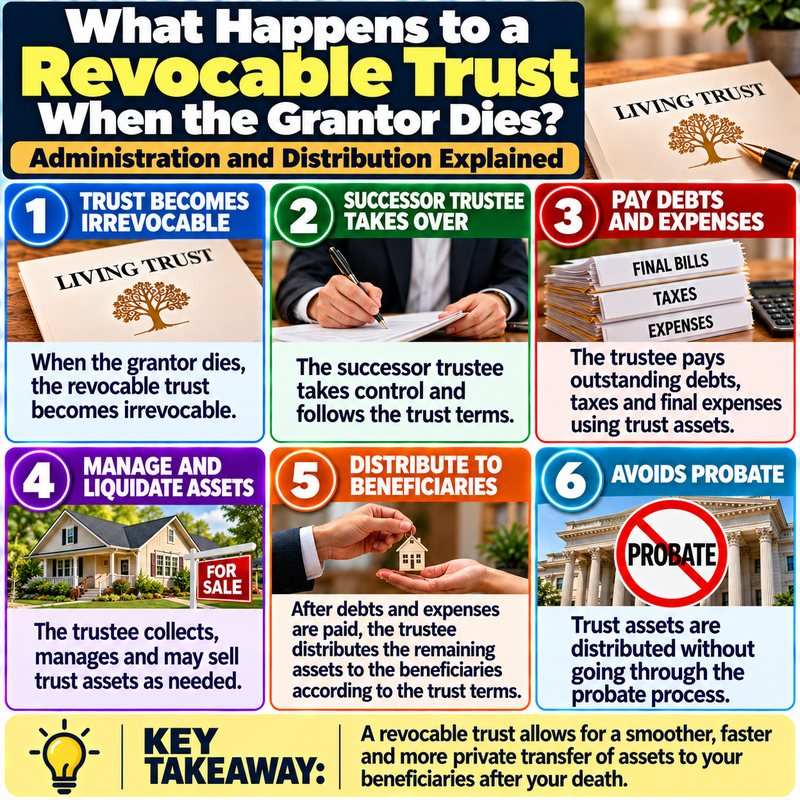
What Happens the Moment the Grantor Dies
The instant the grantor passes away, their power to revoke, amend, or control the trust ends. Control shifts to whoever is named as successor trustee in the trust document. But having legal authority and actually exercising it are two different things. The trustee still needs death certificates, access to records, and a clear understanding of what the trust says before doing anything meaningful with the assets inside it.
Nothing distributes itself. Bank accounts don’t automatically retitle. Real estate doesn’t transfer with a snap of the fingers. Every single step, from confirming the trustee’s authority to handing over the final asset, requires action, paperwork, and often patience.
When Does a Revocable Trust Become Irrevocable
A revocable trust becomes irrevocable, in whole or in part, once the grantor dies. This is one of the most important legal shifts in the entire trust lifecycle, and it affects nearly everything that follows.
- The deceased grantor can no longer revoke, amend, or restate the trust.
- The successor trustee gains authority to administer the trust according to its written terms.
- Beneficiary rights that were dormant during the grantor’s lifetime often activate.
- Tax reporting obligations can change, sometimes requiring a new taxpayer identification number.
Exactly how and when this transition occurs can depend on the specific trust document and the state where it was created. Some trusts split into multiple sub-trusts at this point, each with its own rules. Others remain a single unified trust until final distribution. The governing document always controls the details.
Why the Trust Can No Longer Be Changed
Revocable trusts exist, in large part, because they let the grantor stay in control during their lifetime. They can add assets, remove assets, change beneficiaries, or cancel the whole arrangement. Death removes that flexibility permanently. Once the grantor is gone, there’s no one left with the legal standing to revoke the trust, so its terms lock into place.
How This Shift Affects Beneficiary Rights
Before the grantor’s death, beneficiaries named in a revocable trust typically have very limited rights, since the grantor could change their minds at any time. After death, that dynamic flips. Beneficiaries often gain the right to receive notice of the trust’s existence, request a copy of its terms, and eventually receive an accounting of how the trustee managed and distributed assets. These rights vary by state, but they generally exist to keep the trustee accountable.
- Right to receive formal notice of the trust
- Right to request relevant trust documents
- Right to receive timely and accurate accountings
- Right to pursue legal action if the trustee breaches their duties
These protections exist precisely because beneficiaries no longer have a living grantor to answer to on their behalf. The successor trustee steps into that oversight role, and the law expects them to take it seriously.

What Authority Does the Successor Trustee Have
The successor trustee’s authority comes from two places: the trust document itself and the laws of the state governing the trust. Together, these sources spell out what the trustee can do, what they must do, and what they’re forbidden from doing.
- Collecting and securing trust property
- Paying legitimate debts and administration expenses
- Filing necessary tax returns
- Managing investments prudently during administration
- Distributing assets according to the trust’s instructions
Just because someone is named as successor trustee doesn’t mean they automatically have unlimited power. Most trust documents place conditions on major decisions, especially when it comes to selling property, investing trust funds, or making early distributions. A careful trustee reads the entire document before acting, not just the portions that seem obviously relevant.
Where to Find the Successor Trustee’s Powers in the Trust Document
Most trust documents include a dedicated section, often labeled “Trustee Powers” or “Administrative Provisions,” that lists exactly what the trustee is authorized to do. This might include the power to sell real estate, borrow money, hire professionals, or make discretionary distributions to beneficiaries based on need. Reading this section carefully, ideally with legal guidance, helps the trustee avoid acting outside their authority.
Trust documents built around a comprehensive revocable living trust plan often anticipate common scenarios, like a surviving spouse needing income or a minor beneficiary requiring a continuing trust. Those anticipated scenarios shape what the trustee is allowed to do without asking a court for permission.
How State Law Shapes Trustee Authority
When the trust document is silent on a particular issue, state law fills the gap. Most states have adopted some version of trust administration statutes that outline default trustee powers, fiduciary duties, and notification requirements. California, for example, generally requires trustees to notify beneficiaries and heirs within 60 days after a revocable trust becomes irrevocable due to the settlor’s death. Other states have their own timelines and requirements, so a trustee should never assume the rules are identical everywhere.
First Administrative Steps After Death
The early days of trust administration set the tone for everything that follows. Rushing through this phase, or skipping steps entirely, tends to create problems down the road, including disputes among beneficiaries and potential personal liability for the trustee.
Obtain Death Certificates and Review the Trust
One of the very first things a successor trustee should do is request multiple certified copies of the death certificate. Banks, investment firms, insurance companies, and government agencies will all want their own copy before releasing information or transferring assets. Alongside this, the trustee needs to locate the complete trust document, including every amendment and restatement, since an outdated version could contain terms that no longer apply.
It helps to also gather related estate planning documents, like a pour-over will, powers of attorney, or property schedules referenced within the trust. These documents often work together, and missing one can create confusion about what belongs in the trust versus what sits outside it.
Identify and Secure Trust Property
Once the trustee understands the trust’s terms, the next job is creating a full inventory of everything the trust owns. This includes bank accounts, investment accounts, real estate, vehicles, business interests, and personal property of value. Each asset needs to be checked for how it’s titled, since only property properly transferred into the trust’s name during the grantor’s lifetime typically avoids probate.
Securing property matters just as much as identifying it. Real estate may need new locks or updated insurance. Vehicles might need to be moved or insured under the trust. Valuables, like jewelry or collectibles, should be inventoried and protected from loss or theft during the administration period.
Obtain Tax Identification and Reporting Guidance
Many revocable trusts use the grantor’s Social Security number for tax purposes during their lifetime. After death, the trust frequently needs its own Employer Identification Number, since the IRS treats a formerly revocable trust differently once it becomes irrevocable. Applying for this EIN early avoids delays when opening accounts or filing returns.
According to current IRS guidance, trusts that change from grantor trust status typically need a new EIN, since the trust is treated as a separate tax entity after the triggering event. A tax professional familiar with post-death trust administration can confirm exactly which filings apply to the specific situation.
Given how much can shift during this window, many trustees find it wise to loop in a CPA early rather than waiting until tax season arrives. Mistakes made in the first few months, like using the wrong tax ID or missing a filing deadline, can be far more expensive to fix later.
Value Assets
Accurate valuation matters for multiple reasons: calculating any estate tax exposure, determining basis for capital gains purposes, and ensuring fair distribution among beneficiaries. Real estate typically needs a formal appraisal. Investment accounts usually show date-of-death values on statements. Business interests and unique personal property, like art or collectibles, may require a professional appraiser.
Skipping this step, or guessing at values, creates real risk. Beneficiaries are entitled to accurate information, and the IRS expects accurate reporting. A trustee who distributes assets based on rough guesses rather than documented values is setting themselves up for disputes.

How Debts, Expenses, and Creditor Claims Get Handled
Here’s a mistake that trips up well-meaning trustees constantly: distributing everything right away, before confirming what’s actually owed. Trust assets usually need to cover outstanding debts, funeral expenses, administration costs, and taxes before beneficiaries receive their full share.
Creditor procedures vary significantly depending on the state and whether probate is involved in any capacity. Some states require formal creditor notice periods even for trust assets, while others handle this more informally. The trustee needs to understand which approach applies before assuming the coast is clear.
- Funeral and burial expenses
- Outstanding medical bills
- Credit card balances and personal loans
- Mortgage payments or property taxes on trust-owned real estate
- Legal and accounting fees tied to trust administration
- Any final income tax owed by the deceased grantor
Why the Trustee Cannot Distribute Everything Right Away
If a trustee distributes all trust assets and then discovers an unpaid debt or tax liability, they may be personally responsible for covering the shortfall. This is one of the clearest reasons experienced trustees wait until they’ve accounted for known obligations before writing distribution checks. Reserving a reasonable amount of cash, even after most obligations are paid, protects against surprises that surface later.
Beneficiaries sometimes grow impatient during this waiting period, especially when they expect quick access to funds. Clear, proactive communication about why the trustee is moving carefully tends to prevent frustration from boiling over into disputes or legal challenges.
How Creditor Procedures Can Vary
Some states allow trustees to publish a notice to creditors, which starts a clock on how long creditors have to make claims. Other states don’t offer this option for trust-only administration, meaning the trustee may need to rely on known creditors and reasonable diligence instead. Because trust administration rules differ so much across state lines, a trustee administering a trust in an unfamiliar jurisdiction should confirm local requirements rather than assuming their home state’s rules apply.
Taxes and Post-Death Tax Reporting
Tax treatment is one of the areas where death changes everything. During the grantor’s lifetime, a revocable trust is typically treated as a grantor trust, meaning the grantor reports all income on their personal tax return. That simplicity disappears the moment the grantor passes away.
After death, the trust may need to file its own tax return, pay its own taxes, or pass income through to beneficiaries depending on how it’s structured and what the trustee decides to do with distributions.
Why Tax Treatment Changes After the Grantor’s Death
Once the grantor dies, the trust generally stops being treated as an extension of that person for tax purposes. It becomes its own taxable entity, at least for income earned after the date of death. This shift is exactly why applying for a new EIN early in the process matters so much. Financial institutions and the IRS expect to see the trust reporting under its own identification number going forward.
Form 1041 and Trust Income Reporting
Form 1041, the U.S. Income Tax Return for Estates and Trusts, often becomes relevant once a revocable trust turns irrevocable. The trust may need to report income earned after death, whether that’s interest, dividends, rental income, or capital gains from asset sales. Depending on the trust’s terms, that income might get taxed inside the trust itself, or it might pass through to beneficiaries via a Schedule K-1, letting them report and pay tax on it individually.
Whether the trust pays the tax or passes it through to beneficiaries often comes down to how much income is distributed during the tax year versus how much stays inside the trust. This is an area where professional guidance really pays off, since the choice can significantly affect the overall tax bill.
Stepped-Up Basis and Its Effect on Capital Gains
Here’s a silver lining many beneficiaries don’t expect: assets held in a revocable trust often receive a step-up in basis to their fair market value as of the date of death. This means if the trustee sells an asset shortly after death for close to its appraised value, there may be little or no capital gains tax owed, even if the original grantor purchased that asset decades earlier for a fraction of its current worth.
This stepped-up basis is exactly why accurate date-of-death valuations matter so much. Without a documented value, the trustee and beneficiaries lose the ability to prove what the new basis actually was, which can create headaches if the IRS ever asks questions later.
Who Pays the Tax: The Trust or the Beneficiaries
Whether the trust itself pays the income tax or passes that burden to beneficiaries depends largely on how much income gets distributed during the tax year. If the trustee distributes income to beneficiaries, that income generally carries out to them via Schedule K-1, and they report it on their own returns. If the trustee retains income inside the trust instead, the trust pays tax at trust tax rates, which compress to the highest bracket far faster than individual rates. This is one more reason a knowledgeable CPA earns their fee during trust administration.

Beneficiary Notices and Communications
Keeping beneficiaries in the dark is one of the fastest ways a trustee invites legal trouble. Most states require some form of formal notification once a revocable trust becomes irrevocable, and skipping this step, even unintentionally, can expose the trustee to claims of breach of duty.
Beyond the legal requirement, clear communication simply makes administration smoother. Beneficiaries who understand the timeline, the process, and the reasons behind delays tend to be far more patient than those left guessing. A trustee who sends periodic updates, even brief ones, builds trust that pays off if questions or disagreements arise later.
What the Statutory Notice Must Include
A proper trust notice isn’t just a casual letter announcing that someone passed away. Most states specify exactly what information must appear in this document, and missing a required element can invalidate the notice entirely.
- The identity of the settlor and the date the trust became irrevocable
- The name, address, and contact information of the acting trustee
- The physical address where the trust is being administered
- A statement explaining the recipient’s right to request a copy of the trust terms
- A required warning about the legal deadline for contesting the trust’s validity
This notice typically goes to every beneficiary named in the trust as well as every legal heir of the deceased settlor, even heirs who weren’t named as beneficiaries. That second group matters because heirs sometimes have standing to contest the trust, and the law wants them informed regardless of whether they inherit anything.
In California, for example, the trustee generally must serve this notice within 60 days of the date the trust (or a portion of it) becomes irrevocable due to the settlor’s death. Missing this window doesn’t necessarily void the trust, but it can extend the period during which someone could challenge it.
The 60-Day Notification Deadline
Sixty days sounds like plenty of time, until a trustee is also juggling death certificates, asset inventories, and grieving family members. Building notification into the very first weeks of administration, rather than treating it as an afterthought, keeps the trustee on solid legal footing. Many trustees work with an attorney specifically to draft and send this notice correctly, since the consequences of getting it wrong can be serious.
Why an Informal Family Announcement Isn’t Enough
A phone call to the kids or a group text announcing “Mom’s trust is now in effect” might feel sufficient in the moment, but it doesn’t satisfy the legal requirement in states that mandate formal written notice. Courts generally want documented proof that each required recipient received specific, complete information, not just a general awareness that something changed.
Trustees who skip formal notice sometimes find out the hard way when a beneficiary later claims they never knew about their right to contest the trust or request its terms. Sending a proper, documented notice protects the trustee just as much as it informs the beneficiary.
Managing Real Estate and Investments During Administration
Trust administration rarely wraps up overnight, which means someone has to manage whatever assets sit inside the trust while everything else gets sorted out. Real estate needs upkeep. Investment portfolios need attention. Bills don’t stop arriving just because the grantor passed away.
This ongoing management responsibility is often underestimated by people stepping into the trustee role for the first time. It’s not a one-time event where assets get frozen and later released. It’s active stewardship that can stretch across many months.
Maintaining Insurance and Property Value
A house that sits vacant without proper insurance coverage is a liability waiting to happen. Many homeowner’s policies change or lapse when the named insured passes away, so the trustee needs to confirm coverage continues, sometimes through a vacant property policy if the home sits empty for an extended period. The same logic applies to vehicles, boats, or other insured property owned by the trust.
Beyond insurance, physical upkeep matters too. Lawns need mowing, pipes need to be protected from freezing, and security systems need monitoring. Letting a property fall into disrepair while administration drags on can reduce its sale value and create friction with beneficiaries who expected a well-maintained asset.
Continuing or Selling a Business Interest
If the trust owns part or all of a business, the trustee faces a more complex decision. Some trusts include specific instructions about continuing operations, selling the interest, or transferring it to a particular beneficiary. Others leave this decision largely in the trustee’s hands, guided by general fiduciary principles.
Running a business is a very different skill set than managing a bank account, and trustees without relevant experience often bring in outside management or a business valuation expert before making any major moves. Selling too quickly can undervalue the asset, while holding on too long without proper expertise can erode its worth just as easily.

Outright Distributions vs. Continuing Trusts
Not every trust ends with a simple check written to each beneficiary. Some trusts are designed to distribute everything relatively quickly once debts and taxes are settled. Others are built to continue for years, sometimes decades, managing assets on behalf of beneficiaries who aren’t ready, able, or legally permitted to receive a lump sum.
Reading the distribution instructions carefully, rather than assuming every trust works the same way, is essential. A trustee who distributes assets outright when the document calls for a continuing trust has made a serious error, one that can be difficult or impossible to undo.
When Beneficiaries Receive Assets Immediately
Simpler trusts, especially those created by a single person leaving everything to adult children in equal shares, often call for outright distribution once administration wraps up. In these cases, once debts are paid, taxes are addressed, and the trustee has documented everything properly, remaining assets get transferred directly to beneficiaries and the trust terminates.
When a Trust Continues for a Spouse, Child, or Special-Needs Beneficiary
Many trusts, though, are built with more nuance. A surviving spouse might receive income for life while the principal eventually passes to children. A minor child’s inheritance might stay in trust until they reach a certain age, like 25 or 30. A special-needs beneficiary might need assets held in a specially designed trust that doesn’t disqualify them from government benefits.
These continuing trusts require the trustee to keep managing assets, making distributions according to specific standards, like health, education, maintenance, or support, and filing ongoing tax returns for potentially many years after the original grantor’s death. This is a long-term commitment, not a quick wrap-up project.
What Happens to Assets Outside the Trust
Here’s something that surprises a lot of people: not everything the deceased owned necessarily belongs to the trust, even if they intended it to. Assets titled individually, without ever being retitled into the trust’s name, generally don’t fall under the trustee’s authority at all.
Jointly Held Property and Beneficiary-Designated Accounts
Property owned jointly with rights of survivorship typically passes directly to the surviving co-owner, completely outside the trust. Retirement accounts, life insurance policies, and payable-on-death bank accounts usually transfer according to their named beneficiary designations, regardless of what the trust document says. This is exactly why keeping beneficiary designations updated matters just as much as funding the trust properly.
Why the Trustee Must Verify Ownership First
Before a trustee lists something as a trust asset, they need actual proof of ownership, not just an assumption based on where the item sits physically. A bank account titled only in the deceased’s individual name, for example, isn’t a trust asset even if the deceased always intended to transfer it. Verifying titling on every account and piece of property prevents the trustee from mistakenly managing, or distributing, assets they have no legal authority over.
How a Pour-Over Will Interacts With Probate
Most comprehensive trust plans include a companion document called a pour-over will. This will acts as a safety net, directing any assets left outside the trust at death to “pour over” into the trust for distribution according to its terms.
| Scenario | What Happens |
|---|---|
| Asset properly titled in trust name | Passes under trust terms, no probate needed |
| Asset left in individual name, pour-over will exists | May still require probate before transferring to trust |
| Asset left in individual name, no will or trust reference | Passes under state intestacy law through probate |
A pour-over will doesn’t eliminate probate for assets left outside the trust; it simply ensures those assets eventually end up in the right place once probate concludes. This distinction trips up a lot of people who assume having a trust automatically means no probate at all, regardless of how assets were titled.
The real lesson here is that funding the trust properly during the grantor’s lifetime, meaning actually retitling accounts and property into the trust’s name, matters just as much as writing the trust document itself. A pour-over will is a backstop, not a substitute for proper funding.
Why Pour-Over Property May Still Require Probate
Probate exists specifically to transfer individually titled property, and a pour-over will doesn’t bypass that requirement. It only directs where the property goes once probate releases it. This means assets caught by a pour-over will often take longer to reach the trust, and may incur probate costs that properly funded trust assets would have avoided entirely.

How Long Trust Administration Typically Takes
There’s no single answer that fits every situation. Simple trusts with a single beneficiary and straightforward assets might wrap up in a matter of months. Complex trusts involving real estate sales, business interests, continuing sub-trusts, or multiple beneficiaries with competing interests can take a year or considerably longer.
Factors That Can Extend the Timeline
- Real estate that needs to be sold rather than simply transferred
- Disputes or disagreements among beneficiaries
- Complex tax situations requiring extended filing periods
- Business interests that require ongoing management or valuation
- Continuing sub-trusts designed to last for years
- Delays in locating or identifying all trust assets
When to Bring in an Attorney, CPA, or Financial Professional
Trustees aren’t expected to know everything, and trying to handle complex administration entirely alone is often where mistakes creep in. An estate planning attorney can confirm the trustee is interpreting the trust correctly and meeting state-specific notice requirements.
A CPA familiar with fiduciary income tax can navigate the Form 1041 decisions and stepped-up basis calculations that trip up even experienced trustees. A financial advisor can help manage investment assets prudently during the administration period, especially when a continuing trust is involved.
Bringing in professionals isn’t a sign of failure on the trustee’s part. It’s simply a recognition that trust administration touches legal, tax, and financial disciplines that most people haven’t trained in. The cost of professional guidance is almost always smaller than the cost of a mistake made trying to save money by going it alone.
Successor-Trustee Checklist
- Obtain multiple certified copies of the death certificate
- Locate and review the complete trust document and all amendments
- Confirm your authority to act as successor trustee
- Apply for a new EIN for the trust if required
- Send formal written notice to all beneficiaries and legal heirs within the applicable deadline
- Inventory every trust asset and confirm how each one is titled
- Secure real estate, vehicles, and valuables, and update insurance as needed
- Obtain professional valuations for real estate, business interests, and unique property
- Identify and address outstanding debts, taxes, and administration expenses
- Open a dedicated trust bank account separate from personal funds
- Keep detailed records of every transaction, receipt, and payment
- Consult an attorney, CPA, or financial advisor as needed throughout the process
- Distribute remaining assets according to the trust’s exact terms, whether outright or into continuing sub-trusts
- Provide a final accounting to beneficiaries if required
The Bottom Line on Trust Administration After Death
A revocable living trust doesn’t hand out assets the moment the grantor dies, and treating it as if it does is one of the most common, and costly, mistakes a successor trustee can make. Real administration takes time, careful record-keeping, and a clear understanding of what the trust document and state law actually require.
Navigating trust administration after a loved one’s death doesn’t have to feel overwhelming when you understand each step clearly, and working with experienced guidance through resources like createalivingtrust.com can help trustees carry out their responsibilities with confidence.
Successor-Trustee Checklist
| Step | Why It Matters |
|---|---|
| Review the trust and confirm authority | Prevents acting outside the trustee’s legal power |
| Notify beneficiaries and heirs | Satisfies statutory deadlines and starts the contest clock |
| Inventory and secure assets | Protects property from loss, damage, or mismanagement |
| Address debts and taxes | Avoids personal liability for unpaid obligations |
Every successor trustee benefits from having a clear roadmap before diving into the details of administration. Without one, it’s easy to miss a deadline, skip a required notice, or distribute assets before confirming what’s actually owed. The checklist below breaks the process into manageable steps, each building on the one before it.
None of these steps happen in isolation. Reviewing the trust informs how assets get inventoried. Notifying beneficiaries often happens alongside securing property. Treating this as a sequence rather than a random collection of tasks keeps administration organized and defensible if anyone ever questions how the trustee handled things.
Trustees administering a trust built around a solid revocable living trust foundation often find this process smoother, simply because the original document anticipated common scenarios and spelled out clear instructions. Trusts drafted loosely or inconsistently tend to create far more guesswork for the person stepping into the trustee role.
1. Locate and Review the Trust Document
Before taking any action, find the complete, signed trust document along with every amendment or restatement ever made to it. An outdated copy can lead a trustee to follow instructions the grantor later changed, which creates real problems if discovered after distributions have already occurred.
Reading the entire document, not just skimming the distribution section, reveals powers, limitations, and conditions that shape every decision ahead. Trustees who skip this step often find themselves backtracking later once they realize a provision applies that they overlooked the first time through.
2. Obtain Certified Death Certificates
Order more certified copies of the death certificate than seem necessary at first glance. Banks, title companies, insurance providers, and government agencies each typically want their own original, and running out partway through administration just creates delays.
Most county vital records offices or funeral homes can provide these certified copies for a small fee per copy. Having ten or more on hand at the start saves the trustee from repeated trips back to request additional copies as new institutions ask for one.
3. Notify Beneficiaries and Heirs
Formal notification isn’t optional in most states once a revocable trust becomes irrevocable due to the grantor’s death. This step protects both the beneficiaries’ right to information and the trustee’s own legal standing, since proper notice starts the clock on how long someone has to contest the trust.
Every beneficiary named in the trust needs this notice, along with every legal heir of the deceased grantor, even heirs who aren’t named as beneficiaries at all. That second group matters because heirs generally retain standing to challenge the trust’s validity, and the law wants them formally informed regardless of what they stand to inherit.
Missing this requirement doesn’t automatically void the trust, but it can extend how long the trust remains vulnerable to a challenge. Sending the notice correctly and on time closes that window and gives the trustee documented proof that everyone entitled to information actually received it.
Many states, including California, generally require this notice to go out within 60 days of the date the trust becomes irrevocable. The notice must typically identify the trustee, explain the recipient’s right to request trust documents, and include a specific warning about the deadline for contesting the trust.
4. Inventory and Secure Trust Assets
Create a complete, written inventory of every asset the trust owns, confirming how each one is titled before listing it as trust property. Once identified, secure real estate with proper insurance, protect valuables from loss, and update account access so trust funds don’t sit exposed to unnecessary risk during the administration period.
5. Open a Trust Bank Account and Apply for an EIN
Setting up a dedicated trust bank account, separate from the trustee’s personal finances, keeps records clean and prevents any appearance of commingling funds. Pairing this account with a newly issued EIN, obtained once the trust becomes irrevocable, ensures income and expenses get reported under the correct tax identity from day one.
6. Address Debts, Taxes, and Expenses Before Distributing
Confirm every outstanding debt, pending tax liability, and administration expense before writing a single distribution check. Reserving sufficient funds to cover these obligations protects the trustee from personal liability if a bill or tax notice surfaces after assets have already gone out the door.

The Bottom Line on Trust Administration After Death
A revocable living trust doesn’t hand beneficiaries their inheritance the moment the grantor passes away, and assuming otherwise sets everyone up for frustration. Real administration involves locating documents, securing property, notifying the right people, settling debts and taxes, and only then distributing what remains according to the trust’s actual terms, a process that rewards patience and careful record-keeping far more than speed.
Frequently Asked Questions
Administering a trust after someone’s death raises plenty of specific questions, many of which don’t have one-size-fits-all answers. State law, the trust’s own language, and the complexity of the assets involved all shape the right response in any given situation.
Below are answers to some of the most common questions successor trustees and beneficiaries ask during this process.
- How probate interacts with trust assets
- Whether trustees face personal liability for mistakes
- How notice requirements differ from state to state
- What happens when no successor trustee is available
These questions tend to surface early in administration, often within the first few weeks after the grantor’s death. Having clear answers upfront helps trustees avoid common missteps and gives beneficiaries realistic expectations about timing and process.
For situations that don’t fit neatly into a general answer, consulting an estate planning attorney familiar with the specific state’s trust laws remains the safest path forward.
Does a revocable trust avoid probate entirely after death?
Only assets that were properly retitled into the trust’s name during the grantor’s lifetime typically avoid probate. Anything left in the grantor’s individual name, even with a pour-over will pointing it toward the trust, may still need to pass through probate before reaching its intended destination.
This is why funding the trust correctly while the grantor is alive matters just as much as drafting the trust document itself. A trust that exists on paper but holds no properly titled assets offers little practical benefit when it comes to avoiding probate.
Can a successor trustee be held personally liable for mistakes?
Yes, a trustee who breaches their fiduciary duties, mismanages trust property, or distributes assets improperly can face personal liability to beneficiaries or creditors. This is exactly why careful record-keeping, timely notices, and professional guidance matter so much throughout administration.
Does every state require the same beneficiary notice rules?
No, notification requirements vary considerably from state to state, including who must receive notice, what the notice must say, and how quickly it needs to go out. Some states impose a strict 60-day deadline, while others use different timeframes or less formal requirements altogether.
Because of this variation, a trustee administering a trust should confirm the specific rules in the state governing the trust rather than assuming requirements are uniform nationwide. What satisfies one state’s notice statute might fall short in another.
Trustees handling cross-state situations, such as a grantor who lived in one state but owned property in another, face an added layer of complexity here. Consulting an attorney licensed in the relevant state helps avoid a technical notice failure.
- Deadline for sending notice after the trust becomes irrevocable
- Required content within the notice itself
- Who qualifies as an heir entitled to notice, even if not a named beneficiary
What happens if there is no named successor trustee?
Most well-drafted trusts name at least one backup or alternate trustee in case the first choice can’t or won’t serve. If no one named in the document is available, a court may need to step in and appoint a trustee, which can add time and expense to the administration process.
Can beneficiaries contest a trust after the grantor’s death?
Yes, beneficiaries and certain heirs generally retain a limited window to contest a trust’s validity after receiving proper notice. This window is exactly why the required warning about contest deadlines must appear in the formal notice sent out by the trustee.
Common grounds for a contest include claims of undue influence, lack of mental capacity at the time the trust was signed, or improper execution. Once the contest period expires without a challenge, the trust’s terms generally become much harder to dispute.
Is a new EIN always required for the trust after death?
In most cases where a revocable trust becomes irrevocable due to the grantor’s death, a new EIN is required, since the IRS no longer treats the trust as an extension of the grantor’s personal tax identity. A tax professional can confirm whether any exceptions apply to a specific trust’s structure.
How are trust debts different from the grantor’s personal debts?
Trust debts are obligations tied specifically to property or liabilities held within the trust, paid using trust assets. The grantor’s personal debts, on the other hand, may need to be addressed through a separate probate process if they aren’t tied to trust property.
Sorting out which debts belong to which category is one of the trustee’s early tasks, since paying the wrong account from the wrong source can create accounting headaches and potential disputes among beneficiaries later.
What happens to a jointly owned home when the grantor dies?
If the home was titled jointly with rights of survivorship, it typically passes directly to the surviving co-owner outside the trust entirely, regardless of what the trust document says about real estate. The trustee generally has no authority over this property since it never belonged to the trust in the first place.
Confirming exactly how a property was titled, rather than assuming it falls under trust control, prevents the trustee from mistakenly including it in the trust inventory or attempting to manage an asset they have no legal claim over. For more details on the trustee’s responsibilities, you can review the trust administration basics.
Can a trustee sell property before distributing it to beneficiaries?
Generally yes, if the trust grants this authority, and selling is often necessary to cover expenses, pay debts, or divide value equally among multiple beneficiaries who can’t simply split a single piece of real estate.
Do all beneficiaries get access to the full trust document?
Most states give beneficiaries the right to request a copy of the trust terms relevant to their own interest, though the scope of what they’re entitled to see can vary depending on state law and the trust’s own provisions.
Some trusts contain confidential provisions affecting other beneficiaries that a given individual may not have automatic access to, particularly in trusts with unequal distributions or special conditions attached to specific shares.
When beneficiaries and trustees disagree about what information must be shared, consulting an attorney familiar with the governing state’s trust transparency laws usually resolves the question faster than letting tension build on its own.
If you’re stepping into the role of successor trustee or simply want to understand how your own living trust will be handled someday, the team at createalivingtrust.com can help you plan ahead with confidence.