Tools for Managing NFTs Held in a Trust
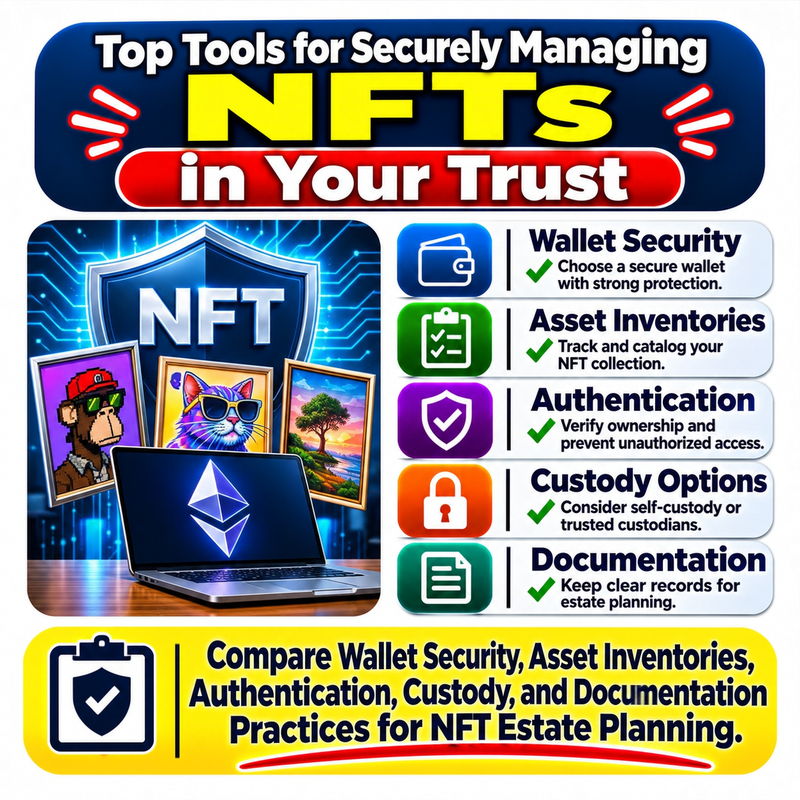
Compare wallet security, asset inventories, authentication, custody, and documentation practices for NFT estate planning.
You inherit a wallet full of digital art, and suddenly the hardware device in your hand feels a lot heavier than it looks.
Article-at-a-Glance
- Securely managing NFTs in a trust means separately verifying the token itself, the wallet holding it, the legal right to the underlying artwork, and the survival of any linked media — no single app or device handles all four.
- A hardware wallet doesn’t actually “store” an NFT; what it protects is something far more specific, and misunderstanding this trips up a lot of well-meaning trustees.
- Owning an NFT and owning the copyright to the image, video, or song behind it are two separate legal questions, and conflating them is one of the most common estate-planning mistakes.
- Standard trust-funding services, including the eState Living Trust offered through Bulletproof Legacy Financial, handle ordinary asset titling, but NFT custody, key recovery, and IP review typically call for additional, specialized attention.
- A token can remain perfectly intact on the blockchain while the picture, video, or audio file it points to quietly disappears — and whether that happens depends on choices made long before a trustee ever gets involved.
Managing NFTs inside a revocable living trust isn’t one task — it’s five or six smaller ones stacked together, and skipping any of them creates a gap a future trustee may not notice until it’s too late.
Compare wallet security, asset inventories, authentication, custody, and documentation practices for NFT estate planning
Here’s the direct answer: managing NFTs held in a trust requires a reliable asset inventory, secure and authorized wallet access, proof of legal ownership or an effective trust transfer, documentation of the token plus any contractual rights tied to it, verification that the linked media and metadata are still reachable, and a clear succession plan for the next trustee. Hardware wallets, portfolio trackers, blockchain explorers, credential managers, and custody services each do one job well. None of them, alone, proves trust title, guarantees access, confirms authenticity, or preserves the artwork forever.
That distinction matters more than most people realize going in. A trustee can hold a hardware wallet, see the NFT listed in a tracker, and still not have lawful authority to sell, transfer, or distribute it. Legal ownership, technical access, and intellectual-property rights are three separate layers, and this article walks through tools and procedures for each one.
What NFT Trust Management Actually Involves
Before comparing tools, it helps to separate what an NFT trustee is actually managing. There’s the token itself — a line of code on a blockchain. There’s the wallet that holds the signing keys controlling that token. There’s the trust document that may or may not have legally captured the asset. And there’s the media the token points to, which might live on a centralized server or a decentralized storage network. Each layer needs its own verification process, and tools built for one layer rarely do anything useful for another.
Who Needs a Specialized NFT Plan
Anyone holding NFTs with real financial, sentimental, or professional value needs more than a generic “digital assets” clause. This includes collectors with profile-picture collections, artists holding minted editions of their own work, gamers with in-game NFT items tied to account access, and anyone holding fractional or utility NFTs tied to memberships or royalties. If a token’s loss or mishandling would create a real problem for beneficiaries, it deserves a documented plan rather than a vague mention in a will.
When a Standard Trust Clause Falls Short
A revocable living trust is a strong foundation for general estate planning, covering real estate, bank accounts, and personal property with well-established funding procedures. But a trust document that simply lists “NFTs” or even names a wallet address doesn’t, by itself, transfer signing control, confirm authenticity, or resolve licensing questions tied to the underlying artwork. The trust establishes who’s supposed to receive or manage the asset; it does not replace the technical and legal steps needed to actually get there.

Tracking NFT Token IDs and Blockchain Records
Every NFT has a few pieces of identifying information that matter far more than its thumbnail image: the blockchain it lives on, the smart-contract address that minted it, the specific token ID within that contract, the wallet address currently holding it, and its full transaction history. Together, these create a fingerprint that’s unique and verifiable. Separately, any one of them is nearly meaningless.
Why Token ID Alone Is Not Proof of Ownership
A token ID like “#4521” is not globally unique — thousands of different NFT contracts might each have a token numbered 4521. What makes it specific is the combination of chain, contract address, and token ID together. A trustee should never accept a screenshot, a PDF printout, or a marketplace listing page as proof that a trust actually holds a particular NFT. Screenshots can be faked, marketplace pages can display delisted or stolen items, and replicas minted on a different chain can look identical to the original while holding zero legal connection to it. The only reliable confirmation comes from checking the actual wallet address against the blockchain record itself.
Matching Each NFT to Its Correct Blockchain and Chain
NFTs exist on different blockchains — Ethereum, Polygon, Solana, and others — and a token minted on one chain is not automatically the same asset if a similar-looking version appears on another. “Bridged” versions, wrapped tokens, or copycat collections can confuse even experienced collectors. A trustee verifying a collection should confirm which specific chain each token lives on before assuming two similar-looking assets are actually connected.
Recording Smart Contract Addresses for Trustees
The smart-contract address is essentially the “building” the NFT lives in, while the token ID is its specific “unit number.” Recording both — along with the token standard where relevant, such as ERC-721 or ERC-1155 on Ethereum-based chains — gives a successor trustee everything needed to locate the asset independently, without relying on a marketplace account that might later be restricted, closed, or inaccessible.
Wallet Control and Access for Trustees
Wallets fall into a few broad categories, and understanding the tradeoffs between them is one of the most practical skills a trustee can develop. Each approach balances convenience against risk differently:
- Hardware signing devices store private keys offline and require physical confirmation for any transaction, reducing remote-hacking risk but creating a single physical object that must be safeguarded and eventually passed along.
- Software wallets run on a phone or computer, offering convenience but exposing keys to malware, phishing, or device compromise if the device itself isn’t secured.
- Multisignature arrangements require two or more approvals before a transaction executes, spreading control across multiple trustees or advisers so no single person can move assets alone.
- Third-party custody services hold keys on behalf of the owner, shifting technical responsibility to a provider in exchange for fees and reliance on that provider’s own security practices.
Custodial vs Non-Custodial Wallets Explained
A custodial wallet means a company holds the private keys on the owner’s behalf — similar to how a bank holds cash rather than the account holder keeping it under a mattress. A non-custodial wallet means the individual (or trustee) holds the keys directly, with no company able to reverse a mistake or recover a lost password. Trusts holding valuable NFTs sometimes use a mix: custody for simplicity on lower-value holdings, self-custody for pieces where control matters most.
Multi-Signature Wallets for Shared Trustee Control
Multisignature, or “multisig,” setups require multiple separate approvals before a transaction can complete — for example, two signatures out of three authorized parties. This prevents one trustee from acting alone, whether by mistake, bad judgment, or compromise, and it mirrors the kind of shared fiduciary oversight courts and beneficiaries expect from trust administration generally. It’s not a casual feature to set up, though, and usually benefits from a specialist’s involvement during configuration.
Seed Phrase Storage Without Creating a Single Point of Failure
A hardware wallet does not physically contain the NFT — it contains the credentials used to approve transactions involving it. The real asset remains on the blockchain. Losing the device’s recovery phrase (often a string of twelve or twenty-four words) can mean permanently losing signing access, since blockchain transfers are generally irreversible and there’s no customer service line to call for a reset. That recovery phrase should never appear in a will, a trust document, a probate filing, or any file likely to become public or widely shared. Instead, many families use a sealed, physically secured record kept separately from the trust paperwork, with access limited to the current trustee.
Metadata and Off-Chain Hosting Risks
An NFT’s token lives on the blockchain, but the actual image, video, or audio file it represents usually lives somewhere else entirely — referenced through a metadata link rather than stored directly on-chain. That distinction explains one of the strangest risks in NFT ownership: the token can survive perfectly while the art it points to vanishes.
Why Linked Media Can Disappear Even if the Token Survives
When media is hosted on an ordinary centralized web server, that server’s continued existence depends entirely on someone paying the hosting bill and keeping the domain active. If a project shuts down, a hosting contract lapses, or a company goes out of business, the link can simply break — leaving a technically valid, verifiably-owned NFT pointing at nothing but a broken image icon.
IPFS, Centralized Servers, and Long-Term Storage Tradeoffs
Decentralized storage systems, often referenced through something called IPFS (InterPlanetary File System), address this differently by identifying content through a unique fingerprint rather than a single server location. That sounds more permanent, and in some ways it is — but content-addressed storage still depends on someone actively “pinning,” or continuously hosting, the file somewhere. Without ongoing pinning, even IPFS-referenced media can become unreachable. Preserving permitted copies, metadata snapshots, and hosting records — without reproducing copyrighted material beyond what’s legally authorized — gives a trustee a fallback if the original hosting ever fails.

Marketplace Permissions and Transfer Authority
NFTs are frequently bought, sold, and tracked through marketplaces, and those platforms add another layer entirely — separate from blockchain ownership and separate from the trust document.
OpenSea, Blur, and Platform-Specific Account Access
A marketplace account is just that: an account, governed by its own terms of service, login credentials, and recovery procedures. Holding an NFT in a self-custody wallet is not the same as being logged into the marketplace account associated with it, and a platform may impose its own restrictions or deceased-user procedures that a trustee must follow through legitimate channels rather than by attempting to log in as the original account holder.
Granting Transfer Rights Without Surrendering Trust Control
Many marketplaces require wallet “approvals” that let their smart contracts move tokens on a user’s behalf — a convenience that also creates risk if the approval is overly broad or tied to a malicious contract disguised as a legitimate collection page. Trustees should understand exactly what permissions a marketplace interaction grants before clicking “approve,” since overly broad approvals are a common vector for wallet-draining scams.
Verifying Authenticity Before Trust Transfer
Before a trustee treats any NFT as a true trust asset, it’s worth confirming the thing is what it claims to be. Authenticity problems in the NFT space aren’t rare, and a convincing fake can sit right next to the genuine article in a wallet’s display, looking identical down to the thumbnail image.
Confirming Provenance Through the Original Minting Record
Provenance means tracing a token all the way back to its original minting transaction — the moment it was first created on the blockchain — and following every wallet-to-wallet transfer since then. A blockchain explorer can display this history publicly, showing the original minting contract, the first owner’s wallet, and each subsequent sale or transfer. If that chain of custody is broken, unclear, or inconsistent with purchase records the original owner kept, that’s a signal worth investigating before assuming the NFT belongs in the trust at all.
Spotting Counterfeit Collections and Copycat Contracts
Scammers routinely mint “copycat” collections that copy an original project’s artwork and name, deploying them on a different contract address entirely. To the untrained eye, a counterfeit token can look indistinguishable from a legitimate one inside a marketplace search result. The only reliable way to tell them apart is comparing the contract address against the verified, original contract — not the collection name, not the image, and not the marketplace listing title.
A trustee working through an unfamiliar collection benefits from a short verification routine rather than guesswork:
- Confirm the contract address matches records from the original purchase, if available.
- Cross-check the contract address against the project’s official website or verified social channels, where such records still exist.
- Review the full transaction history for unusual patterns, like a token bouncing between unfamiliar wallets shortly before being listed for sale.
- Treat unsolicited NFTs that appear in a wallet without any purchase record with suspicion, since “airdropped” tokens are a known phishing tactic.
None of this guarantees certainty in every case, and genuinely disputed authenticity sometimes calls for a specialist’s opinion rather than a trustee’s best guess.
Hardware Wallets for Cold Storage of NFTs
Hardware wallets are physical devices designed to keep private keys away from internet-connected devices, approving transactions only after a physical button press or PIN entry on the device itself. For NFTs with real value, this “cold storage” approach significantly reduces exposure to remote hacking attempts compared with keeping keys on a phone or laptop that’s constantly online.
It’s worth repeating a point that trips up a lot of people: the hardware device doesn’t contain the NFT. The token lives permanently on the blockchain. What the device holds is the cryptographic key needed to prove ownership and authorize a transfer. Losing the device itself usually isn’t catastrophic as long as the backup recovery phrase survives — but losing both the device and the backup generally means losing access permanently, with no company or customer service line able to restore it.
Ledger and Trezor Compatibility With NFT Standards
Popular hardware wallet brands generally support the token standards used for most NFTs, connecting to software interfaces that display a collection’s contents for review before any transaction is approved. Compatibility details change as standards and blockchains evolve, so a trustee managing an unfamiliar device should verify current support for a specific chain before assuming everything will simply work, rather than relying on outdated documentation.
Backup Protocols So Trustees Are Not Locked Out
A sound backup protocol separates three things: the device itself, the recovery phrase, and any PIN or password protecting device access. Storing these in the same location defeats the purpose of having a backup at all. Many trust administrators use a sealed, physically secured arrangement — such as a safe deposit box or attorney-held sealed envelope — that’s referenced in trust-related instructions without the sensitive details themselves ever appearing in a public document. A successor trustee should know exactly where to find that sealed material and under what conditions they’re authorized to access it, without the current trustee publishing the actual seed phrase anywhere.

Inventory Tools for Cataloging a Digital Collection
An inventory is the backbone of responsible NFT trust administration. Without one, a successor trustee has nothing to work from beyond scattered marketplace statements and a device they may not know how to operate.
- Spreadsheet-based inventories kept in a secured document repository.
- Blockchain explorers used for independent, read-only verification of holdings.
- Portfolio tracking platforms that aggregate multiple wallets into one dashboard.
- Read-only wallet monitoring tools that display holdings without exposing signing access.
Each tool serves a distinct function, and relying on just one creates blind spots. A tracker, for instance, might miss bridged tokens, obscure collections, or assets flagged as spam by its filtering algorithm — meaning a trustee who treats a tracker’s dashboard as a complete and final inventory risks overlooking real assets entirely.
Spreadsheet Templates vs Dedicated Crypto Inventory Software
A simple spreadsheet, maintained carefully, often outperforms flashier software for trust purposes because it’s transparent, portable, and doesn’t depend on a third-party service staying in business. Dedicated inventory platforms add convenience — automatic valuation updates, visual galleries, multi-chain aggregation — but they introduce a dependency on that platform’s continued operation and accuracy. Many trustees use both: a tracker for day-to-day monitoring, and a spreadsheet as the authoritative, independently verifiable record.
What Every NFT Ledger Entry Should Include
A useful inventory entry captures enough detail that someone with zero prior context could locate and verify the asset independently. That typically means:
- Blockchain or network (Ethereum, Polygon, Solana, etc.)
- Smart-contract address
- Token ID
- Wallet or public address currently holding the token
- Acquisition date and source (purchase, mint, gift)
- Claimed legal owner
- Transaction hash from the acquiring transaction
- Metadata and media hosting location
- Any licensing or usage-rights documents on file
- Purchase records or receipts
- Assigned custodian or responsible trustee
Notice what’s deliberately absent from that list: private keys, seed phrases, passwords, or PINs. A thorough inventory documents everything needed to identify and verify an asset without ever becoming, itself, a security liability.
Succession Documentation Beyond the Trust Instrument
The trust document establishes legal intent — who should receive or manage which assets. It’s rarely the right place for operational detail, though, since trusts can sometimes become discoverable during disputes or administration, and nobody wants sensitive access information floating around in a document reviewed by multiple parties.
A separate memorandum, referenced by the trust but kept confidentially, bridges that gap. It holds the practical “how” that complements the trust’s legal “who” and “what” — without turning the trust itself into a security risk.
This approach also solves a timing problem. Trusts are sometimes amended infrequently, while wallet setups, device replacements, and password managers change more often. A separate memorandum can be updated whenever circumstances shift, without requiring a formal trust amendment every time a trustee swaps hardware wallets or adds a new storage account.
Choosing where to store that memorandum matters just as much as writing it. Options include a sealed envelope with an estate attorney, a secured safe deposit box, or a reputable password manager with designated emergency access — each with different tradeoffs between convenience and risk.
- Attorney-held sealed documents offer professional oversight but may add delay during access requests.
- Safe deposit boxes offer strong physical security but depend on bank access procedures after death, which vary by institution.
- Secure password managers with emergency access features offer convenience but depend on that service’s continued operation and security practices.
Writing a Digital Asset Memorandum Trustees Can Actually Use
A useful memorandum reads like an instruction manual, not a legal clause. It names each wallet by purpose (“primary hardware wallet,” “hot wallet for marketplace activity”), explains where backups are physically stored, lists which marketplace accounts exist and under what email, and names a backup contact for technical questions if the primary trustee isn’t comfortable navigating crypto tools directly.
It should also clarify intent on judgment calls a trustee might face — whether certain NFTs are meant to be sold, held, or distributed in kind to specific beneficiaries, and whether the grantor has strong feelings about particular pieces that aren’t purely financial in nature.
Storing Access Instructions Separately From the Trust Document
Keeping access instructions physically and digitally separate from the trust itself limits exposure if the trust document is ever reviewed by courts, beneficiaries, or other parties during administration. The trust can reference that a memorandum exists and name who holds it, without reproducing any of its sensitive content. This separation is a small habit that prevents a much larger problem down the road.

Worked Scenario: A Trustee Inherits a Mixed NFT Collection
Picture a hypothetical successor trustee stepping into the role after a grantor’s death, inheriting a wallet containing a dozen NFTs, a hardware device, partial wallet records, and a folder of marketplace transaction statements. Some of these tokens have media served from ordinary centralized URLs; others reference content-addressed decentralized storage. Nothing about the situation is unusual — it’s exactly the kind of mixed, partially documented collection most families actually leave behind.
The trustee’s first job isn’t deciding whether to sell anything. It’s figuring out, with confidence, what’s actually there and whether they have lawful authority to touch it.
Step One: Locating On-Chain and Off-Chain Assets
Using a blockchain explorer and the wallet address on file, the trustee confirms which tokens the wallet currently holds, cross-referencing each contract address and token ID against the marketplace statements. Two tokens show broken image links when viewed through a standard interface — their media was hosted on an ordinary web server for a small, now-defunct project, and the hosting lapsed. Three other tokens, minted by a larger, more established collection, display correctly because their metadata references decentralized storage that’s still actively maintained by the project’s community.
Step Two: Securing Wallet Access and Verifying Authenticity
The trustee locates the hardware device and, separately, a sealed envelope containing backup recovery information, following the access memorandum left by the grantor. Before assuming full control, the trustee verifies each contract address against publicly available project information to rule out counterfeit tokens mixed into the collection — a step that reveals one NFT is actually a copycat deployed on a different contract than the genuine collection, with effectively no resale value tied to the original project’s reputation.
Step Three: Documenting Value and Distributing to Beneficiaries
With authenticity and access confirmed, the trustee builds a formal inventory recording every verified detail, then turns to valuation — a genuinely tricky step given how thin and volatile NFT markets can be. Rather than relying on a marketplace’s displayed “floor price,” which can be manipulated or stale, the trustee consults recent actual sales data and, for higher-value pieces, considers a qualified appraiser before finalizing distribution decisions to beneficiaries.
This scenario highlights a real divide worth understanding clearly: a token remaining visible on-chain says nothing about whether its linked media still works. Blockchain permanence and media permanence are two entirely separate promises, and treating them as one is a common, costly assumption.
| Tool or record | What it helps verify or protect | What it does NOT prove or guarantee | Trustee action |
|---|---|---|---|
| Blockchain explorer | Current wallet holder, transaction history, contract address | Legal title, trust funding, copyright, media availability | Cross-check every token against the explorer before relying on marketplace screenshots |
| Structured inventory/spreadsheet | Complete, portable record of chain, contract, token ID, custodian | Ownership itself; it’s only as accurate as the data entered | Update after every acquisition, sale, or transfer; store securely |
| Hardware wallet | Signing-key security against remote hacking | The NFT is not “inside” the device; loss of backup still risks permanent lockout | Separate device, PIN, and recovery phrase storage locations |
| Secure recovery procedure/memorandum | Successor trustee’s path to lawful access | Court authority or beneficiary rights by itself | Keep confidential, referenced but not reproduced in the trust |
| Media/metadata preservation records | Documentation of what the linked media looked like and where it was hosted | Continued hosting or permanent availability | Preserve permitted copies and hosting contracts where lawful |
| Professional custody evaluation | Specialized security and operational oversight | Market performance, authenticity of every asset, or guaranteed recovery | Weigh added cost against collection value and complexity |
Decision Checklist: Tools Compared by Control, Cost, and Risk
Every tool choice in NFT trust administration comes down to a tradeoff between how much control a trustee retains, how much it costs to maintain, and how much risk it introduces if something goes wrong. There’s rarely a single “correct” answer — the right setup depends on the collection’s value, the trustee’s technical comfort, and how many people need legitimate access.
Hardware Wallet vs Custodial Exchange Storage
A hardware wallet puts the trustee in full control but also puts the full burden of security on them — lose the backup, lose the assets, with nobody to call. A custodial exchange or qualified custody service shifts that technical burden to a provider, typically for a fee, and can simplify succession since the provider may have its own documented deceased-account procedures. The tradeoff is dependence on that provider’s security, solvency, and continued operation — none of which a trustee directly controls.
This same tension — direct ownership versus ownership through an intermediary structure — shows up in more traditional estate planning too. Families weighing how living trusts and LLCs differ for rental property face a comparable question about where legal control sits versus who manages day-to-day decisions. That real-estate comparison doesn’t establish NFT title, digital custody, marketplace transferability, or intellectual-property rights by analogy — the rules genuinely differ — but the underlying logic of separating legal ownership from operational control carries over conceptually.
Manual Inventory vs Automated Tracking Platforms
A manually maintained inventory demands more upfront discipline but gives a trustee full transparency over exactly what’s recorded and why. An automated tracking platform saves time and catches routine portfolio changes automatically, but as noted earlier, these tools can miss bridged, obscure, or delisted tokens, and they should never be treated as a substitute for legal ownership verification. The strongest setups usually combine both: automation for convenience, manual review for accuracy and legal defensibility.

How a Revocable Living Trust Fits Into the Bigger Picture
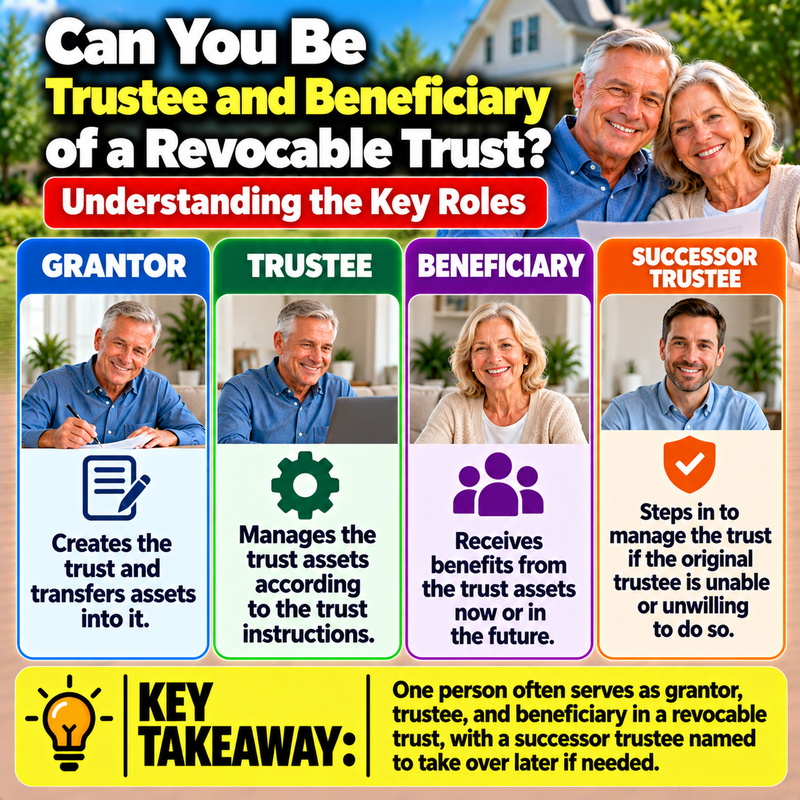
A revocable living trust remains one of the most effective tools for coordinating how NFTs — and everything else someone owns — pass to beneficiaries without unnecessary court involvement. It establishes clear roles: the grantor who creates it, the trustee who manages it, the successor trustee who steps in later, and the beneficiaries who ultimately benefit. For NFTs specifically, though, the trust’s role is coordinating intent and legal structure, not solving technical custody on its own.
Why a Standard Trust Alone Does Not Solve Wallet Access
Simply listing a wallet address or an NFT on a trust’s asset schedule doesn’t automatically mean the trust has effective control over it. Without a documented transfer, updated custody arrangement, or legally reviewed assignment, the token may remain tied to an individual’s personal wallet in practice, regardless of what the trust paperwork says. This gap between paper and practice is exactly where many well-intentioned estate plans quietly fail.
Pairing a Living Trust With Specialized Digital Asset Provisions
A well-drafted trust pairs its general estate-planning language with specific provisions addressing digital assets — naming who’s authorized to access wallets, referencing (without disclosing) where recovery materials are stored, and clarifying whether NFTs should be sold, held, or distributed in kind. Attorneys familiar with digital assets can tailor this language to a specific collection’s size and complexity, rather than relying on boilerplate.
Where Professional Help Matters
Not every NFT situation calls for a team of specialists, but genuinely valuable or complicated collections usually benefit from at least one outside opinion. Knowing which professional to call — and what to ask them — saves time and avoids costly mistakes.
- Estate counsel: Does the trust document actually and legally capture these specific tokens? What additional assignment or funding steps are needed beyond listing them on a schedule?
- Intellectual-property attorney: Does ownership of this NFT include any licensed rights to the underlying artwork, and are those rights assignable to beneficiaries or limited to the original purchaser?
- Digital-asset security professional: Is the current wallet setup, backup arrangement, and access procedure sound, or does it create unnecessary single points of failure?
- Tax adviser: How should these assets be valued for estate or income-tax purposes, and what records support that valuation if questioned later?
A broader look at evolving guidance on blockchain-based assets, including how regulators are approaching their treatment, can be found in this overview of blockchain estate planning considerations, which discusses why existing tools like trusts remain adaptable to crypto and NFT holdings even as regulatory treatment continues to develop. Separately, practical guidance on cold storage, private key handling, and naming digital beneficiaries is covered in this explanation of secure private key and wallet management for crypto estate planning, both of which reinforce why no single tool replaces coordinated legal, technical, and tax review.
What a General Living Trust Service Like eState Can and Cannot Cover
Services like the eState Living Trust, offered through Bulletproof Legacy Financial, provide ordinary trust-funding assistance, deed-related support, powers of attorney, a pour-over will, and successor-trustee guidance — solid groundwork for general estate planning. They are not designed to include NFT custody setup, private key recovery, token transfers, metadata hosting, intellectual-property licensing review, or specialized cryptocurrency tax planning. Recognizing that boundary upfront helps families line up the right additional professionals rather than assuming a standard plan covers territory it was never built for.

How a Revocable Living Trust Fits Into the Bigger Picture
A revocable living trust remains one of the strongest tools available for coordinating how NFTs, along with everything else someone owns, eventually reach the people meant to receive them. It establishes clear roles — the grantor who creates it, the trustee managing it day to day, the successor trustee who steps in later, and the beneficiaries who ultimately benefit. For digital assets, though, the trust’s job is coordinating legal intent, not solving wallet access or token verification on its own.
This separation between legal ownership and practical control isn’t unique to crypto. Families weighing how living trusts and LLCs differ for rental property run into a similar question about who holds title versus who manages the asset day to day. That comparison is built around real estate, not NFTs, and it doesn’t establish token title, digital custody, marketplace transferability, or intellectual-property rights — but the underlying lesson, that naming an asset on paper isn’t the same as having functional control of it, applies just as much to a wallet full of NFTs as it does to a rental property.
Why a Standard Trust Alone Does Not Solve Wallet Access
Simply listing a wallet address or an NFT collection on a trust’s asset schedule doesn’t automatically mean the trust has effective control over it. Without a documented transfer, an updated custody arrangement, or a legally reviewed assignment, the token can remain tied to an individual’s personal wallet in practice, regardless of what the paperwork says. This gap between the written plan and the technical reality is exactly where a lot of otherwise well-built estate plans quietly fall apart.
Pairing a Living Trust With Specialized Digital Asset Provisions
A well-drafted trust pairs ordinary estate-planning language with provisions aimed specifically at digital assets — naming who’s authorized to access wallets, referencing where recovery materials are stored without disclosing them directly, and spelling out whether NFTs should be sold, held, or distributed as-is to specific beneficiaries. An attorney familiar with digital assets can tailor this language to the size and complexity of a given collection instead of relying on generic boilerplate that was never written with blockchain assets in mind.
Where Professional Help Matters
Not every NFT situation needs a full team of specialists lined up. But genuinely valuable, unusually complicated, or disputed collections tend to benefit from at least one outside opinion, and knowing which professional to call — and what to actually ask them — saves time and prevents expensive missteps later.
Broader context on how existing estate-planning tools adapt to blockchain-based assets is available in this overview of estate planning considerations for blockchain assets, which touches on why wills and trusts remain workable frameworks even while the regulatory treatment of tokens like NFTs is still developing. Separately, practical guidance on protecting private keys and choosing between wallet types is covered in this explanation of secure cold-storage and key-management practices. Together, these point to the same conclusion: no single tool replaces coordinated legal, technical, and tax review for a meaningful NFT collection.
Attorneys Who Handle Digital Asset Provisions
An estate attorney familiar with digital assets can confirm whether a trust document actually and legally captures specific tokens, rather than just naming them in passing, and can advise on what additional assignment or funding steps might still be needed.
Valuation Specialists for NFT Estate Reporting
Because NFT markets can be thin, volatile, or occasionally manipulated, a qualified appraiser familiar with digital collectibles can help establish a defensible value for tax or distribution purposes, rather than relying on a marketplace’s displayed floor price.
Beyond attorneys and appraisers, two more specialists are worth keeping in mind for complicated collections:
- Digital-asset security professionals can review wallet setups, backup arrangements, and access procedures to spot single points of failure before they become a crisis.
- Tax advisers familiar with digital assets can clarify how acquisition records, transaction hashes, and valuation documentation should be organized for estate or income-tax reporting.
What a General Living Trust Service Like eState Can and Cannot Cover
A general service like the eState Living Trust, offered through Bulletproof Legacy Financial, provides ordinary trust-funding assistance, deed-related support, powers of attorney, a pour-over will, and successor-trustee guidance — solid groundwork for general estate planning. It is not built to include NFT custody setup, private key recovery, token transfers, metadata hosting, intellectual-property licensing review, or specialized cryptocurrency tax planning. Recognizing that boundary early helps a family line up the right additional specialists instead of assuming a standard plan already covers territory it was never designed for.
Frequently Asked Questions
NFT trust administration tends to raise the same handful of questions again and again, no matter how large or small the collection is. The answers below address the practical and legal points trustees run into most often.
A few of these questions get asked almost immediately once someone realizes a trust document and a crypto wallet don’t automatically work together the way a bank account and a trust do:
- Whether the trust itself actually transfers ownership
- Whether a hardware wallet is strictly necessary
- What happens if linked media stops loading
- When it’s time to bring in outside help
The questions that follow walk through those concerns one at a time, in plain language.
Can NFTs be held in a revocable living trust?
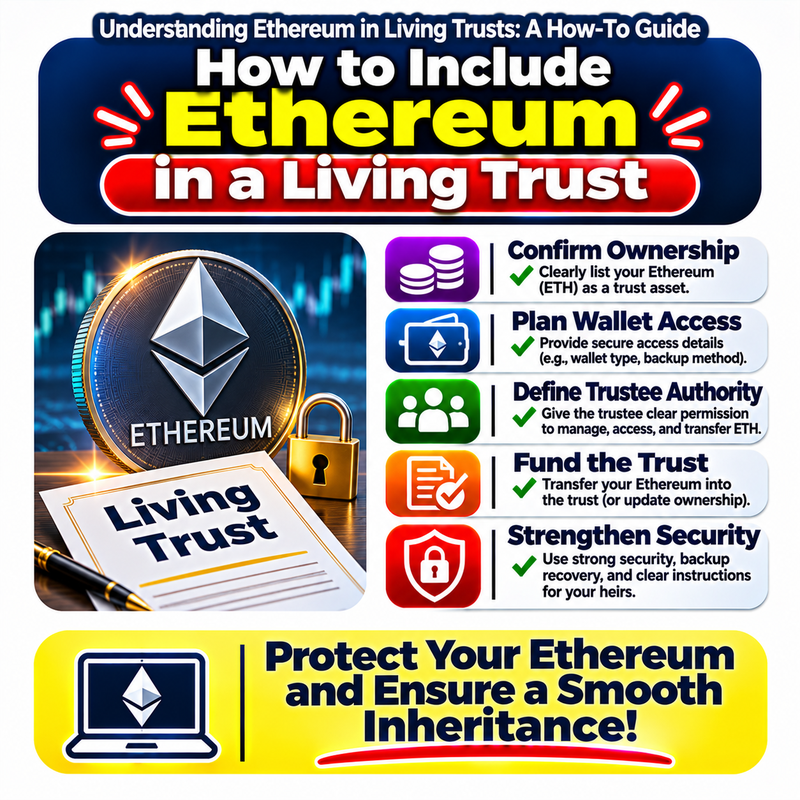
Yes, NFTs can be referenced and administered through a revocable living trust, similar to other forms of personal property. That said, naming them in the trust document is only the starting point — effective administration also requires confirming legal title, securing wallet access, and verifying the trustee actually has lawful, practical control over each token.
Does listing an NFT or wallet address on a trust schedule transfer ownership?
Not automatically. A trust schedule documents intent, but actual legal transfer usually depends on additional steps — a properly executed assignment, an updated custody arrangement, or legal review confirming the asset has genuinely moved into the trust’s control rather than remaining tied to someone’s personal wallet in practice.
Which details belong in an NFT trust inventory?
A thorough inventory records the blockchain, smart-contract address, token ID, wallet address, acquisition date and source, claimed legal owner, transaction hash, metadata and media location, any licensing documents on file, purchase records, and the assigned custodian. Private keys, seed phrases, passwords, and device PINs should never appear in this record.
Does owning an NFT also convey copyright in the artwork?
Not automatically. Holding an NFT typically transfers ownership of the token itself, not the copyright, trademark, or commercial rights to the underlying image, video, or audio. Those rights depend on separate license terms set by the original creator, which a trustee should locate, review, and preserve rather than assume exist by default.
What happens when off-chain NFT media disappears?
The token can remain fully intact and verifiable on the blockchain even after its linked media becomes unreachable, since artwork is usually hosted separately from the token itself. Centralized hosting fails if a server or domain lapses, while decentralized storage depends on continued “pinning” to stay accessible. Preserving permitted copies and hosting records ahead of time helps reduce this risk.
Can a hardware wallet protect trust-held NFTs?
A hardware wallet helps protect the signing credentials used to manage NFTs by keeping private keys offline, away from internet-connected devices. It doesn’t physically store the NFT itself — the token still lives on the blockchain — and losing both the device and its backup recovery phrase can mean permanent, irreversible loss of access.
How can a successor trustee obtain lawful wallet access without exposing seed phrases?
A separate, confidential memorandum kept apart from the trust document — such as a sealed record with estate counsel or a secured safe deposit box — can direct a successor trustee to recovery materials without ever publishing sensitive credentials in the trust itself, a will, or a probate filing. This keeps access instructions functional without turning the trust into a security risk.
Can marketplace terms limit NFT administration or transfer?
Yes. Marketplace accounts operate under their own terms of service, which can restrict account recovery, transferability, or deceased-user procedures independently of whatever the blockchain itself allows. A trustee should work through a platform’s official channels rather than attempting to log in as, or impersonate, a deceased account holder.
How should trustees document NFT values and tax records?
Trustees should retain purchase records, transaction hashes, wallet statements, acquisition dates, fees paid, and any records of later sales or transfers. Because NFT markets can be thin or volatile, a marketplace’s displayed floor price isn’t necessarily a defensible valuation, so a qualified appraiser or tax adviser can help establish supportable figures for estate or income-tax purposes.
When should a trustee hire legal, IP, valuation, or cybersecurity specialists?
Specialized help generally makes sense when a collection carries significant value, when authenticity or licensing terms are unclear, when multiple trustees or beneficiaries need coordinated access, or when the current trustee isn’t confident navigating wallets and blockchain verification alone. Bringing in the right specialist early tends to prevent far costlier problems down the line.
Managing NFTs in a trust ultimately comes down to a handful of disciplined habits: verify each token’s chain, contract, and token ID; confirm legal title and any license rights separately from the token itself; inventory wallets and records without ever exposing secrets; check whether off-chain media is still reachable; and document valuations and fiduciary decisions as they happen. No single tool guarantees security, legal ownership, liquidity, media persistence, or probate avoidance on its own, which is exactly why these practices work best layered together rather than relied on individually.
For readers wanting to see how ordinary trust funding and succession planning pair with this kind of specialized digital-asset work, Bulletproof Legacy Financial’s educational resources are a reasonable next stop.